In the world of automation, electronics, and smart devices, there exists a small yet incredibly powerful component that works silently to detect the presence or absence of objects without any physical contact. This device is widely known as a proximity sensor. However, across various industries and technical documentation, you might encounter it under several other names. Understanding these terms is key to navigating datasheets, product catalogs, and technical discussions.
The most common alternative name for a proximity sensor is a non-contact sensor. This term directly describes its fundamental operating principle. Unlike limit switches or push buttons that require physical touch to activate, a non-contact sensor can detect an object's presence through various fields or beams. This characteristic is crucial in applications where maintaining product integrity, avoiding mechanical wear, or ensuring hygiene is paramount, such as in food packaging, pharmaceutical manufacturing, or cleanroom environments.
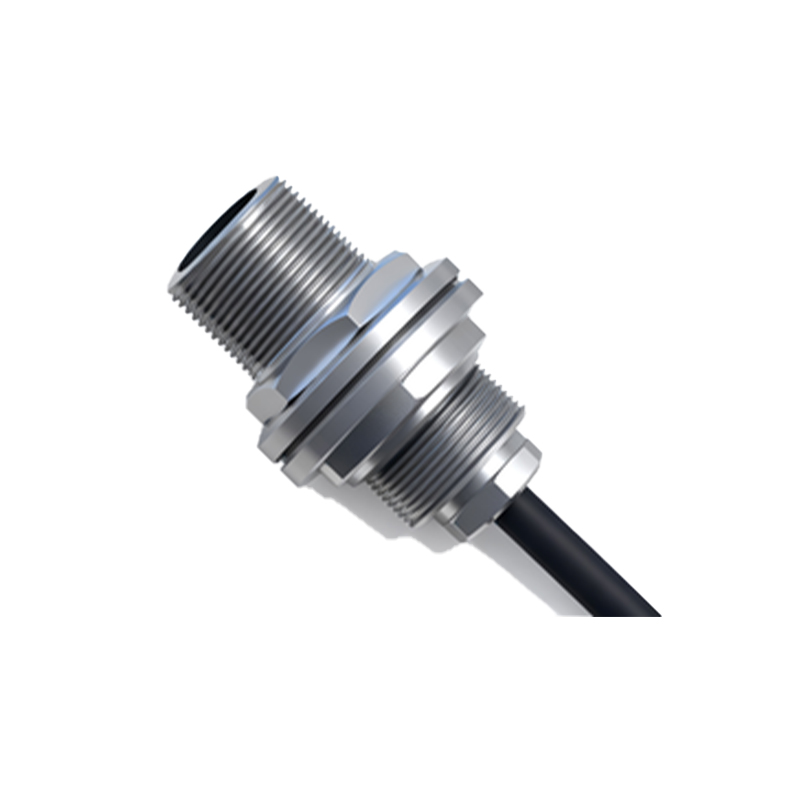
In specific contexts, particularly in industrial automation and safety systems, proximity sensors are often referred to as object detection sensors. This name emphasizes the sensor's primary function: to confirm whether a target object is within a specified range or at a particular point in a process. On assembly lines, for instance, an object detection sensor verifies if a component is present before a robotic arm proceeds with its task, preventing errors and jams.
Another prevalent term, especially for sensors that detect metallic objects, is the inductive proximity switch or simply proximity switch. While "sensor" implies a continuous measurement, "switch" highlights its role in providing a discrete on/off signal. An inductive proximity switch generates an electromagnetic field. When a metallic target enters this field, it induces eddy currents within the metal, causing a change in the sensor's oscillation amplitude. This change triggers a solid-state output signal, effectively "switching" the connected circuit. These are workhorses in metalworking, machine tools, and automotive manufacturing.
For applications involving non-metallic materials like wood, plastic, glass, or liquids, the corresponding device is often called a capacitive proximity sensor or capacitive switch. It operates by detecting changes in capacitance. The sensor forms one plate of a capacitor, with the target object acting as the other. As the object approaches, the capacitance increases, and once it surpasses a threshold, the sensor activates. These are ideal for level detection in tanks, material handling, and detecting filled containers on a conveyor belt.
In the realm of consumer electronics, the technology is ubiquitous but rarely labeled explicitly. The feature that turns off your smartphone's screen during a phone call to prevent accidental touches is powered by a proximity sensor. Here, it might be integrated and referred to in engineering contexts as an IR proximity detector, as it typically uses an infrared LED and a light detector to sense the closeness of your face.
Furthermore, some specialized types are known by names that describe their specific technology or form factor. Magnetic proximity sensors, or reed switches, detect the presence of a permanent magnet. Ultrasonic proximity sensors measure the time taken for a sound wave to reflect back from an object. Photoelectric sensors, sometimes grouped under the proximity umbrella for close-range detection, use a beam of light.
The diversity in naming stems from the sensor's underlying technology, its primary application, and the industry's convention. Whether called a non-contact sensor, an object detector, or a proximity switch, the core purpose remains identical: to provide reliable, wear-free detection of objects within a defined sensing range. This capability forms the backbone of countless automated processes, safety interlocks, and user interface enhancements in our daily lives. When selecting such a device, focusing on its technical specifications—sensing distance, target material, output type, and environmental rating—is more critical than the particular name it goes by, though knowing the synonyms ensures you find exactly what you need.