In the intricate world of industrial automation, robotics, and smart systems, the ability to detect and measure the presence, proximity, or force of an object without physical contact is paramount. Among the suite of technologies enabling this capability, pressure proximity sensors stand out for their unique operational principle and versatile applications. Unlike traditional contact-based pressure sensors or optical proximity sensors, these devices often operate in a nuanced space, detecting changes in a medium—typically air—to infer proximity or light touch.
At its core, a pressure proximity sensor functions by monitoring subtle variations in pressure within a defined environment or cavity. A common implementation involves an air-based system. A small, controlled stream of air is emitted from a nozzle. When an object approaches the nozzle, it disrupts the airflow, causing a change in the backpressure within the system. An internal pressure transducer detects this change and converts it into an electrical signal. The magnitude of this signal correlates with the distance of the object or the degree of obstruction. This principle allows for highly sensitive detection of objects millimeters away, even if they are made of transparent, reflective, or dark materials that would challenge optical sensors.
The advantages of this technology are significant. Firstly, it is remarkably robust against environmental factors. It is unaffected by ambient light, color, surface finish, or dust, making it ideal for dirty or visually challenging industrial settings like machining, woodworking, or packaging. Secondly, as a non-contact method, it avoids issues of wear, contamination, or mechanical damage that can plague tactile sensors. The sensing element is often sealed, protected from the harsh external environment by the air curtain itself. Furthermore, these sensors can be exceptionally sensitive, capable of detecting extremely lightweight or fragile objects, such as paper sheets, filaments, or delicate components, without exerting any force upon them.
The applications of pressure proximity sensors are diverse and critical across multiple sectors. In automated manufacturing and assembly lines, they are used for precise part presence verification, counting, and jam detection. In robotics, particularly in grippers and collaborative robot (cobot) arms, they provide a form of basic tactile feedback, enabling gentle handling and preventing collisions. The automotive industry employs them in paint shops and assembly stages where non-contact sensing is crucial. They also find roles in medical devices, for example, in monitoring fluid levels in IV bags or detecting the presence of surgical tools, and in consumer electronics for innovative touch interfaces.
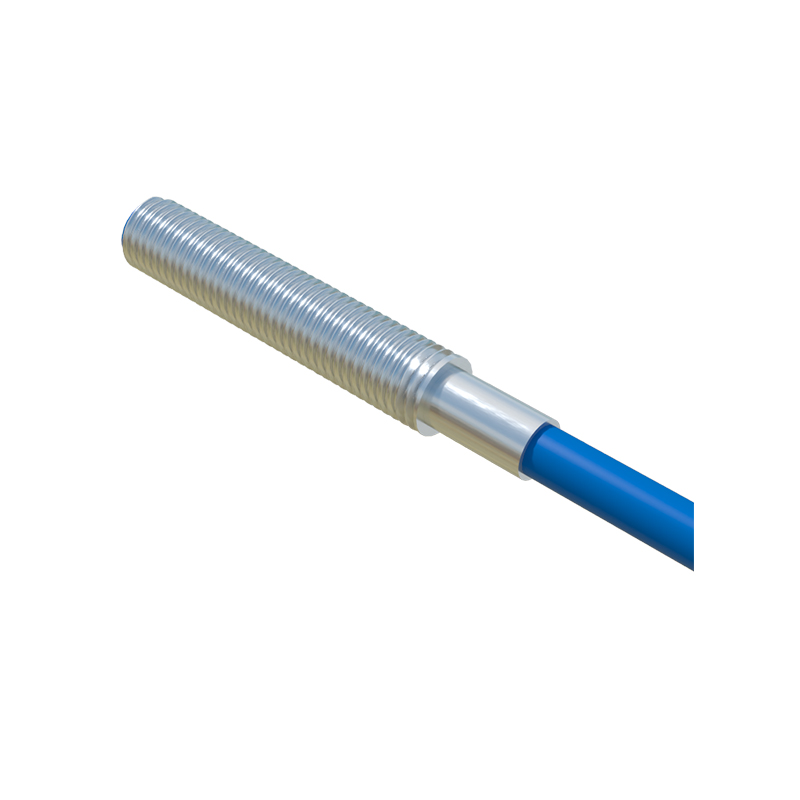
Looking forward, the evolution of pressure proximity sensors is intertwined with broader trends in miniaturization, integration, and intelligence. The development of Micro-Electro-Mechanical Systems (MEMS) technology is leading to smaller, more affordable, and lower-power sensor chips that can measure minute pressure changes. Integrating these sensors with microcontrollers and wireless communication modules (IoT) will enable distributed sensing networks for predictive maintenance and process optimization. A key future direction is enhancing their "smart" capabilities. By fusing pressure proximity data with inputs from other sensors (e.g., inertial, temperature) and processing it through edge-based algorithms, these systems can move beyond simple presence detection to classify materials, estimate softness, or interpret more complex interaction patterns.
However, challenges remain. Calibration can be sensitive to environmental temperature and humidity changes affecting air density. The need for a clean air supply (often filtered) adds to system complexity compared to a purely solid-state electronic sensor. Researchers and engineers are actively working on advanced compensation algorithms and self-calibration techniques to mitigate these issues. Another frontier is the development of "artificial skin" for robots, where arrays of micro-pressure/proximity sensors are embedded in a flexible substrate, creating a sophisticated sense of touch that approaches biological sensitivity.
In conclusion, pressure proximity sensors represent a vital and sophisticated tool in the sensor technology arsenal. Their principle of operation, leveraging fluid dynamics to bridge the gap between non-contact and tactile sensing, offers a unique set of benefits—robustness, sensitivity, and material independence. As industries push for greater automation, finer control, and smarter machines, the role of these sensors will only expand. From ensuring the smooth operation of a high-speed production line to enabling the next generation of sensitive robotic manipulators, pressure proximity sensors will continue to be a key enabler in our increasingly automated and interactive world.