In the world of industrial automation and smart systems, proximity switch sensors are the silent, reliable sentinels. These non-contact electronic devices detect the presence or absence of an object within a specific range without any physical touch. Their ability to operate in harsh environments, provide high-speed response, and offer exceptional longevity has made them indispensable across countless sectors, from manufacturing assembly lines to modern consumer electronics.
At their core, proximity sensors work by emitting an electromagnetic field or a beam of radiation (like infrared light). When a target object enters this field, it causes a change in the signal. The sensor's circuitry detects this disturbance and converts it into an electrical output signal, typically to switch a circuit on or off. This fundamental principle allows for wear-free operation, as there is no mechanical contact involved.
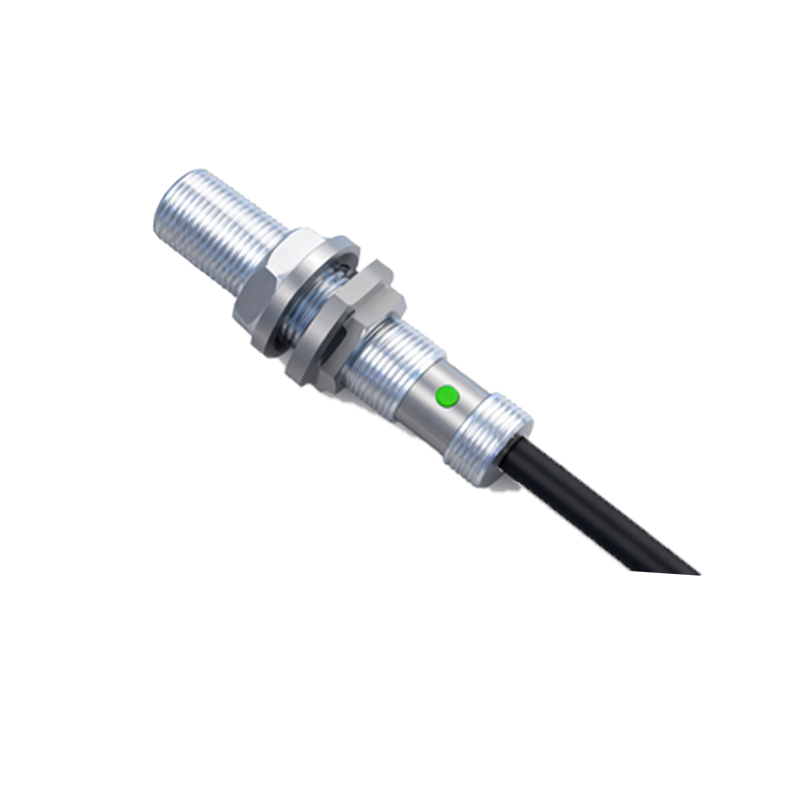
The landscape of proximity sensors is diverse, with each type suited for specific materials and applications. Inductive proximity sensors are perhaps the most common in industrial settings. They generate an oscillating electromagnetic field and can only detect metallic objects, primarily ferrous metals like steel and iron. Their sensing range is relatively short but highly precise, making them perfect for counting metal parts, determining position in machinery, or as limit switches.
For non-metallic targets, capacitive proximity sensors step in. They can detect almost any material—liquids, plastics, wood, glass, and even granular substances—by measuring changes in capacitance. This makes them ideal for level detection in tanks, monitoring presence of plastic bottles on a conveyor, or touch-sensitive interfaces.
Ultrasonic sensors use sound waves beyond human hearing. They measure the time it takes for an emitted sound pulse to bounce back from a target. Effective for both solid and liquid objects over longer distances, they excel in applications like parking assistance systems, bulk material level monitoring, and robotic obstacle detection.
Photoelectric sensors, which use light beams (visible, infrared, or laser), offer the longest sensing ranges. They can detect objects regardless of material, provided the object affects the light beam. They are categorized into through-beam, retro-reflective, and diffuse reflective types, each with advantages for different detection scenarios, such as packaging, material handling, and security systems.
Selecting the right proximity sensor requires careful consideration of several factors. The nature of the target material is paramount—is it metal, plastic, liquid, or transparent? The required sensing distance, or range, dictates the sensor type. Environmental conditions cannot be ignored; factors like temperature extremes, dust, moisture, or chemical exposure demand sensors with appropriate ingress protection (IP) ratings and housing materials (e.g., stainless steel for washdown areas).
Electrical requirements are equally critical. Designers must match the sensor's output type (e.g., NPN sinking, PNP sourcing, or analog) and voltage range with the control system. The physical size and mounting style (threaded barrel, rectangular) must fit the application's spatial constraints. Finally, performance characteristics like switching frequency (response speed) and whether a Normally Open (NO) or Normally Closed (NC) configuration is needed will influence the choice.
The applications are virtually limitless. In automotive plants, inductive sensors monitor robotic welding arms. In food processing, capacitive sensors ensure correct fill levels. Ultrasonic sensors guide autonomous mobile robots in warehouses, while photoelectric sensors read barcodes at high speed. Beyond industry, they are in your smartphone (screen turn-off during a call), elevator doors, and automatic faucets.
Looking ahead, the integration of IO-Link communication is a significant trend, turning simple proximity switches into smart devices that can transmit parameters like temperature, signal strength, and diagnostic data to higher-level control systems. This enables predictive maintenance, reducing downtime. Furthermore, miniaturization continues, allowing sensors to fit into ever-smaller devices and machines.
In conclusion, proximity switch sensors are foundational components of modern technology. Understanding their types, operating principles, and selection criteria is essential for engineers, technicians, and procurement specialists. By choosing the correct sensor for the specific application, one ensures reliability, efficiency, and longevity in any automated system, driving productivity and innovation forward.