In industrial automation and consumer electronics, proximity sensors play a critical role in detecting the presence or absence of objects without physical contact. Among various sensing principles, absorption contrast stands out as a key mechanism influencing sensor performance. This article delves into the concept of absorption contrast, its impact on proximity sensing, and practical considerations for optimizing sensor applications.
Absorption contrast refers to the difference in how materials absorb or reflect the energy emitted by a proximity sensor, typically in the form of infrared (IR) light, ultrasonic waves, or electromagnetic fields. When a sensor emits a signal, the target object interacts with this energy based on its material properties, such as color, surface texture, composition, and density. For instance, dark-colored materials tend to absorb more IR light, reducing the amount reflected back to the sensor, while light-colored or reflective surfaces enhance signal return. This variation in absorption creates a contrast that the sensor interprets to determine object presence, distance, or characteristics.
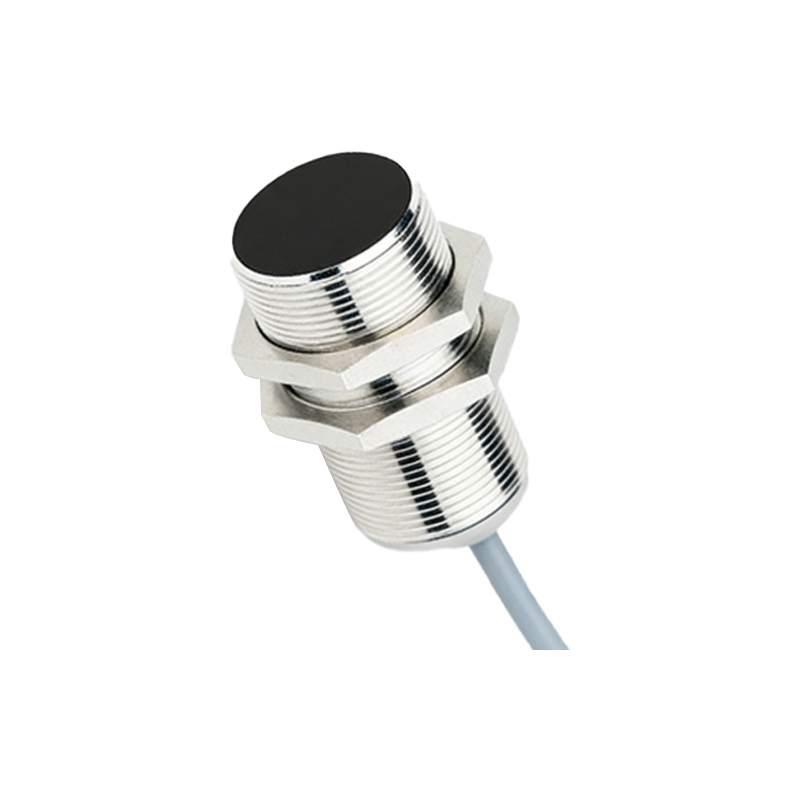
The effectiveness of a proximity sensor heavily relies on absorption contrast. In high-contrast scenarios—where the target object significantly differs from the background in absorption properties—sensors achieve higher accuracy and reliability. For example, in automotive applications, sensors detecting a black tire against a light concrete floor benefit from strong absorption contrast, enabling precise positioning. Conversely, low absorption contrast, such as sensing a transparent glass bottle or a matte black object in a dark environment, can lead to false readings or reduced detection ranges. This challenge underscores the importance of selecting sensors tailored to specific material interactions.
Several factors influence absorption contrast in proximity sensing. Material composition is primary: metals often reflect electromagnetic waves effectively, making them ideal for inductive sensors, while non-metallic materials like plastics or wood may require capacitive or optical sensors. Surface finish also matters; glossy surfaces reflect more light, whereas rough surfaces scatter energy, diminishing contrast. Environmental conditions, including ambient light, humidity, and temperature, further modulate absorption rates. For instance, in outdoor settings, sunlight can saturate IR sensors, lowering contrast and necessitating shielding or modulated signals to maintain performance.
To optimize proximity sensor performance, engineers must account for absorption contrast during system design. Sensor selection should align with the target material’s properties. For low-contrast applications, such as detecting clear liquids or similar-colored objects, sensors with adjustable sensitivity or multi-wavelength IR capabilities can enhance discrimination. Calibration and threshold setting are also crucial; by tuning sensors to the expected absorption levels of the target, false triggers from background interference can be minimized. Additionally, using complementary technologies—like combining ultrasonic and optical sensors—can mitigate contrast limitations in complex environments.
Real-world applications highlight the significance of absorption contrast. In packaging industries, sensors distinguish between cardboard boxes and plastic wraps based on IR absorption differences, ensuring accurate counting and sorting. In consumer devices, smartphones use proximity sensors with IR absorption contrast to detect a user’s ear during calls, turning off the screen to save power. However, challenges persist, such as detecting objects with varying absorption properties, like multi-material assemblies, which may require advanced algorithms or sensor fusion techniques.
Looking ahead, advancements in sensor technology aim to address absorption contrast limitations. Innovations include adaptive sensors that dynamically adjust emission wavelengths or power levels based on real-time feedback, improving contrast in fluctuating conditions. Machine learning integration allows sensors to learn material absorption patterns, enhancing accuracy over time. Moreover, the development of novel materials with engineered absorption properties could enable more predictable and consistent sensing outcomes.
In summary, absorption contrast is a fundamental aspect of proximity sensing that dictates sensor efficacy across diverse applications. By understanding how materials interact with sensor signals, professionals can design robust systems that leverage contrast for reliable detection. As technology evolves, addressing contrast challenges will drive smarter, more adaptable sensors, paving the way for innovations in automation, safety, and user experience.