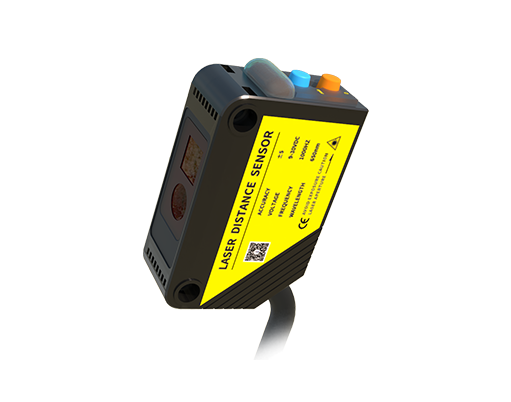
In the realm of precision measurement and industrial automation, the laser displacement sensor stands as a pivotal tool. However, its accuracy, repeatability, and long-term reliability are profoundly dependent on a component often overlooked: the mount. A laser displacement sensor mount is not merely a bracket; it is the critical interface that defines the sensor's spatial relationship with the target, isolates it from environmental disturbances, and ensures consistent data acquisition. This guide delves into the essential considerations for selecting and applying the right mount for your laser sensor system.
The primary function of a mount is to provide rigid and stable fixation. Vibration, whether from machinery, footsteps, or environmental sources, is the nemesis of high-resolution displacement measurement. Even micron-level movements of the sensor head can translate into significant noise in the measurement data. A well-designed mount, constructed from materials like anodized aluminum or stainless steel, acts as a mechanical filter. Its mass and structural damping characteristics absorb and dissipate vibrational energy before it reaches the sensor. For extreme environments, specialized vibration-isolation mounts incorporating elastomeric dampers or active cancellation systems may be necessary. The rigidity of the mount also prevents "creep" or slow deformation under load, which could cause a drift in the measurement baseline over time.
Beyond stability, precision adjustability is a hallmark of a quality sensor mount. Initial setup and periodic recalibration require fine-tuning of the sensor's position in multiple axes. A superior mount offers micrometer-grade adjustments in pitch (vertical angle), yaw (horizontal angle), and sometimes roll. These adjustments are typically achieved through finely threaded screws acting against spring-loaded or kinematic mechanisms. This allows the operator to precisely align the laser beam perpendicular to the target surface, a condition crucial for optimal measurement accuracy, especially when using triangulation-based sensors. The adjustability should be both sensitive enough for fine alignment and robust enough to lock securely once the optimal position is found, preventing accidental shifts during operation.
The application environment dictates specific mount requirements. In cleanrooms or sterile environments, mounts must be made of non-shedding, corrosion-resistant materials and be easy to clean. For outdoor use or in washdown areas in food & beverage or pharmaceutical plants, mounts with high IP (Ingress Protection) ratings, such as IP67, are essential to guard against dust and water jets. In high-temperature settings near furnaces or welding stations, mounts must withstand thermal expansion without losing clamping force or altering alignment. Conversely, in cryogenic applications, material brittleness must be considered. The mount's design should also facilitate cable management, ensuring sensor cables are routed neatly and strain-relieved to prevent connector damage.
Selecting the correct mounting point is as important as the mount itself. The structure to which the mount is attached—be it a machine frame, optical table, or a dedicated post—must itself be stable. Mounting a vibration-damped sensor bracket to a vibrating panel is counterproductive. Ideally, the base should be massive and rigid. Magnetic bases offer quick deployment on ferrous surfaces but may not provide sufficient stability for high-frequency measurements. For optical tables, posts and post holders with 1/4"-20 or M6 threaded connections are standard. Clamp-style mounts that attach to machine frames or rails provide flexibility but must be torqued correctly to prevent slippage.

Finally, the interplay between the mount and the sensor's measurement principle must be understood. For example, confocal chromatic sensors have a strict requirement for beam alignment relative to their probe tip. A mount that allows angular misalignment can introduce significant measurement error. Similarly, for laser triangulation sensors, the mount must secure the sensor at the correct stand-off distance and working range as specified by the manufacturer. Time-of-flight sensors may be more forgiving of angular errors but still require stable fixation.

In conclusion, investing in a high-quality, application-appropriate laser displacement sensor mount is not an ancillary expense; it is an investment in data integrity. It transforms a capable sensor into a trustworthy measurement system. By prioritizing stability, precision adjustability, environmental compatibility, and secure base mounting, engineers and technicians can ensure their laser displacement sensors deliver the precise, reliable data that modern automated processes demand.