In industrial automation, electronics, and robotics, proximity sensors are ubiquitous components. Professionals and technical documents frequently use abbreviations to refer to these devices concisely. Understanding these acronyms is crucial for reading datasheets, schematics, and communicating effectively within technical fields. This guide explains the most common English abbreviations for proximity sensors and their related terminology.
The most fundamental abbreviation is PS, which stands for Proximity Sensor. This is a general, all-encompassing term. However, due to the variety of sensing technologies, more specific abbreviations are prevalent. These abbreviations often combine the type of sensor with its form factor or output.
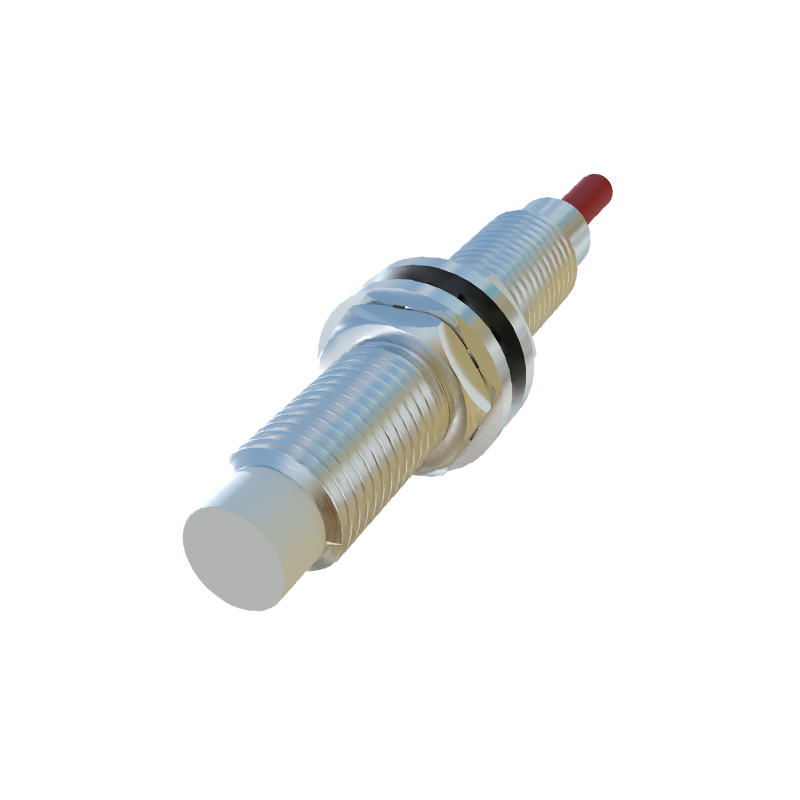
A major category is Inductive Proximity Sensors. These detect metallic objects without physical contact. Common abbreviations include:

INDS or IPS: Inductive Proximity Sensor.
PL: Often used in part numbers or catalogues to denote a cylindrical ("probe") style inductive sensor.
NAMUR: This is not a sensor type abbreviation but a crucial standard (from Normenarbeitsgemeinschaft für Mess- und Regeltechnik) for intrinsically safe sensors used in hazardous areas. A sensor listed as "NAMUR-compliant" is a key specification.
For detecting non-metallic objects, Capacitive Proximity Sensors are used. Their typical abbreviations are:
CAPS or CPS: Capacitive Proximity Sensor.
CL: Similar to PL, sometimes denotes a cylindrical capacitive sensor.
Photoelectric Sensors, which use light beams, have their own extensive set of abbreviations. While not strictly "proximity" in the same sense, they perform similar non-contact detection. You might see:
PES: Photoelectric Sensor.
PE: A very common shorthand for Photoelectric.
THRU-BEAM: A type where the emitter and receiver are separate units.
RETRO: Retro-reflective, where the sensor uses a reflector.
DIFFUSE: Diffuse reflective, where the sensor detects light reflected directly from the target.
Ultrasonic Proximity Sensors use sound waves. Their abbreviation is typically:
USS: Ultrasonic Sensor.
Beyond the sensor type, abbreviations describe the output configuration. This is critical for integration into control systems.
NO: Normally Open output. The switch is open (off) when no target is present.
NC: Normally Closed output. The switch is closed (on) when no target is present.
PNP: Sourcing output. The sensor switches the positive voltage line to the load.
NPN: Sinking output. The sensor switches the negative (ground) line to the load.
A: Analog output (e.g., 0-10V, 4-20mA).
IO-Link: A digital communication point-to-point protocol, not just a simple switch.
Form factor and housing are also abbreviated:
CYL: Cylindrical housing.
BLK: Block or rectangular housing.
LIM: Limit switch style housing.
When reading a part number like IPS-NO-PNP-CYL-18M, one can decode it as an Inductive Proximity Sensor, with a Normally Open, PNP output, in a Cylindrical housing, and likely an 18mm diameter. This standardized shorthand allows for precise identification.
It's important to note that while many abbreviations are semi-standardized, manufacturers may have their own internal coding systems. Always refer to the specific manufacturer's datasheet for definitive interpretation. For instance, one company might use "PRX" in a model number, while another uses "PROX."
In summary, mastering these abbreviations—from the general PS to the specific IPS, CAPS, and output types like PNP/NO—is essential for anyone working with automation systems. It streamlines communication, ensures correct part selection, and facilitates efficient troubleshooting. The next time you encounter a technical document, this knowledge will help you quickly decipher the functionality and specifications of the proximity sensor in question.