Laser sensors are sophisticated devices that utilize laser technology for precise measurement, detection, and control across various industries. Understanding their composition is essential for engineers, technicians, and enthusiasts working with automation, robotics, or quality control systems. At its core, a laser sensor consists of several key components that work in harmony to emit, receive, and process light signals.
The primary component is the laser diode, which serves as the light source. This semiconductor device generates a coherent, monochromatic beam of light, typically in the visible red or infrared spectrum. The coherence and narrow wavelength of this beam allow for highly accurate measurements over long distances. The laser diode is driven by a power supply circuit that regulates current to ensure stable output, as fluctuations can directly impact measurement precision.
Following the light source is the optical system. This includes collimating lenses that shape the emitted laser beam into a parallel, focused stream, reducing divergence and maintaining intensity over distance. In reflective or triangulation sensors, the system may also incorporate beam splitters or mirrors to direct light. The quality of these optical elements is critical; any imperfections can scatter light and introduce errors.
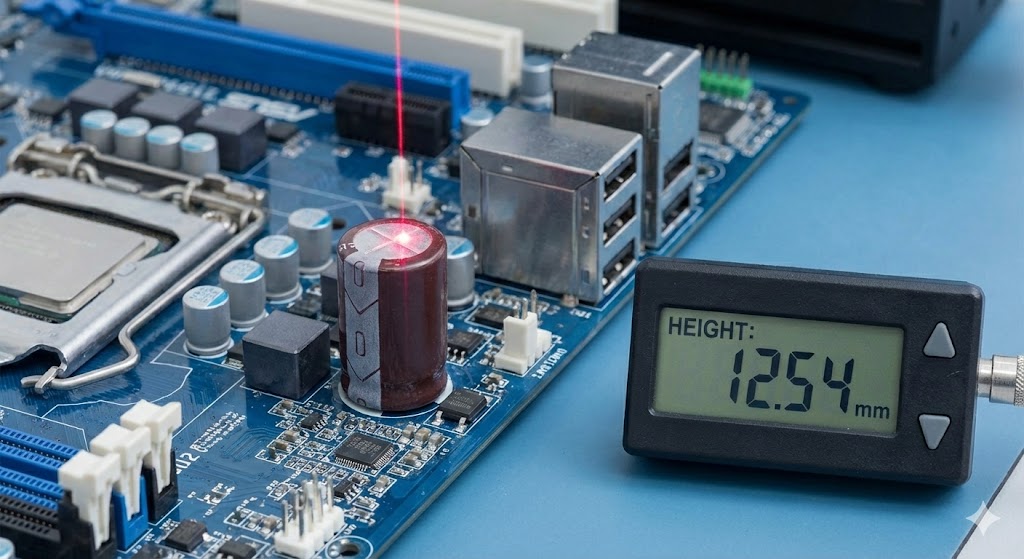
The receiver section is another fundamental part. It features a photodetector, such as a photodiode or a position-sensitive device (PSD), which captures the light reflected or scattered from the target object. The photodetector converts incoming photons into an electrical signal. Its sensitivity and response time are vital parameters, especially in high-speed applications or environments with low reflectivity targets.
Signal processing electronics form the brain of the sensor. This circuitry amplifies the weak electrical signal from the photodetector, filters out ambient noise (such as from ambient light or electrical interference), and converts it into a usable digital or analog output. Advanced sensors integrate microcontrollers or digital signal processors (DSPs) to perform complex calculations, such as time-of-flight measurements for distance or speed detection. Algorithms within these processors help compensate for environmental factors like temperature changes or surface variations.
The housing or enclosure protects these delicate internal components from physical damage, dust, moisture, and electromagnetic interference. Industrial-grade sensors often feature ruggedized casings made from metals or robust plastics, with ingress protection (IP) ratings suitable for harsh environments. Connectors and cabling interface the sensor with external systems, such as programmable logic controllers (PLCs) or data acquisition units, facilitating communication via protocols like IO-Link, analog voltage, or serial interfaces.
Additionally, many modern laser sensors include auxiliary elements like alignment indicators, status LEDs, or digital displays for ease of setup and diagnostics. Some models incorporate temperature sensors to auto-calibrate readings, ensuring consistency across operating conditions. In safety-rated sensors, such as those used in guarding applications, redundant circuits and self-checking mechanisms are integrated to meet regulatory standards.
The integration of these components enables diverse sensing modes. For instance, in a diffuse reflective sensor, the emitter and receiver are housed together, relying on light bouncing directly from the target. In a through-beam sensor, they are separate units aligned opposite each other, detecting interruptions in the beam. Triangulation sensors use angular measurement to determine position with high resolution, common in precision gauging.
Applications span from simple object detection on conveyor belts to complex 3D scanning in metrology. In automotive assembly, laser sensors verify part dimensions; in logistics, they measure parcel sizes; in agriculture, they monitor crop levels. Each use case may emphasize different compositional aspects—e.g., long-range sensors prioritize powerful laser diodes and sensitive receivers, while compact sensors focus on miniaturized optics and electronics.
Maintenance and calibration involve checking each component's integrity. Over time, laser diodes may degrade, lenses can accumulate dirt, and connectors might loosen, all affecting performance. Regular cleaning of optical surfaces and verification against reference standards help sustain accuracy. Understanding the composition aids in troubleshooting; for example, erratic readings could stem from a faulty photodetector or electrical noise in the signal processor.
In summary, a laser sensor is a synergistic assembly of optoelectronic and electronic parts. From the laser diode generating light to the photodetector capturing it, and the electronics interpreting signals, each element plays a specific role. This composition underpins the sensor's reliability, accuracy, and adaptability, making laser technology indispensable in modern industrial and scientific endeavors. As advancements continue, such as the integration of fiber optics or smart sensing networks, the fundamental principles of composition remain central to innovation.