Laser sensors represent a critical technology in modern measurement and control systems, converting physical quantities into measurable electrical signals through sophisticated transduction mechanisms. The core of laser sensor operation lies in its ability to utilize coherent light to detect changes in position, displacement, distance, or other physical parameters with exceptional precision.
The transduction process typically begins with a laser diode emitting a focused beam of light toward a target surface. When the beam interacts with the target, several optical phenomena occur, including reflection, scattering, or interference. Photodetectors within the sensor capture the returning light, and the system analyzes specific characteristics of this light to determine the measured variable. Common transduction principles include triangulation, time-of-flight (ToF), interferometry, and confocal measurement.

Triangulation-based sensors calculate displacement by measuring the angle of the reflected beam. As the target distance changes, the position of the reflected light spot shifts on a linear photodetector array. This method offers high resolution for short to medium ranges. Time-of-flight sensors, in contrast, measure the round-trip time for a laser pulse to travel to the target and back, enabling accurate distance measurement over longer ranges. Interferometric sensors exploit the wave nature of light, detecting minute displacements by analyzing interference patterns created between a reference beam and a measurement beam. This approach provides nanometer-level resolution, essential in semiconductor manufacturing and precision metrology.
The conversion from an optical signal to an electrical output involves several stages. The photodetector, often a photodiode or a position-sensitive device (PSD), generates a photocurrent proportional to the intensity or position of the incident light. Subsequent signal conditioning circuits, including transimpedance amplifiers and filters, convert this current into a stable voltage. Advanced sensors incorporate microprocessors to digitize this signal, apply algorithms for error correction (compensating for ambient light or surface reflectivity), and output standardized data via interfaces like analog voltage, current loops, or digital protocols (IO-Link, Ethernet).
Key performance parameters in this transduction chain include resolution, linearity, repeatability, and response time. Resolution defines the smallest detectable change in the measured quantity. Non-linearity, often corrected through calibration, refers to the deviation from an ideal straight-line response. The choice of transduction method directly impacts these parameters. For instance, while interferometry offers extreme resolution, it may require stable environmental conditions. ToF sensors provide robust performance for long ranges but may have lower resolution compared to triangulation at close quarters.
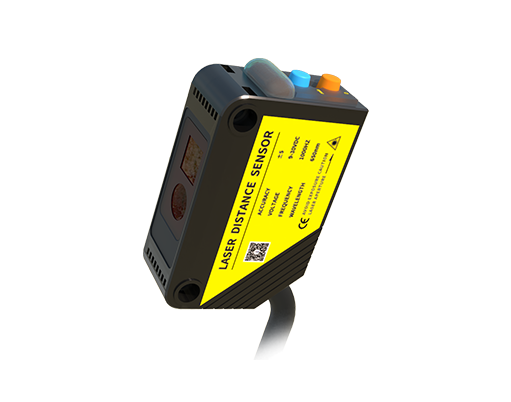
Applications of laser sensor transduction are vast and cross-industrial. In automotive assembly, they ensure precise gap and flush measurement between body panels. Robotics employs them for object detection, positioning, and navigation. Consumer electronics rely on laser displacement sensors for thickness control in battery and display manufacturing. Furthermore, laser triangulation sensors monitor vibration and deformation in structural health monitoring, while confocal chromatic sensors measure film thicknesses and surface topography in quality control.

Recent advancements focus on enhancing transduction efficiency and integration. Miniaturization of laser and detector components enables compact sensor designs. The development of multi-channel and array sensors allows for simultaneous measurement of multiple points. Integration with artificial intelligence and machine vision systems facilitates complex inspection tasks, such as defect detection on moving production lines. Additionally, improvements in laser safety classifications (e.g., Class 1 or 2) have expanded their use in human-collaborative environments.
Selecting the appropriate laser sensor requires a thorough analysis of the application requirements. Factors include the measurement range, target material and surface properties (color, reflectivity, texture), environmental conditions (temperature, dust, ambient light), required accuracy, and output needs. Understanding the underlying transduction principle is paramount, as it dictates the sensor's capabilities and limitations. For example, a highly reflective mirror-like surface may pose challenges for triangulation sensors but be suitable for interferometric types.
In summary, the transduction of physical variables into electrical signals by laser sensors is a multifaceted process underpinned by precise optical and electronic engineering. Mastery of these mechanisms allows engineers to leverage their high accuracy, speed, and non-contact nature across diverse fields, from industrial automation to scientific research, driving innovation and quality improvement in countless processes.