In the realm of precision measurement and industrial automation, high-power laser sensors have emerged as a cornerstone technology. These devices utilize concentrated beams of coherent light to detect, measure, and analyze objects with exceptional accuracy and speed, operating in environments where other sensing technologies may fail. Unlike conventional sensors, they are not easily affected by ambient electromagnetic interference, dust, or varying lighting conditions, making them indispensable in modern manufacturing, quality control, and scientific research.
The fundamental principle behind a high-power laser sensor involves the emission of a laser beam towards a target. The interaction of this beam with the target—whether through reflection, scattering, or absorption—is then captured and analyzed by a receiver within the sensor. Key measurement techniques include time-of-flight (ToF), triangulation, and interferometry. Time-of-flight sensors calculate distance by measuring the time it takes for a laser pulse to travel to the target and back. Triangulation-based sensors use the angle of the reflected beam to determine position, offering high resolution for close-range applications. Interferometric sensors, on the other hand, rely on wave interference patterns for ultra-precise displacement measurements, often at the nanometer scale. The "high-power" aspect refers to the intensity of the laser source, which allows for longer measurement ranges, the ability to penetrate certain materials or adverse atmospheric conditions, and improved signal-to-noise ratios for clearer data acquisition.
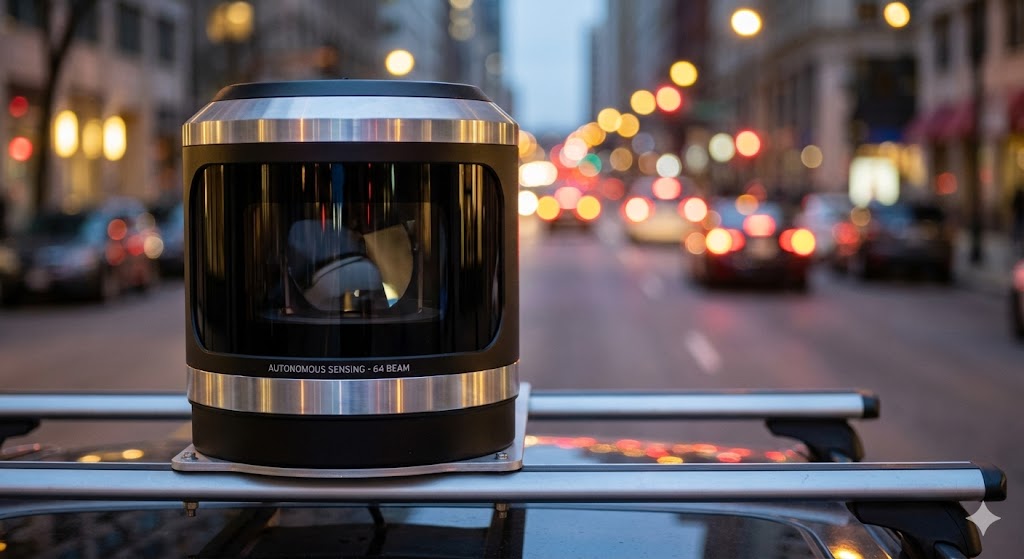
The applications of high-power laser sensors are vast and continually expanding. In industrial automation, they are pivotal for robotic guidance, enabling robots to precisely locate and handle components on assembly lines. They perform non-contact dimensional inspection and profile scanning of manufactured parts, ensuring adherence to strict tolerances without risking surface damage. In the logistics sector, these sensors facilitate high-speed sorting and volume measurement of packages. Furthermore, they play a critical role in structural health monitoring, where they can detect minute deformations in bridges, buildings, and aircraft wings. Emerging fields like autonomous vehicles rely on LiDAR (Light Detection and Ranging) systems, a form of laser sensing, to create real-time 3D maps of the environment. In scientific contexts, they are used for atmospheric sensing, particle analysis, and even in experimental physics setups.
Selecting the appropriate high-power laser sensor requires careful consideration of several parameters. The required measurement range and stand-off distance are primary factors. Resolution and accuracy needs dictate the choice of sensing principle; for instance, interferometric sensors provide extreme accuracy but over shorter ranges. The laser's wavelength (often in the visible red or near-infrared spectrum) affects its performance with different material surfaces. Response speed, or sampling rate, is crucial for dynamic processes or high-speed production lines. Environmental robustness is another key concern; sensors may need specific ingress protection (IP) ratings for operation in dusty, humid, or wash-down environments. Finally, the output interface (analog, digital, or industrial network protocols) must be compatible with the existing control system.
Looking ahead, the future of high-power laser sensor technology is geared towards greater integration, intelligence, and miniaturization. The convergence with artificial intelligence and machine learning algorithms will enable sensors not only to collect data but also to interpret it, predict anomalies, and make autonomous decisions. Advances in semiconductor laser diodes and photonic integrated circuits are driving the development of smaller, more energy-efficient, yet more powerful sensor units. Furthermore, the push for Industry 4.0 and the Industrial Internet of Things (IIoT) demands sensors that are inherently connected and capable of seamless data exchange within smart factory ecosystems. Research is also ongoing into new wavelengths and beam-shaping techniques to handle more challenging materials and complex geometries.
In conclusion, high-power laser sensors represent a dynamic and critical technology that bridges the gap between the physical world and digital control systems. Their ability to deliver reliable, high-precision data under demanding conditions fuels innovation across countless industries. As the technology continues to evolve, becoming more capable and accessible, its role in shaping advanced automation, enhancing safety, and enabling new scientific discoveries will only become more profound. Understanding their operating principles and application landscape is essential for engineers and decision-makers aiming to leverage their full potential for technological advancement and operational excellence.
