In modern industrial automation and precision measurement, digital laser sensor sensing heads have become indispensable components. These advanced devices utilize laser technology to achieve non-contact, high-precision detection and measurement, offering significant advantages over traditional mechanical or optical sensors. A digital laser sensor sensing head typically consists of a laser emitter, a receiver, and integrated digital signal processing circuitry. The emitter projects a focused laser beam onto a target object, while the receiver captures the reflected light. The integrated digital processor then analyzes the received signal to determine parameters such as distance, displacement, thickness, or presence of the object.
One of the key features of digital laser sensor sensing heads is their ability to provide real-time, accurate measurements with minimal interference from environmental factors like ambient light or dust. Advanced models incorporate adaptive algorithms that compensate for surface variations, color differences, and material transparency, ensuring consistent performance across diverse applications. The digital output, often transmitted via interfaces like IO-Link, Ethernet/IP, or Modbus, allows seamless integration with programmable logic controllers (PLCs), industrial computers, and data acquisition systems. This facilitates automated control, quality inspection, and process monitoring in manufacturing lines.
Applications of digital laser sensor sensing heads span numerous industries. In automotive manufacturing, they are used for gap measurement between body panels, weld seam inspection, and part positioning. The electronics industry relies on them for component placement verification, PCB warpage detection, and solder paste thickness measurement. In packaging, these sensors ensure correct label placement, fill level control, and container positioning. Additionally, they play a crucial role in robotics for obstacle detection, guidance, and precision assembly tasks.
The evolution of digital laser sensor technology has led to the development of compact, robust sensing heads capable of operating in harsh environments. Many models feature IP67 or higher ingress protection ratings, making them resistant to water, oil, and shock. Furthermore, advancements in laser diode efficiency and power management have extended operational lifetimes and reduced maintenance requirements. Some sensing heads also include built-in diagnostics and self-calibration functions, enhancing reliability and reducing downtime.
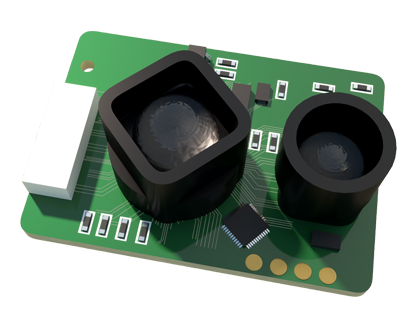
When selecting a digital laser sensor sensing head, factors such as measurement range, resolution, response time, and output type must be considered. For instance, long-range models may sacrifice resolution for extended detection distances, while high-speed variants prioritize rapid response for dynamic applications. The choice of laser class (e.g., Class 1 or Class 2) depends on safety regulations and application-specific risk assessments. Proper installation, alignment, and periodic calibration are essential to maintain optimal performance.
Future trends in digital laser sensor sensing heads point toward increased miniaturization, enhanced connectivity through Industrial Internet of Things (IIoT) protocols, and integration with artificial intelligence for predictive analytics. These developments will further expand their utility in smart factories, autonomous systems, and advanced research laboratories. As industries continue to demand higher precision and efficiency, digital laser sensor sensing heads will remain at the forefront of technological innovation, driving improvements in productivity and quality control worldwide.