In the realm of industrial automation and smart systems, proximity sensors are fundamental components. Among the various types, bidirectional proximity sensors represent a significant advancement, offering enhanced functionality and reliability. Unlike standard unidirectional sensors that detect objects approaching from one specific direction, bidirectional sensors are capable of detecting objects moving towards or away from the sensing face. This dual capability opens up a wider range of applications and solves complex positioning problems.
The core technology behind bidirectional proximity sensors often involves sophisticated inductive or capacitive sensing principles. For inductive types, which are common for detecting metallic objects, the sensor generates an oscillating electromagnetic field. When a metallic target enters this field, eddy currents are induced on the target's surface, causing a change in the oscillation amplitude. A bidirectional sensor is designed with circuitry that can distinguish between the phase shift caused by an object moving into the field versus one moving out of it. This phase discrimination is the key to determining the direction of movement. Capacitive bidirectional sensors operate on a similar principle but by measuring changes in capacitance, making them suitable for non-metallic targets like liquids, plastics, or granular materials.
The advantages of implementing bidirectional proximity sensors are substantial. First and foremost, they provide critical directional information without the need for two separate sensors, leading to a more compact and cost-effective design. This is particularly valuable in space-constrained environments. Secondly, they enhance system reliability by offering a more complete picture of object movement. For instance, in a safety interlock system, knowing that a guard door is not only closed but also securely latched (a movement away from the sensor) is crucial. They also reduce wiring complexity and potential points of failure.
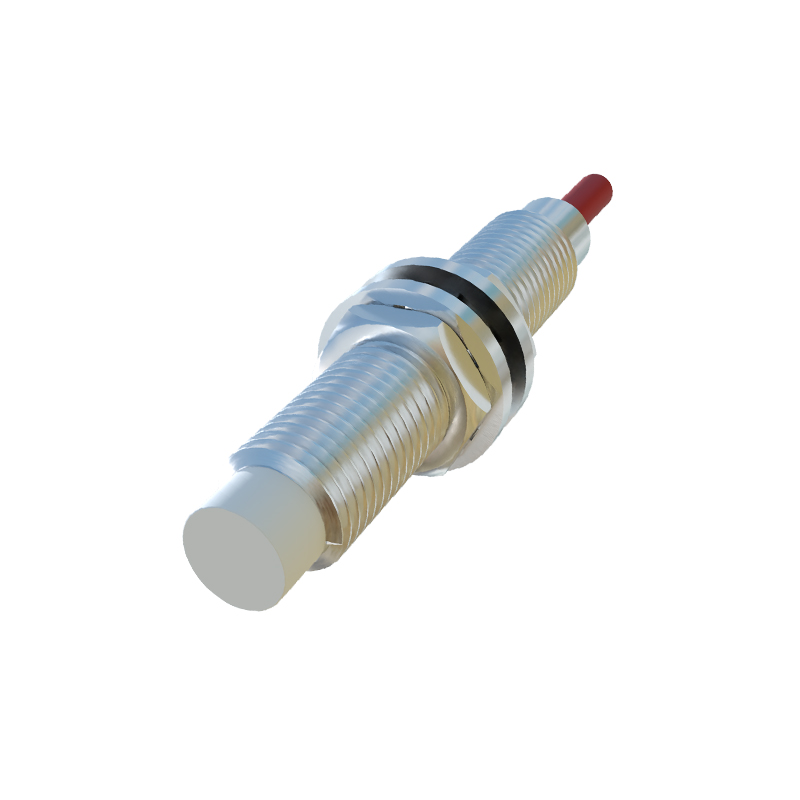
The applications for bidirectional proximity sensors are diverse and growing. In automated material handling, they are used to monitor the position of shuttle cars or pallet lifts, confirming both the "in" and "out" positions for precise cycle control. In robotics, they can be employed in gripper mechanisms to verify that an object has been both picked up and successfully released. Within the packaging industry, these sensors ensure that filling nozzles are in the correct retracted position before indexing to the next station, preventing spills and damage. Another critical application is in predictive maintenance on rotating machinery; by monitoring the axial play or movement of a shaft in both directions, early signs of bearing wear can be detected before catastrophic failure.
When selecting a bidirectional proximity sensor, several factors must be considered. The sensing range, which is typically shorter than equivalent unidirectional models, must be appropriate for the application. The output type is also vital; many bidirectional sensors provide two separate discrete outputs (e.g., PNP or NPN)—one for the "approach" signal and one for the "depart" signal. Some advanced models may offer analog or IO-Link outputs that provide continuous distance and direction data. Environmental conditions such as temperature, presence of washdown chemicals, or electromagnetic interference must also be factored into the selection to ensure long-term stability.
Installation and alignment are more critical for bidirectional sensors compared to their standard counterparts. The sensor must be mounted perpendicular to the path of the target movement to ensure accurate directional detection. Misalignment can lead to false triggering or an inability to distinguish direction. Proper shielding and grounding are essential to minimize noise interference, which can disrupt the sensitive phase-detection circuitry.
In conclusion, bidirectional proximity sensors are intelligent devices that add a layer of directional intelligence to object detection. By understanding the movement direction—toward or away—they enable more sophisticated control logic, improve machine safety, and facilitate predictive maintenance strategies. As automation systems become more complex and demand higher levels of data, the role of bidirectional sensing will continue to expand, making them a key component in the development of smarter, more responsive industrial and technological ecosystems.