In the realm of modern technology, laser sensor devices stand as a cornerstone of precision measurement and detection. These sophisticated instruments utilize the unique properties of laser light to gather data about their environment with exceptional accuracy and speed. Unlike conventional sensors, laser sensors operate by emitting a focused beam of coherent light and analyzing the reflected signal. This fundamental principle enables a wide array of applications, from industrial automation to consumer electronics, making them indispensable tools in today's data-driven world.
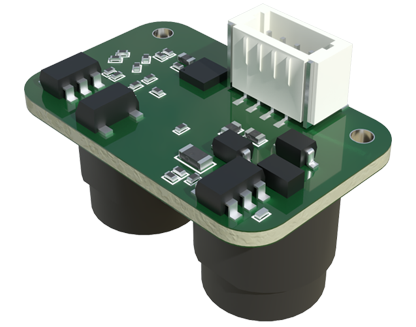
The core technology behind laser sensor devices is based on the interaction between light and matter. A typical device consists of a laser diode that generates the light beam, optics to focus and direct it, and a photodetector to capture the returning light. The key parameters measured are often time-of-flight, phase shift, or the intensity of the reflected beam. For instance, in a time-of-flight (ToF) laser sensor, the device calculates the distance to an object by measuring the time it takes for a laser pulse to travel to the target and back. This method allows for non-contact, high-speed distance measurements critical in robotics and autonomous systems.
Industrial manufacturing represents one of the largest sectors employing laser sensor technology. On assembly lines, these sensors perform critical tasks such as precise positioning, dimensional gauging, and defect detection. They can measure the thickness of materials, check for surface flaws, or ensure components are correctly aligned, all without physical contact that could damage sensitive parts. The reliability and repeatability of laser measurements significantly enhance quality control processes, reduce waste, and improve overall production efficiency. In logistics and warehousing, laser sensors are integral to automated guided vehicles (AGVs) and robotic picking systems, enabling them to navigate complex environments and identify objects accurately.

Beyond the factory floor, laser sensor devices have become ubiquitous in everyday life. They are the enabling technology behind barcode scanners at retail checkouts, gesture recognition in smart devices, and the autofocus systems in modern smartphone cameras. In the automotive industry, they form the backbone of advanced driver-assistance systems (ADAS) and are a primary sensor type in many LiDAR (Light Detection and Ranging) units for autonomous vehicles. These sensors map the vehicle's surroundings in three dimensions, detecting pedestrians, other vehicles, and road obstacles with high resolution, even in low-light conditions.
The field of environmental monitoring and scientific research also benefits greatly from laser sensing. LIDAR systems mounted on aircraft or satellites are used to create detailed topographic maps, monitor deforestation, and measure atmospheric pollutants. In medicine, laser-based sensors are found in diagnostic equipment, enabling non-invasive techniques for monitoring blood flow or tissue oxygenation.
Looking toward the future, the evolution of laser sensor devices is driven by demands for miniaturization, lower power consumption, and enhanced functionality. Emerging trends include the development of solid-state LiDAR without moving parts, which promises greater durability and lower costs for mass-market applications like consumer robotics and automotive safety. Integration with artificial intelligence and machine learning algorithms is another significant frontier. By processing the rich point-cloud data from laser sensors with AI, systems can achieve not just detection but also recognition and predictive analysis, such as classifying objects or predicting their movement.
Furthermore, advancements in photonics and semiconductor manufacturing are leading to chip-scale laser sensors. These integrated devices could bring high-precision sensing capabilities to a broader range of products, from wearable health monitors to smart home appliances, at a fraction of the current size and cost. The ongoing research into new laser materials and wavelengths will also expand the operational range of these sensors, allowing them to perform reliably in challenging conditions like fog, dust, or extreme temperatures.
In conclusion, laser sensor devices are a transformative technology whose influence spans across countless industries. Their ability to provide precise, reliable, and non-contact measurements solves complex challenges in automation, safety, and data acquisition. As the technology continues to advance, becoming smaller, smarter, and more affordable, its integration into our technological infrastructure will only deepen, paving the way for more intelligent and responsive systems in an increasingly automated world.