In the realm of modern manufacturing, precision is paramount. Lathe operations, fundamental to shaping materials like metal, wood, and plastics, have undergone a significant transformation with the integration of advanced sensing technology. Among these innovations, lathe laser sensors have emerged as a critical tool, driving unprecedented levels of accuracy, efficiency, and process control. Unlike traditional mechanical probes or manual measurement methods, these non-contact sensors utilize laser beams to gather real-time data, fundamentally changing how machinists interact with their workpieces.
The core principle behind a lathe laser sensor involves emitting a focused laser beam towards the target object—typically the rotating workpiece on the lathe. The sensor then precisely measures the reflection or diffraction of this beam. Common technologies include triangulation, where the position of the reflected laser spot on a detector array is analyzed to calculate distance, and time-of-flight methods. This allows for micron-level measurements of dimensions such as diameter, radius, runout, and surface profile without ever touching the part. This non-contact nature is a game-changer; it eliminates the risk of surface marring on delicate materials and allows for measurements during high-speed rotation, which is impossible with contact tools.
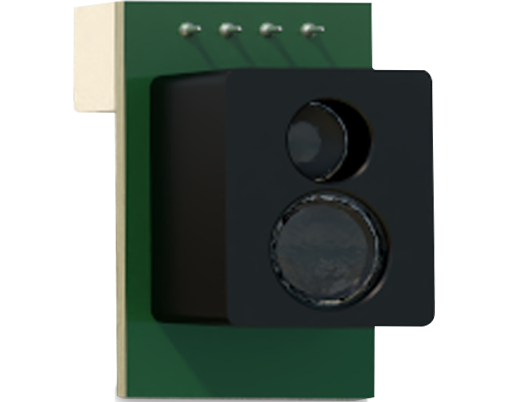
The applications of laser sensors on lathes are diverse and impactful. One primary use is in-process gauging and control. Instead of stopping the lathe to manually measure a part, the laser sensor continuously monitors critical dimensions in real-time. If the sensor detects that the part is approaching the upper or lower tolerance limit, it can send a signal to the lathe's CNC (Computer Numerical Control) system to make automatic compensatory adjustments to the tool path. This closed-loop control drastically reduces scrap rates, minimizes material waste, and ensures every part conforms to specifications from the first piece to the thousandth. This is particularly vital in high-volume production environments for automotive, aerospace, and medical components.
Furthermore, these sensors excel in tool setting and tool wear monitoring. By quickly and accurately measuring the position of a cutting tool tip after a tool change, laser sensors automate and expedite the setup process, reducing machine downtime. More importantly, they can indirectly monitor tool wear by measuring the dimensional changes on the workpiece over time or by detecting subtle changes in the machining process. Early detection of a worn tool prevents catastrophic tool failure, protects the workpiece and machine, and maintains consistent part quality.
Another advanced application involves surface inspection and defect detection. High-resolution laser sensors can scan the surface of a turned part, creating a detailed topographic map. This enables the detection of imperfections like grooves, scratches, or chatter marks that might be invisible to the naked eye but could compromise the part's function or fatigue life. Integrating this inspection directly into the machining cell allows for immediate corrective action.
The benefits of adopting lathe laser sensors are compelling. They lead to a substantial increase in overall equipment effectiveness (OEE) by reducing setup times, eliminating non-cutting measurement intervals, and preventing defects. The consistent, data-driven process enhances quality assurance, making compliance with stringent industry standards more straightforward. Additionally, the automation of measurement tasks reduces the reliance on operator skill for precise gauging, mitigating human error and freeing skilled machinists for more complex tasks.
However, successful implementation requires consideration of certain factors. The machining environment can be harsh, with coolant, metal chips, and vibrations. Therefore, selecting sensors with appropriate ingress protection (IP) ratings and robust housings is essential. The choice of laser type (e.g., red visible laser or blue laser for better performance on reflective metals) must suit the material being machined. Proper integration with the lathe's CNC system and user-friendly software for data analysis and interface are also crucial for unlocking the full potential of the technology.
In conclusion, lathe laser sensors are far more than just measurement devices; they are enablers of intelligent, adaptive manufacturing. By providing a stream of precise, real-time metrological data directly from the point of action, they close the loop in manufacturing processes, fostering a transition from reactive to proactive machining. As Industry 4.0 and smart factory concepts continue to evolve, the role of these sensors will only expand, forming the backbone of data-centric production systems that prioritize zero-defect manufacturing, predictive maintenance, and ultimate operational efficiency. For any machine shop aiming to compete on quality, speed, and cost in today's market, investing in laser sensor technology for lathes is no longer a luxury but a strategic necessity.