In the realm of industrial manufacturing, welding remains a cornerstone process, essential for joining materials across sectors from automotive to aerospace. As technology advances, the integration of laser sensors into welding machines has revolutionized this field, offering unprecedented levels of precision, control, and efficiency. These sensors are not merely add-ons but integral components that transform traditional welding into a smart, adaptive operation.
Laser sensors in welding machines primarily function by emitting laser beams to measure and monitor various parameters in real-time. They can detect seam tracking, joint geometry, and surface conditions with high accuracy, often within micrometer ranges. This capability allows welding systems to adjust parameters such as speed, heat input, and torch position dynamically, ensuring consistent weld quality even on irregular or complex workpieces. For instance, in robotic welding applications, laser sensors enable robots to "see" and adapt to variations in part alignment, reducing errors and minimizing rework.
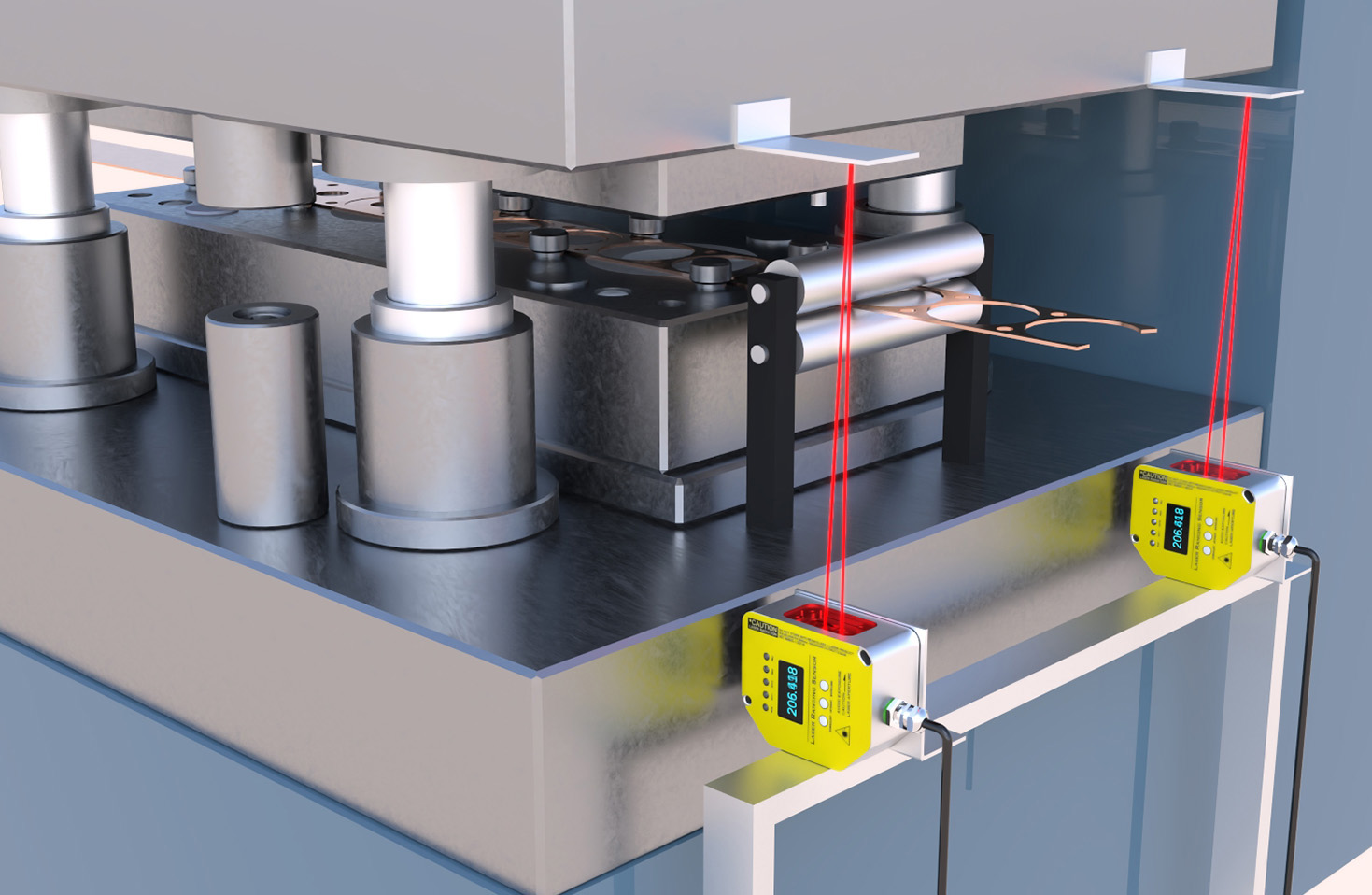
The benefits of incorporating laser sensors are manifold. First, they enhance precision by providing continuous feedback, which is crucial for applications requiring tight tolerances, such as in medical device manufacturing or electronics assembly. Second, they boost efficiency by reducing setup times and enabling faster welding cycles. Traditional methods often rely on manual adjustments or pre-programmed paths, which can lead to downtime if parts deviate from specifications. With laser sensors, machines can self-correct on the fly, maintaining productivity without human intervention. Third, these sensors improve safety by minimizing human exposure to hazardous welding environments, as automated systems take over repetitive or dangerous tasks.

Several types of laser sensors are employed in welding, including triangulation sensors, confocal sensors, and time-of-flight sensors. Triangulation sensors, for example, use a laser point and a camera to calculate distance based on the angle of reflected light, ideal for seam tracking and profile measurement. Confocal sensors offer higher resolution for detecting surface topographies, while time-of-flight sensors measure distance by calculating the time taken for a laser pulse to return, suitable for larger-scale applications. The choice depends on factors like required accuracy, working distance, and environmental conditions (e.g., exposure to sparks or fumes).
In practice, industries are increasingly adopting laser-sensor-equipped welding machines to meet rising quality standards and competitive demands. Automotive manufacturers use them for precise body-in-white welding, ensuring structural integrity and aesthetic finishes. In shipbuilding, laser sensors help weld thick plates with consistent penetration, critical for durability in marine environments. Moreover, the trend toward Industry 4.0 and the Internet of Things (IoT) has further propelled their use, as sensor data can be integrated into digital twins or predictive maintenance systems, optimizing overall production workflows.

Despite their advantages, challenges exist in implementing laser sensors. Initial costs can be higher than traditional systems, and they may require specialized training for operators. Environmental factors like dust, smoke, or reflective surfaces can also interfere with laser accuracy, necessitating protective enclosures or filtering algorithms. However, ongoing advancements in sensor technology, such as improved robustness and AI-driven data processing, are mitigating these issues, making laser sensors more accessible and reliable.
Looking ahead, the future of welding machines with laser sensors appears promising. Innovations in miniaturization and multi-sensor fusion are expected to enhance versatility, allowing for even finer control in micro-welding or additive manufacturing. As sustainability gains emphasis, these sensors can contribute by reducing material waste and energy consumption through optimized welding parameters. Ultimately, laser sensors are not just tools but enablers of a smarter, more responsive manufacturing ecosystem, where quality and efficiency go hand in hand.
In conclusion, laser sensors have become indispensable in modern welding machines, driving improvements in accuracy, productivity, and safety. By embracing this technology, manufacturers can stay ahead in a rapidly evolving industrial landscape, delivering superior products while streamlining operations. Whether for large-scale production or specialized custom jobs, the integration of laser sensors marks a significant leap forward in welding excellence.