Magnetic proximity switch sensors are fundamental components in modern industrial automation and safety systems. Unlike traditional mechanical switches, they operate without physical contact, detecting the presence or absence of a magnetic field, typically from a permanent magnet. This non-contact principle is the key to their reliability, long service life, and ability to function in harsh environments where dirt, dust, moisture, or vibration would compromise mechanical parts.
The core working principle is elegantly simple. The sensor itself contains a reed switch or a solid-state Hall effect element. When a magnet approaches within a specified range—the sensing distance—it triggers a change in the sensor's internal state. For a reed switch, the magnetic field causes two ferromagnetic reeds inside a sealed glass tube to flex and make contact, closing an electrical circuit. Hall effect sensors, more common in modern designs, generate a voltage signal when exposed to a magnetic field, which is then processed by integrated electronics to provide a clean, digital output signal. This output typically switches between a "high" and "low" state, signaling the presence (ON) or absence (OFF) of the target magnet.
This technology unlocks a vast array of applications across industries. A classic example is door and window position sensing in security and building automation. A sensor mounted on the frame detects a magnet on the moving door, sending a signal to indicate whether it is open or closed. In factory automation, they are ubiquitous for end-of-travel detection on linear actuators, cylinder position feedback in pneumatic systems, and rotary speed sensing on shafts by counting passing magnets. Their robustness makes them ideal for mobile machinery, agricultural equipment, and automotive systems, where they monitor gear position, seat belt status, or hood/door ajar warnings. Because they are sealed, they perform flawlessly in washdown environments in food and beverage processing or in outdoor applications exposed to weather.
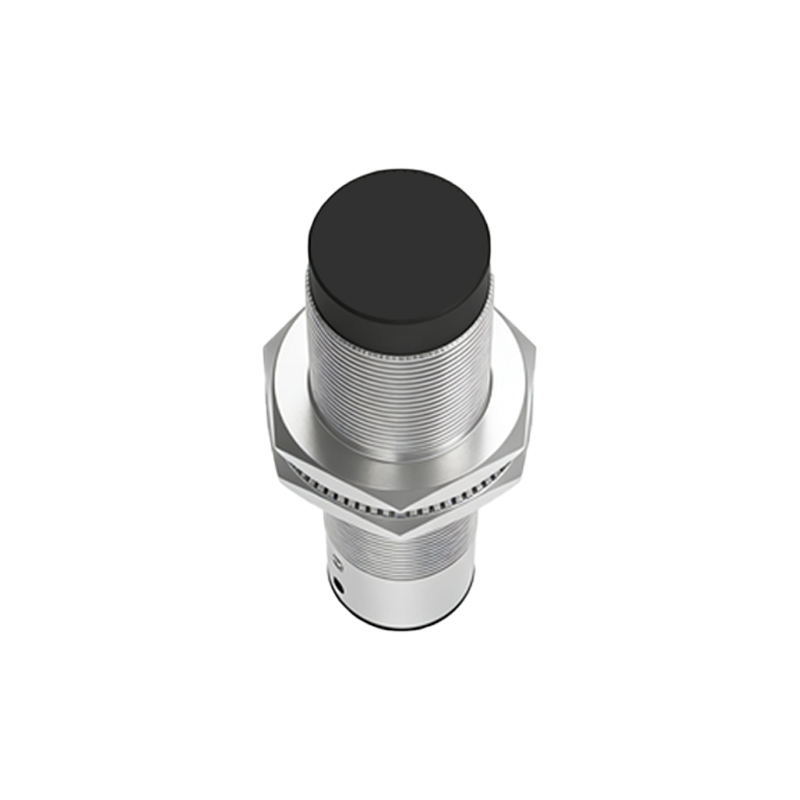
Selecting the right magnetic proximity sensor requires careful consideration of several parameters. The sensing distance, usually specified in millimeters, is critical and depends on the magnet's strength, size, and orientation. Designers must ensure reliable triggering within the application's mechanical tolerances. The type of output is another key decision. Two-wire AC/DC, three-wire NPN/PNN (sourcing or sinking), and analog or IO-Link versions offer different interfaces for PLCs (Programmable Logic Controllers) or control systems. The housing material, typically nickel-plated brass, stainless steel, or ruggedized plastic, must withstand the environmental conditions, including temperature extremes, chemical exposure, and mechanical impact. Electrical specifications like operating voltage, current rating, and protection against short-circuits and reverse polarity are equally important for system integrity.
Compared to other sensor types like inductive or capacitive proximity sensors, magnetic switches have distinct advantages. They are cost-effective for simple position detection tasks and are uniquely capable of sensing through non-ferrous materials like aluminum, plastic, or stainless steel enclosures, allowing for completely sealed designs. However, their limitation is that they can only detect magnetic fields, requiring a magnet to be attached to the target. They are also generally not suitable for very short sensing distances required for precise dimensional measurement.
Installation and maintenance are straightforward but demand attention to detail. The sensor and magnet must be aligned correctly, as the sensing distance varies significantly with axial, lateral, or frontal orientation of the magnet relative to the sensor. Securing both elements against vibration loosening is essential for long-term reliability. While largely maintenance-free, periodic checks are recommended to ensure the sensing face is clean and that the magnet has not lost its strength or become demagnetized due to high temperatures or strong opposing fields.
In conclusion, magnetic proximity switch sensors remain a vital, versatile, and reliable solution for position and speed detection. Their non-contact operation, environmental resilience, and simplicity ensure their continued relevance in designing efficient, safe, and durable automated systems. Understanding their operating principles, key specifications, and application best practices is crucial for engineers and technicians to leverage their full potential.