In the intricate world of industrial automation and consumer electronics, the spotlight often shines on the components that initiate action—the proximity sensors themselves. However, the critical partner that interprets and translates these signals, the proximity sensor receiver, operates as the indispensable, yet frequently overlooked, backbone of the entire sensing system. This component is fundamental to achieving the precision, reliability, and efficiency that modern applications demand.
At its core, a proximity sensor receiver is an electronic module designed to detect the presence or absence of an electrical signal emitted by a corresponding sensor transmitter. Unlike the sensor, which generates an electromagnetic field, ultrasonic wave, or infrared light, the receiver's sole purpose is to listen. It is meticulously engineered to capture the specific signal type it is paired with, filtering out the constant barrage of environmental noise—electrical interference, ambient light, or acoustic vibrations—that could lead to false triggers or system failures. The receiver's sensitivity and selectivity determine the system's overall accuracy and operational range.
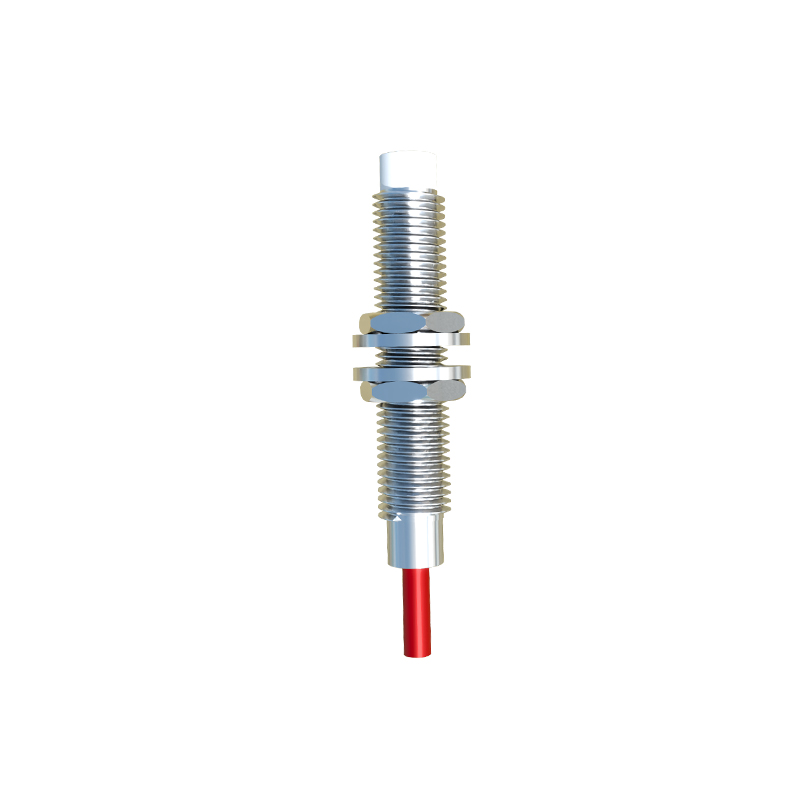
The operational principle varies with the underlying technology. In inductive systems, common for metal detection, the receiver coil detects disturbances in a high-frequency electromagnetic field. Capacitive receivers measure changes in capacitance to detect both metallic and non-metallic objects. Optical receivers, utilizing phototransistors or photodiodes, are tuned to specific wavelengths of light, often modulated to avoid interference from sunlight or other sources. Ultrasonic receivers convert reflected sound waves into electrical signals, with sophisticated circuitry to handle timing and echo processing. In each case, the receiver's circuitry conditions the weak incoming signal—amplifying it, comparing it to a set threshold, and converting it into a clean, digital output (like a PLC-compatible signal) that a controller can act upon.
The applications of these receivers are vast and touch nearly every industry. On high-speed automotive assembly lines, receivers ensure robotic arms maintain precise distance for welding or part placement, preventing costly collisions. In consumer smartphones, the miniature optical receiver works with an IR LED to deactivate the touchscreen during a call, conserving power and preventing accidental inputs. Within packaging machinery, ultrasonic receivers monitor material levels without physical contact, ensuring continuous operation. They are pivotal in safety systems, where light curtain receivers must instantly halt machinery if a beam is broken, protecting human operators. The reliability of the receiver directly impacts productivity, safety, and product quality in these scenarios.
Selecting the right proximity sensor receiver is a nuanced process. Engineers must consider several key parameters beyond just the matching sensor type. The sensing distance, or the effective range at which the receiver can reliably detect the transmitted signal, is paramount. The response time—the speed at which the receiver can process a signal change—is critical for high-speed applications. Environmental robustness is another major factor; receivers may need to be housed in rugged, IP67-rated enclosures to withstand dust, moisture, vibration, and extreme temperatures. Electrical characteristics like supply voltage, output type (NPN/PNP, analog, or IO-Link), and connection method are also essential for seamless integration into existing control architectures.
The evolution of proximity sensor receivers mirrors the broader trend towards Industry 4.0 and the Industrial Internet of Things (IIoT). Modern receivers are no longer simple signal converters. They are becoming intelligent endpoints equipped with self-diagnostic capabilities, able to report their health status, signal strength, or temperature to a central system. This predictive maintenance functionality minimizes unplanned downtime. Furthermore, advanced receivers with IO-Link communication provide detailed parameterization and real-time process data, enabling finer control and deeper analytics for optimizing entire production lines.
Despite their silent operation, the importance of a high-quality proximity sensor receiver cannot be overstated. A system is only as strong as its weakest link, and a receiver prone to interference or with slow response can cripple an otherwise sophisticated automation setup. Proper installation is equally crucial; alignment between transmitter and receiver must be precise, and lenses or faces must be kept clean to ensure optimal performance. As technology advances towards more miniaturized, energy-efficient, and networked solutions, the role of the receiver will only grow in complexity and significance. It remains the faithful interpreter in the silent dialogue between machine and environment, a true unsung hero enabling the seamless automation that defines our modern world.