In the realm of industrial automation and smart device design, the Proximity Sensor BK stands as a pivotal component, enabling machines to perceive their environment without physical contact. This technology, often simply referred to as a proximity switch or non-contact sensor, operates on the principle of detecting the presence or absence of an object within a specified range. The "BK" designation typically denotes a specific series or model family known for its reliability, standardized form factor, and consistent performance metrics across various industrial applications.
The core working mechanism of most Proximity Sensor BK units is based on electromagnetic fields or capacitive sensing. Inductive sensors, the most common type in the BK series for metal detection, generate an oscillating electromagnetic field. When a metallic object enters this field, it induces eddy currents within the object, causing a change in the oscillation amplitude. The sensor's internal circuit detects this change and triggers a switching signal. Capacitive models, on the other hand, can detect both metallic and non-metallic materials by sensing changes in capacitance when an object alters the electrostatic field around the sensor's face.
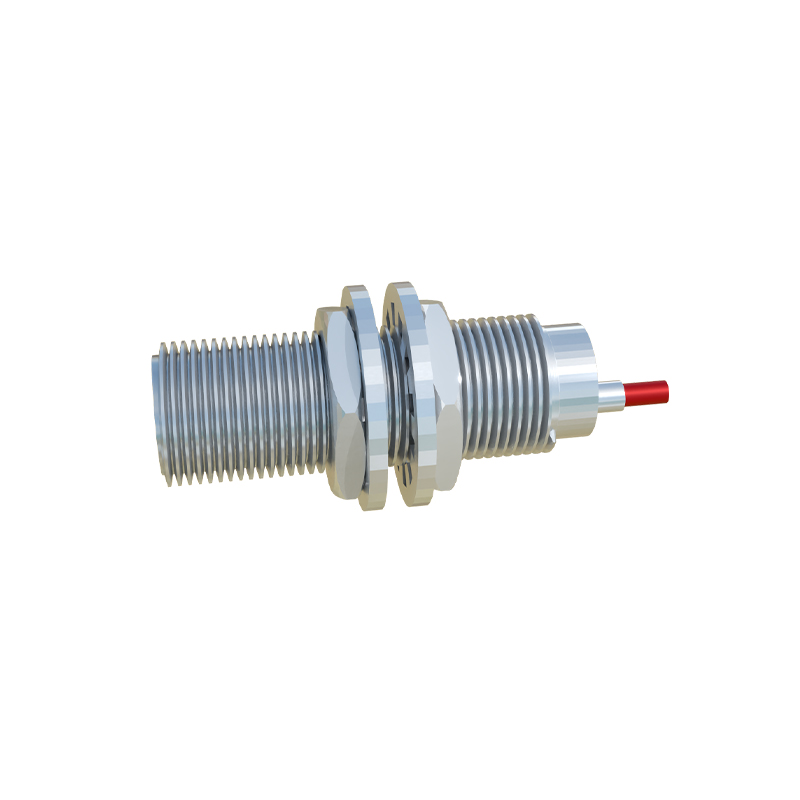
Key specifications define the performance of a Proximity Sensor BK. The sensing distance, often a few millimeters to several tens of millimeters, is a critical parameter, with models like the BK 5mm or BK 10mm being industry standards. The housing material, typically nickel-plated brass or stainless steel in the BK series, ensures durability in harsh environments. Furthermore, these sensors are characterized by their output type—commonly NPN (sinking) or PNP (sourcing) transistor outputs—and their connection method, often utilizing a robust M12 or M8 connector for quick installation and maintenance.
The applications for Proximity Sensor BK are vast and integral to modern manufacturing. On automated assembly lines, they are used for precise object counting, position verification of parts, and end-of-travel detection for robotic arms. In packaging machinery, they ensure correct bottle or box placement. Beyond factory floors, they find roles in automotive systems for seat belt detection, in elevators for floor leveling, and even in consumer appliances for touchless control interfaces. Their hermetically sealed designs make them resistant to oils, coolants, and dust, allowing reliable operation in challenging conditions like CNC machining centers.
Selecting the right Proximity Sensor BK involves a careful assessment of the operational environment. For detecting ferrous metals, a standard inductive sensor is sufficient. For applications involving aluminum, brass, or other non-ferrous metals, sensors with a reduced sensing factor must be selected. In environments with heavy electrical noise, such as near variable frequency drives, choosing a sensor with high electromagnetic compatibility (EMC) ratings is paramount. The physical installation is equally important; ensuring proper alignment, avoiding sensor-to-sensor interference, and maintaining the correct gap from the target are essential for optimal performance.
Compared to mechanical limit switches, Proximity Sensor BK units offer significant advantages. Their non-contact nature eliminates mechanical wear, leading to a vastly longer operational lifespan—often millions of cycles. They provide high switching speeds, enabling faster machine cycles. With no moving parts to jam, they offer exceptional reliability and require minimal maintenance, only periodic cleaning of the sensing face to remove debris or buildup that could attenuate the sensing field.
In conclusion, the Proximity Sensor BK represents a mature, yet continually evolving, technology that forms the sensory backbone of automated systems. Its design emphasizes robustness, repeatability, and ease of integration. From ensuring the safety of machinery by monitoring guard positions to enabling the precision of high-speed bottling lines, these sensors perform critical functions silently and efficiently. As Industry 4.0 and the Internet of Things (IoT) advance, the role of reliable, standardized sensors like the BK series will only grow, providing the essential data points that drive smarter, more responsive, and more efficient industrial operations worldwide.