In the intricate world of industrial automation, where precision and reliability are non-negotiable, a silent yet critical component works tirelessly: the proximity switch pulse sensor. This device is far more than a simple on/off trigger; it is a sophisticated transducer that converts the physical presence or motion of an object into a clean, countable electrical pulse train. This digital pulse output forms the fundamental language through which machinery communicates with control systems, enabling the high-speed counting, precise positioning, and synchronized sequencing that define modern manufacturing, packaging, and assembly lines.
Unlike traditional mechanical limit switches that require physical contact, proximity sensors operate on a non-contact principle. They emit an electromagnetic field or a beam of light. When a target object enters this field, it causes a change in the sensor's internal oscillation or light reception. For a pulse-output proximity sensor, this detection event does not result in a sustained signal. Instead, it generates a distinct, sharp electrical pulse for each detected object or for each predefined unit of motion. This pulse is a near-instantaneous transition from a low to a high voltage state and back again, creating a clear digital signal that programmable logic controllers (PLCs), counters, and tachometers can interpret with exceptional speed and accuracy.
The core technology behind these sensors varies, with inductive and optical types being most prevalent for pulse generation. Inductive proximity switches are the workhorses for detecting metallic objects. They contain a coil driven by an oscillator to create a high-frequency electromagnetic field at the sensing face. When ferrous or non-ferrous metal enters this field, eddy currents are induced in the target, damping the oscillation. The sensor's circuit detects this damping and triggers a solid-state switch to produce a crisp output pulse. They are incredibly robust, immune to dust, oil, and moisture, making them ideal for harsh industrial environments like metal stamping, CNC machining, and automotive welding.
For applications requiring detection of any material—metal, plastic, wood, or glass—optical proximity sensors, often in a through-beam or retro-reflective configuration, are employed. These function by transmitting a modulated beam of infrared or visible light. An object interrupting the beam is detected by a phototransistor or photodiode receiver. The key for pulse output is the sensor's ability to reset almost instantaneously after one detection, ready to generate a new pulse for the next object passing by. This makes them perfect for high-speed counting on conveyor belts, bottle filling lines, and pharmaceutical packaging where non-metallic items are common.
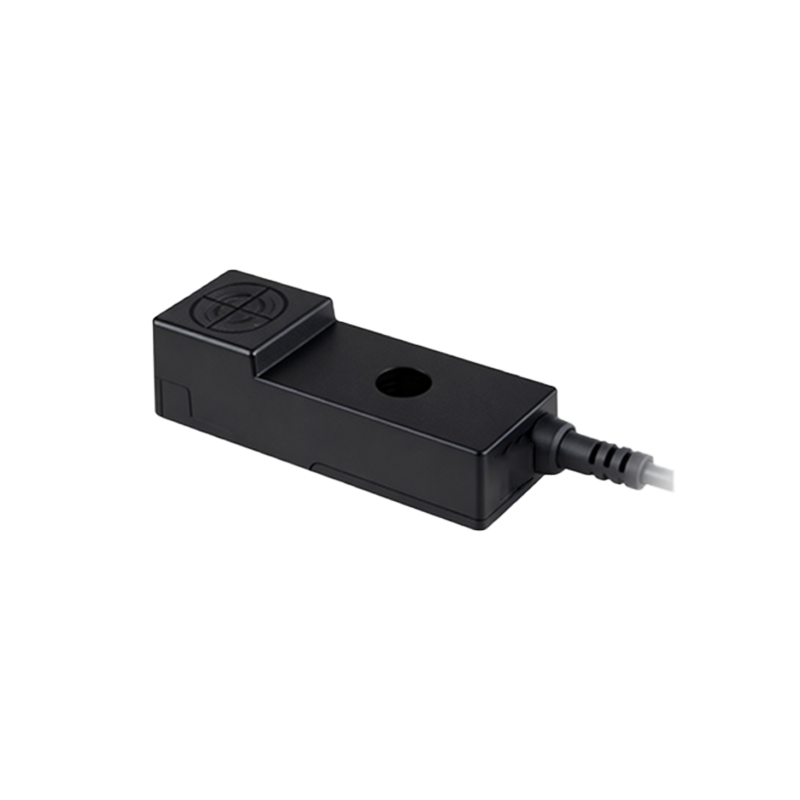
The true power of the pulse output lies in its application. In rotary motion control, a proximity sensor paired with a slotted disk or gear teeth on a shaft becomes a rotary encoder. Each tooth or slot passing the sensor generates one pulse, allowing the system to calculate exact rotational speed (RPM), position, and direction. In linear motion, sensors placed along a track can provide positional feedback for automated guided vehicles (AGVs) or linear actuators. The most common use, however, is high-speed counting and batching. Whether counting screws, bottles, or sheets of paper, each pulse represents one unit, allowing controllers to execute precise batch stops, fill operations, or packaging sequences.
Selecting the right proximity pulse sensor requires careful consideration of several parameters. The sensing distance, which varies from a few millimeters to several tens of millimeters, must be appropriate for the application to avoid false triggers or missed counts. Response frequency, measured in Hertz (Hz), is critical; it defines how many pulses per second the sensor can reliably generate. For high-speed production lines, sensors with frequencies in the kilohertz range are essential. The output configuration (typically NPN or PNP transistor sourcing) must be compatible with the control system's input card. Environmental factors like temperature extremes, washdown conditions, or exposure to welding spatter dictate the required housing material and ingress protection (IP) rating.
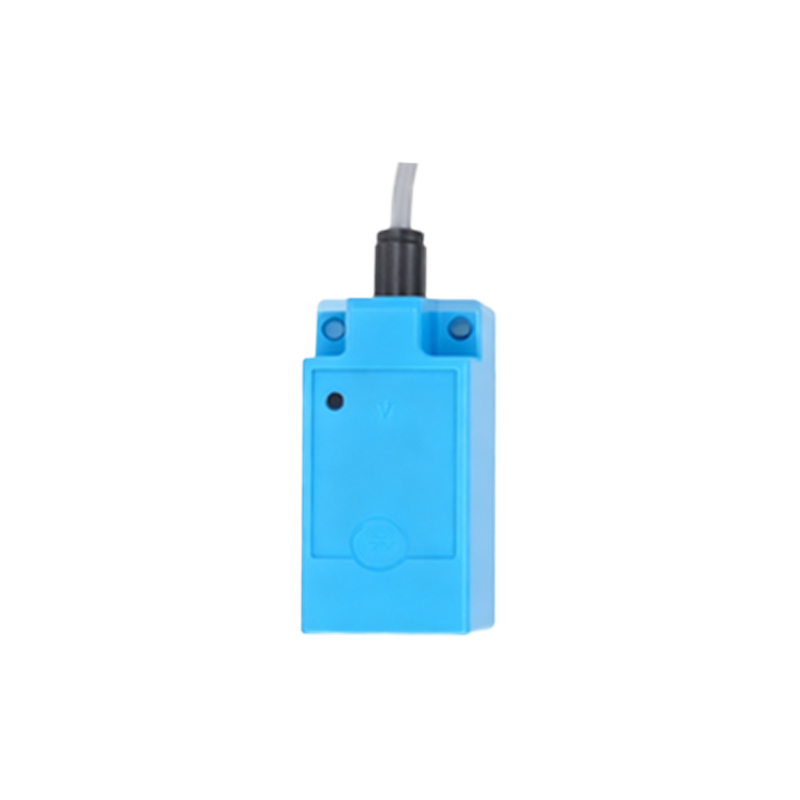
Installation and maintenance are straightforward but crucial for optimal performance. Sensors must be securely mounted to prevent vibration-induced errors, with proper alignment between the sensor and the target. For inductive sensors, ensuring the correct target material and size is used for the rated sensing distance is key. Regular checks for accumulated debris on the sensing face, especially for optical sensors, and verification of the output signal with a simple LED indicator or multimeter can prevent costly downtime. The solid-state design of these sensors grants them a long operational life, often measured in millions of cycles, far outperforming any mechanical switch.
As Industry 4.0 and the Industrial Internet of Things (IIoT) advance, the role of the proximity pulse sensor is evolving. Modern sensors now come with integrated IO-Link communication, allowing them to transmit not just the pulse stream, but also diagnostic data like operating temperature, signal strength, and remaining lifespan to supervisory systems. This enables predictive maintenance, where a controller can alert technicians to a degrading sensor before