In the realm of industrial automation and smart systems, the ability to detect the presence, absence, or position of an object without physical contact is paramount. Photoelectric proximity sensors stand as a cornerstone technology enabling this capability. These devices operate on a simple yet powerful principle: they use light to sense objects. A photoelectric sensor typically consists of an emitter that projects a light beam and a receiver that detects changes in the received light signal. When an object interrupts or reflects this beam, the sensor's output state changes, triggering a control action in a machine or process.
The core working principle hinges on the modulation of light. Most modern photoelectric sensors use pulsed LED light, often in the visible red, infrared, or laser spectrum. This modulation makes the sensor immune to ambient light interference, ensuring reliable operation in varied lighting conditions. The receiver is tuned to respond only to the specific frequency of the emitted light, filtering out other light sources.
There are three primary operating modes for photoelectric proximity sensors, each suited for different applications. The first is the through-beam mode, also known as the opposed mode. This configuration uses separate, physically aligned emitter and receiver units. The object to be detected passes between them, breaking the light beam. This mode offers the longest sensing range and highest reliability, as it requires a complete interruption of the beam. It is ideal for precise detection of small objects or in environments with potential optical contamination on the lenses.
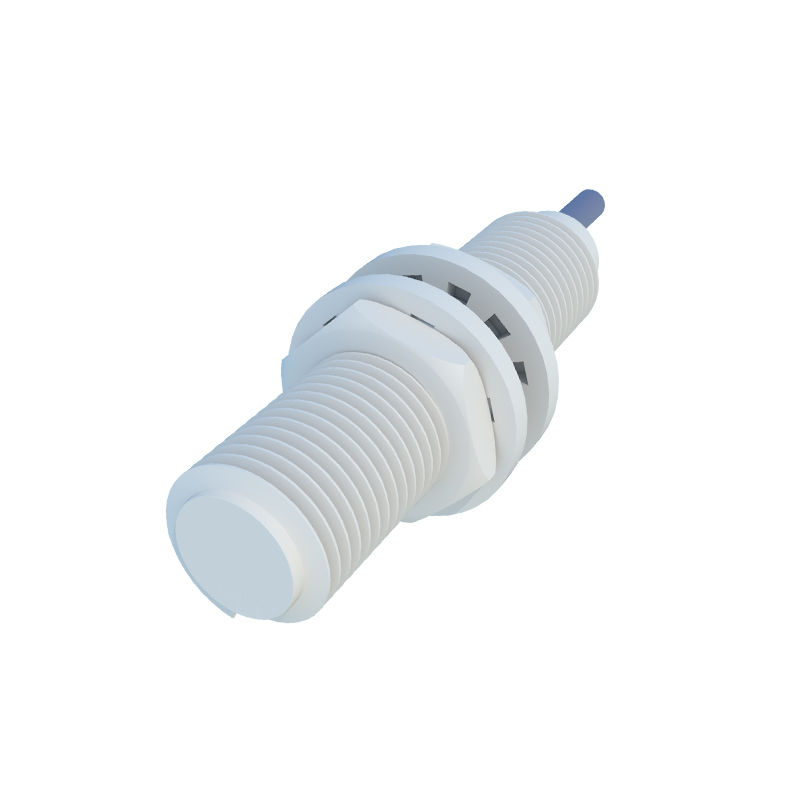
The second common mode is the retro-reflective mode. Here, the emitter and receiver are housed in the same unit. The sensor projects a beam towards a specially designed reflector, which bounces the light directly back to the receiver. An object entering the sensing field blocks this reflected beam. This mode provides a good balance of range and installation simplicity, as it requires wiring only on one side. However, it can be fooled by highly reflective objects that might mimic the reflector's function.
The third, and most versatile for proximity detection, is the diffuse mode, often called the proximity mode. In this setup, both emitter and receiver are in a single housing, and the sensor detects light reflected directly off the target object itself. The sensing distance depends on the object's size, color, and surface texture. Dark, matte, or non-reflective surfaces are more challenging to detect than light, shiny ones. Advanced diffuse sensors use background suppression or fixed-field teaching techniques to ignore distant objects or backgrounds, allowing for precise detection at a set distance.
Key performance specifications define a sensor's suitability for an application. Sensing range is the maximum distance at which a standard target can be reliably detected. Response time indicates how quickly the sensor can react to a change in state, critical for high-speed production lines. Light sources vary; infrared sensors are common for long-range and immunity to visible light, while red light sensors provide a visible beam for easy alignment. Laser sensors offer extremely precise, small-spot detection for minute objects or exact positioning.
The applications of photoelectric proximity sensors are vast and integral to modern industry. In packaging and material handling, they count products on conveyors, detect fill levels in bottles, and ensure proper case sealing. In the automotive sector, they verify the presence of components in assembly robots and monitor automated guided vehicle (AGV) pathways. In electronics manufacturing, they ensure the precise placement of tiny circuit boards. Beyond traditional factories, they are found in automated doors, parking garage vehicle detection, and even in consumer printers to detect paper.
Selecting the right sensor involves careful consideration of the operational environment. Factors such as dust, fog, steam, or vibration can affect performance. Sensors are available with robust housings rated by Ingress Protection (IP) codes to withstand washdowns, oils, and corrosive chemicals. The output type must also match the control system, with options including discrete NPN/PNP transistors, analog current (4-20mA), or digital IO-Link for advanced diagnostics and parameter setting.
The evolution of photoelectric sensors continues with trends towards miniaturization, increased intelligence, and enhanced connectivity. Smart sensors with IO-Link communication can report operating hours, signal strength, contamination warnings, and temperature, enabling predictive maintenance and reducing downtime. Furthermore, the integration of multiple sensing principles into one device, such as combining photoelectric and ultrasonic sensing, is creating more adaptive solutions for complex detection challenges.
In summary, photoelectric proximity sensors provide a reliable, fast, and non-contact method for object detection. Their versatility across different operating modes and continual technological advancements make them an indispensable tool for improving efficiency, safety, and precision in automated systems worldwide. Understanding their principles and capabilities is the first step toward leveraging their potential in any application requiring precise, non-contact sensing.