In the realm of industrial automation, scientific research, and advanced manufacturing, temperature control is a critical parameter that dictates the quality, efficiency, and safety of countless processes. Traditional temperature sensors, such as thermocouples and resistance temperature detectors (RTDs), have served reliably for decades. However, the advent of laser temperature controller sensors represents a paradigm shift, offering non-contact, high-speed, and exceptionally precise thermal measurement capabilities. This technology is revolutionizing fields where traditional methods fall short.
At its core, a laser temperature controller sensor operates on the principle of optical pyrometry. It does not physically touch the target object. Instead, it emits a low-power laser beam towards the surface. The sensor then analyzes the characteristics of the reflected or emitted infrared radiation from that specific spot. The key parameter measured is often the infrared energy, which is directly correlated to the object's temperature according to Planck's radiation law. Sophisticated algorithms within the sensor's electronics convert this radiative data into an accurate temperature reading, typically displayed in real-time on a connected interface or fed directly into a control system.
The advantages of this non-contact methodology are profound. First, it eliminates the risk of contamination or physical alteration of the target, which is crucial in semiconductor fabrication, pharmaceutical production, and food processing. Second, it allows for the measurement of moving objects, such as on conveyor belts or rotating machinery components, without any mechanical wear. Third, the response time is extraordinarily fast—often in the millisecond range—enabling dynamic thermal processes to be monitored and controlled with unprecedented agility. This is vital in applications like laser welding or additive manufacturing, where heat input must be precisely managed in real-time to ensure structural integrity.
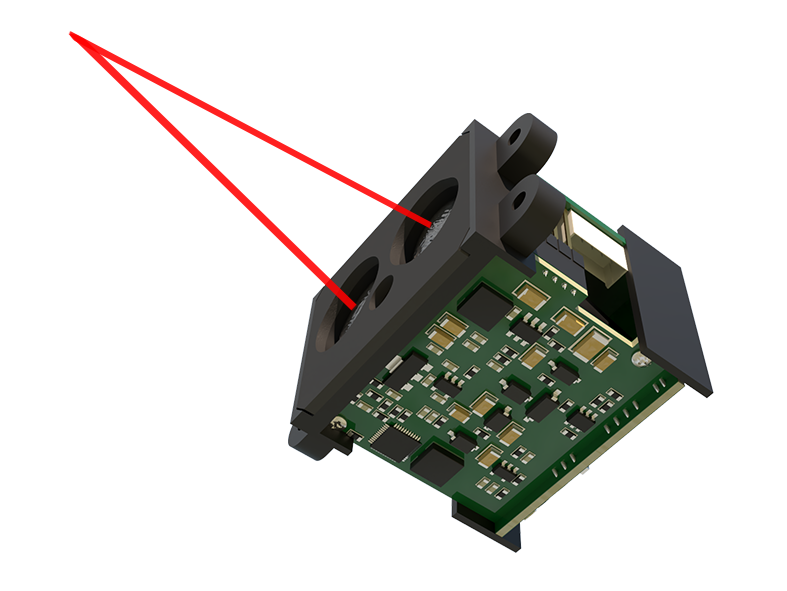
The precision of laser temperature sensors is another standout feature. They can achieve remarkable spatial resolution, measuring temperature on a spot as small as a few micrometers in diameter. This allows for thermal mapping of micro-components or identifying hot spots on circuit boards that would be invisible to bulk-measurement tools. Furthermore, they can handle extremely high temperatures, often exceeding 3000°C, which is beyond the range of most contact sensors, making them ideal for monitoring furnaces, molten metals, and plasma processes.
Applications for laser temperature controller sensors are vast and growing. In the electronics industry, they are used to monitor the temperature of delicate components during soldering and testing. In automotive manufacturing, they ensure proper heat treatment of engine parts and curing of paints. In research laboratories, they facilitate experiments in material science, chemistry, and physics where precise thermal profiles are required. The renewable energy sector employs them to monitor solar cell efficiency and the thermal management of battery systems. Even in the medical field, they find use in non-invasive diagnostic tools and thermal therapy equipment.
Implementing a laser temperature control system requires careful consideration. The emissivity of the target material—its efficiency in emitting infrared radiation—must be correctly configured in the sensor's settings for an accurate reading, as different materials emit radiation differently. Environmental factors like dust, steam, or ambient light can potentially interfere with the laser path, though many modern sensors are equipped with filters and advanced optics to mitigate these issues. The choice between a fixed-installation sensor and a portable handheld unit depends on the application's needs for mobility versus continuous monitoring.
Looking ahead, the integration of laser temperature sensors with Industry 4.0 and the Internet of Things (IoT) is a clear trend. Smart sensors with built-in communication protocols can stream temperature data directly to cloud platforms for analytics, predictive maintenance, and centralized process optimization. This connectivity transforms temperature from a simple measured variable into a rich data point for holistic system intelligence.
In conclusion, laser temperature controller sensors are not merely an incremental improvement but a transformative technology for thermal measurement. By providing accurate, non-contact, and rapid temperature feedback, they empower engineers and scientists to push the boundaries of process control, product quality, and innovative research. As technology advances and costs decrease, their adoption is set to expand further, becoming an indispensable tool in the pursuit of precision engineering and manufacturing excellence across the globe.