Proximity sensors are fundamental components in modern automation, robotics, and countless electronic devices. This lesson plan is designed to provide a comprehensive, hands-on understanding of these versatile sensors, moving from basic principles to practical applications. The goal is to equip learners with the knowledge to select, integrate, and troubleshoot common proximity sensor types effectively.
The journey begins with a core question: What is a proximity sensor? Simply put, it is a non-contact sensor that detects the presence or absence of an object within a specified range without any physical contact. This key characteristic makes them ideal for applications where reliability, speed, and avoiding mechanical wear are critical. We will explore the underlying physics that enable this detection, primarily focusing on electromagnetic fields, capacitance changes, and sound waves.
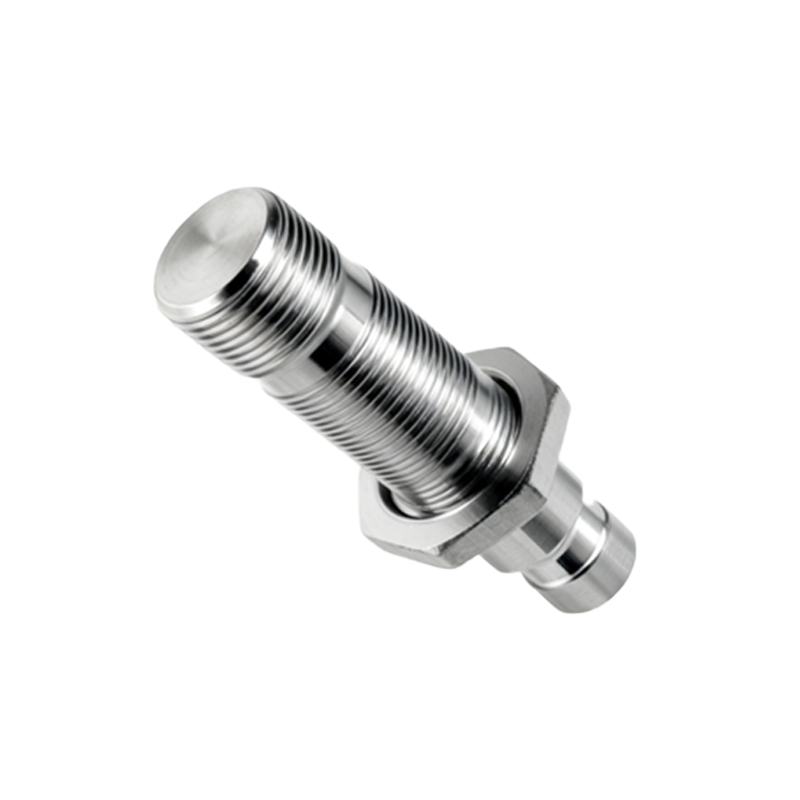
Next, we delve into the primary types of proximity sensors, each with its own operating principle and ideal use case. Inductive proximity sensors are the workhorses of industrial automation. They generate an electromagnetic field and detect eddy currents induced in metallic targets. Their robustness and insensitivity to non-metallic objects make them perfect for counting metal parts or determining the position of a machine component. Capacitive proximity sensors, on the other hand, can detect both metallic and non-metallic materials like liquids, plastics, or wood. They work by sensing changes in capacitance caused by the intrusion of any material into their electrostatic field. This makes them suitable for level detection in tanks or detecting filled packages on a conveyor belt.
Ultrasonic sensors use sound waves beyond human hearing. They emit a high-frequency pulse and measure the time it takes for the echo to return, calculating distance. These sensors are excellent for precise distance measurement, object detection in challenging environments (like dust or fog), and detecting transparent or dark objects that confuse optical sensors. Finally, photoelectric sensors, often considered a proximity subtype, use a light beam (visible or infrared). They come in through-beam, retro-reflective, and diffuse reflective modes, offering solutions for long-range detection and specific material challenges.
A crucial part of the lesson involves understanding sensor specifications. Key parameters include sensing range (nominal and effective), repeatability, response time, and output type (e.g., NPN/PNP transistor, analog, IO-Link). We will practice reading datasheets to match a sensor's capabilities to a task's requirements, such as detecting a small fastener at 2mm versus a pallet at 200mm.
The practical lab section forms the heart of this plan. Using a modular training system or a simple microcontroller board like an Arduino or Raspberry Pi, students will complete a series of experiments. Activity one involves wiring an inductive sensor to a programmable logic controller (PLC) or microcontroller to turn on an LED when a metal object is presented. Activity two challenges students to use a capacitive sensor to distinguish between a container filled with water and an empty one. Activity three tasks them with configuring an ultrasonic sensor to measure distance and display it on a screen, noting the effects of angle and target material on accuracy.
Troubleshooting is an essential skill. Common issues include incorrect sensor type selection (e.g., using an inductive sensor to detect plastic), improper installation (sensor mounted too far or misaligned), electrical interference, and environmental factors like temperature extremes or contamination. The lesson includes diagnostic flowcharts and group discussions on real-world failure scenarios.
Finally, we explore advanced and emerging applications. This includes the role of proximity sensors in the Internet of Things (IoT) for smart homes and predictive maintenance, their use in autonomous vehicles for obstacle detection, and their integration into consumer electronics like smartphones (for turning off the screen during a call) and touchless faucets. The lesson concludes with a capstone project where students design a simple automated system, such as a parts counter or a door opener, specifying all sensors and justifying their choices based on cost, environment, and performance needs.
This structured approach ensures learners not only grasp the theory but also develop the practical intuition needed to work with proximity sensors confidently in technical fields.