In modern industrial environments, the ability to accurately detect the presence, absence, or position of materials is fundamental to automation, safety, and efficiency. Proximity sensors have emerged as a critical technology for this purpose, offering non-contact detection of various objects without physical interaction. These devices operate by emitting an electromagnetic field or a beam of radiation and monitoring for changes in the field or return signal. The primary advantage is their reliability in harsh conditions where physical contact might cause wear, contamination, or damage.
There are several main types of proximity sensors used for material detection, each with distinct operating principles and ideal applications. Inductive proximity sensors are widely used for detecting metallic objects. They generate an oscillating electromagnetic field. When a metal target enters this field, it induces eddy currents within the target, which causes a change in the sensor's oscillation amplitude. This change triggers the sensor's output switch. These sensors are robust, resistant to dust and moisture, and are perfect for detecting metal parts on assembly lines, in machine tools, or for counting metallic objects.
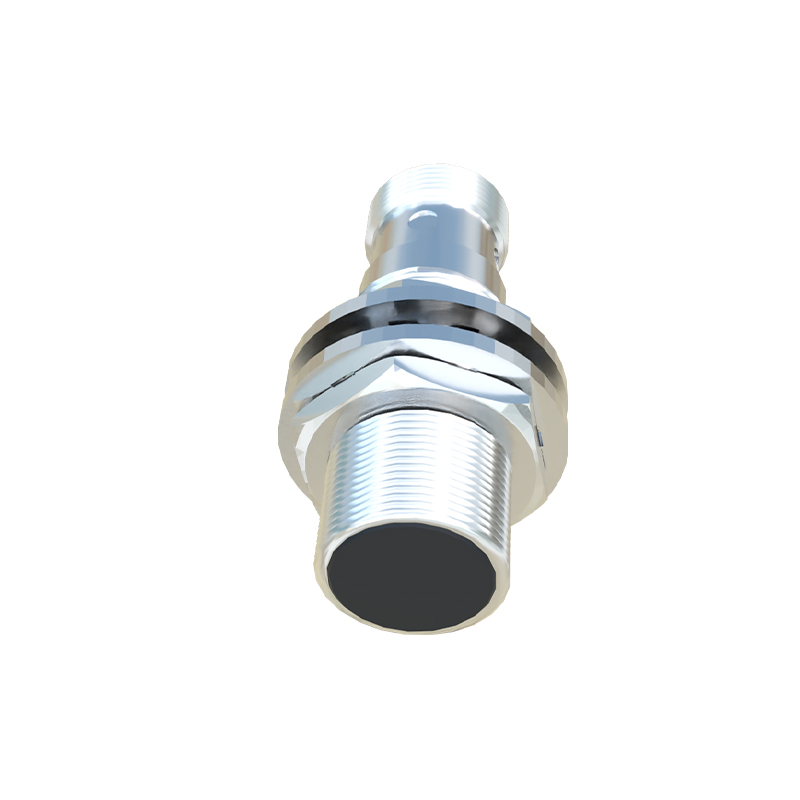
Capacitive proximity sensors, on the other hand, can detect both metallic and non-metallic materials, including liquids, plastics, wood, and granules. They function by generating an electrostatic field. Any object that enters this field alters the capacitance of the sensor's circuit, prompting a state change in the output. This makes them exceptionally versatile for applications like detecting fill levels in non-metallic containers, monitoring the presence of plastic or glass bottles on a conveyor, or sensing wood or paper products.
Ultrasonic proximity sensors use sound waves beyond the human hearing range. They emit high-frequency ultrasonic pulses and measure the time it takes for the echo to return from a target object. This time-of-flight measurement allows them to detect objects regardless of material, color, or transparency. They are excellent for detecting bulk materials, monitoring liquid levels in tanks, and handling objects with complex or irregular surfaces where other sensors might struggle.
Photoelectric sensors, while sometimes categorized separately, function as a form of proximity detection using light beams. They consist of an emitter (light source) and a receiver. The presence of an object is detected by either the interruption of the beam (through-beam), the reflection of the beam back to the receiver (retro-reflective), or the reflection from the object itself (diffuse reflective). They are highly effective for long-range detection and can sense a vast array of materials, making them common in packaging, material handling, and logistics.
The selection of the appropriate proximity sensor for material detection depends on several key factors. The material composition of the target is paramount; inductive for metals, capacitive for nearly anything else. The required sensing distance, or range, varies significantly between types. Environmental conditions such as temperature extremes, presence of dust, oil, or water spray (requiring specific Ingress Protection ratings), and electrical noise must be carefully considered. The required response speed and output type (e.g., digital NPN/PNP, analog) also influence the choice.
Implementing proximity sensors effectively requires proper installation and configuration. Mounting position, orientation, and distance from the target must be precise to ensure reliable operation. Engineers must also account for factors like sensor hysteresis—the difference between the switch-on and switch-off points—to prevent rapid, unwanted switching in the presence of vibration. Regular maintenance, though minimal due to their non-contact nature, involves keeping sensing faces clean and checking for physical damage.
In conclusion, proximity sensors are indispensable components in industrial material detection. By providing reliable, non-contact sensing of diverse materials, they enable precise control, enhance safety by monitoring machine guards and operator zones, and improve overall system productivity. From inductive sensors on a robotic welding cell to capacitive sensors in a food processing plant or ultrasonic sensors in a bulk silo, the correct application of this technology is a cornerstone of intelligent, automated manufacturing and material handling processes. Their continued evolution, including miniaturization and increased integration with Industrial Internet of Things (IIoT) networks for predictive maintenance, promises even greater capabilities in the future.