In the world of industrial automation and safety systems, through beam photoelectric sensors, also known as opposed mode sensors, stand as a cornerstone technology. Their fundamental principle is elegantly simple yet incredibly effective, providing reliable object detection across a vast array of demanding environments. Unlike other sensing modes, the through beam configuration offers unparalleled performance in terms of sensing range and environmental immunity.
The core operating principle involves two separate units: a transmitter and a receiver. The transmitter unit continuously emits a beam of light, typically infrared, laser, or visible red light. This beam is projected directly towards the receiver unit, which is positioned precisely opposite the transmitter. The receiver's sole function is to monitor the incoming light beam. When an opaque object passes between the two units, it interrupts the light path. The receiver detects this loss of signal and triggers an output switch. This "break-the-beam" method is the defining characteristic of through beam sensors.
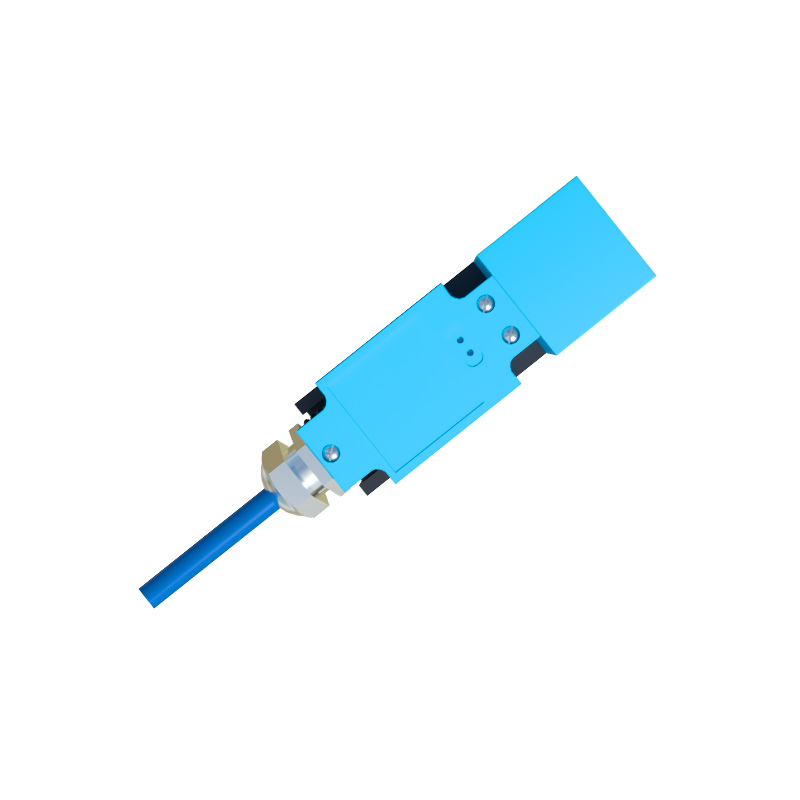
This separation of transmitter and receiver grants through beam photoelectric sensors their most significant advantages. First and foremost is their exceptional sensing distance. Since the light beam travels directly from one point to another without relying on reflection, these sensors can achieve ranges far exceeding other types—from a few centimeters up to several hundred meters in specialized models. Secondly, they possess high immunity to environmental factors. Issues such as target color, reflectivity, surface finish, or material have minimal to no effect on the sensor's operation. Whether detecting a clear glass bottle, a matte black rubber belt, or a shiny metal part, the sensor reacts consistently because it only cares about the presence or absence of the beam. Furthermore, they are less susceptible to ambient light interference and accumulation of dirt on the lenses compared to reflective types, though keeping lenses clean is always recommended for optimal performance.
The applications for through beam photoelectric sensors are extensive and critical. In manufacturing and packaging lines, they are used for precise object counting, jam detection, and verifying the presence of items on conveyors. They safeguard automated machinery by ensuring parts are correctly positioned before a process cycle begins. In material handling, they monitor the fill level of bins or silos by detecting the presence of material at a specific height. Perhaps one of their most vital roles is in safety, where they create invisible safety curtains or light guards around hazardous machinery like presses, robots, or saws. When the beam is broken, the machine is instantly stopped or prevented from starting, protecting personnel.
Selecting the right through beam sensor requires careful consideration of several key parameters. The required sensing distance is the primary factor, dictating the necessary optical power. The environment is crucial; sensors are available with robust housings (often IP67 or higher) for washdown or outdoor use, and some feature specialized coatings or materials for corrosive atmospheres. The choice of light source matters: infrared is common for long range and discreet operation, red light is easy for alignment, and laser beams provide extremely precise detection points for small objects. Output type must match the control system, with options including NPN, PNP transistors, or relay contacts. Finally, consider additional features like built-in timers, diagnostic LEDs, or synchronization capabilities for multiple sensors in close proximity to prevent crosstalk.
Installation and alignment, while conceptually straightforward, are critical steps. The units must be securely mounted to prevent vibration from misaligning the beam. Most sensors incorporate alignment aids like visible light beams or bright indicator LEDs. For long-range applications, the use of alignment tools or precise mounting fixtures is often necessary. Regular maintenance involves checking for physical damage and ensuring the lenses remain free of obstructions, dust, or condensation.
In comparison to diffuse reflective or retro-reflective sensors, through beam types offer the highest reliability for long-range or critical detection tasks, albeit at a slightly higher cost and installation complexity due to the need for two separate devices and wiring runs. However, for applications where performance cannot be compromised, their advantages are decisive.
As technology advances, through beam photoelectric sensors continue to evolve. Modern versions incorporate advanced diagnostics, IO-Link communication for digital parameter setting and condition monitoring, and even more robust designs for extreme temperatures and pressures. They remain an indispensable, reliable solution for countless detection challenges, forming the invisible eyes that keep industrial processes running smoothly and safely. Their simple principle of a broken beam continues to be a fundamental and trusted method in the engineer's toolkit.