In the rapidly evolving landscape of robotics and automation, laser sensor cars represent a fascinating convergence of precision engineering, real-time data processing, and autonomous navigation. These vehicles, often referred to as autonomous mobile robots or smart carts, utilize laser-based sensing as their primary perception system. Unlike simpler infrared or ultrasonic sensors, laser sensors, particularly LiDAR (Light Detection and Ranging), emit pulsed light waves to create highly detailed, three-dimensional maps of the surrounding environment. This capability forms the bedrock of their functionality.
The core technology hinges on a rotating or solid-state LiDAR unit mounted on the vehicle. As the car moves, the sensor continuously scans its surroundings, measuring the time it takes for each laser pulse to bounce back from objects. This data, known as a point cloud, is processed by an onboard computer to identify obstacles, map terrain, and calculate safe, efficient paths. This process happens in milliseconds, allowing for dynamic navigation in complex settings. The integration of this data with other systems, such as inertial measurement units (IMUs) and wheel encoders, provides robust localization—knowing precisely where the vehicle is within its generated map.
The applications for laser sensor cars are vast and transformative. In industrial logistics, they are the workhorses of modern smart warehouses. These Automated Guided Vehicles (AGVs) or Autonomous Mobile Robots (AMRs) transport goods between storage shelves and packing stations with unparalleled efficiency, operating 24/7 without fatigue. They navigate narrow aisles, avoid unexpected obstacles like fallen packages or personnel, and optimize routes in real-time to speed up order fulfillment. Beyond warehouses, they are deployed for inventory scanning, where their laser systems can automatically count and log stock levels on high shelves.
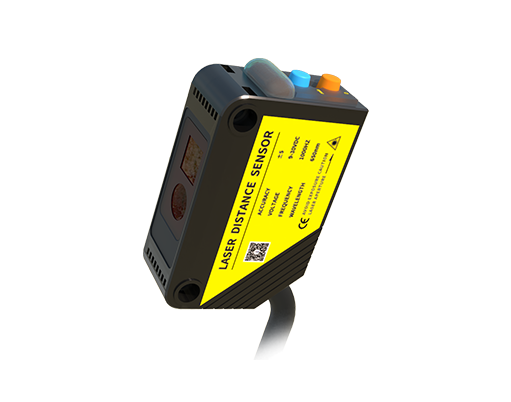
Another critical domain is research and development. Universities and tech companies use scaled-down laser sensor car platforms as essential tools for advancing algorithms in simultaneous localization and mapping (SLAM), computer vision, and machine learning. These platforms serve as affordable testbeds for developing the next generation of self-driving car software. Furthermore, in hazardous environments such as nuclear facilities, mining tunnels, or disaster zones, laser-equipped robotic vehicles can perform inspection and reconnaissance tasks, keeping human operators at a safe distance while providing accurate spatial data.
The advantages of using laser sensors are compelling. They offer high accuracy and resolution at long ranges, perform well in varying lighting conditions (unlike cameras), and provide direct distance measurements. However, challenges persist. Traditional mechanical LiDAR can be expensive and contain moving parts prone to wear. Adverse weather conditions like heavy fog or rain can scatter laser beams, degrading performance. This has spurred innovation in cost-effective solid-state LiDAR and sensor fusion—combining LiDAR data with cameras and radar to create a redundant, more resilient perception system.
Looking ahead, the future of laser sensor cars is intertwined with advancements in artificial intelligence and chip design. Edge computing allows for more processing to occur on the vehicle itself, reducing latency. Machine learning models are getting better at interpreting point cloud data to not just detect objects, but classify them—distinguishing between a cardboard box, a metal rack, and a human worker. The proliferation of 5G connectivity may also enable more complex coordination between fleets of these vehicles in large facilities.
From streamlining global supply chains to pioneering autonomous vehicle technology, laser sensor cars are more than just gadgets; they are pivotal tools in the fourth industrial revolution. As the technology becomes more affordable and robust, we can expect to see these intelligent vehicles navigating an ever-broader array of spaces, from factory floors and hospital corridors to agricultural fields and urban sidewalks, quietly reshaping how goods and information move through our world.