In the realm of industrial automation and quality control, precision is paramount. Among the array of advanced sensing technologies, industrial line laser sensors have emerged as a cornerstone for non-contact, high-accuracy measurement and inspection. These sophisticated devices project a thin, fan-shaped laser line onto a target surface. By analyzing the deformation or displacement of this line using integrated cameras or optical receivers, they can capture detailed three-dimensional profiles, dimensions, and surface features with remarkable speed and fidelity.
The core principle behind these sensors is laser triangulation. The sensor emits a laser line, and its reflection from the object's surface is captured by a receiver positioned at a known angle. Any variation in the object's height or contour causes a shift in the position of the laser line in the receiver's field of view. Advanced algorithms then process this data to generate precise 3D coordinates, enabling micron-level measurements. This capability is indispensable across diverse sectors, from automotive and aerospace to electronics and heavy machinery.

Key applications are vast and transformative. In automotive manufacturing, line laser sensors perform critical tasks such as weld seam inspection, gap and flush measurement between body panels, and dimensional verification of engine components. They ensure that every part meets stringent tolerances, directly impacting safety and performance. In the electronics industry, these sensors inspect printed circuit board (PCB) coplanarity, component placement accuracy, and solder paste volume, preventing costly defects in high-volume production. Furthermore, in logistics and warehousing, they facilitate precise volume measurement of packages for optimal storage and shipping.

The advantages over traditional contact probes or 2D vision systems are significant. As non-contact tools, they eliminate mechanical wear, measurement force errors, and potential damage to delicate surfaces. Their ability to capture continuous profile data along a line, rather than single points, provides comprehensive inspection in a single pass, drastically increasing throughput. Modern sensors integrate robust housings rated for IP67 or higher, allowing reliable operation in harsh environments with dust, coolant, and vibration. Features like integrated Ethernet interfaces, programmable logic, and compatibility with industrial protocols (e.g., PROFINET, EtherNet/IP) simplify integration into existing factory networks and Industry 4.0 frameworks.
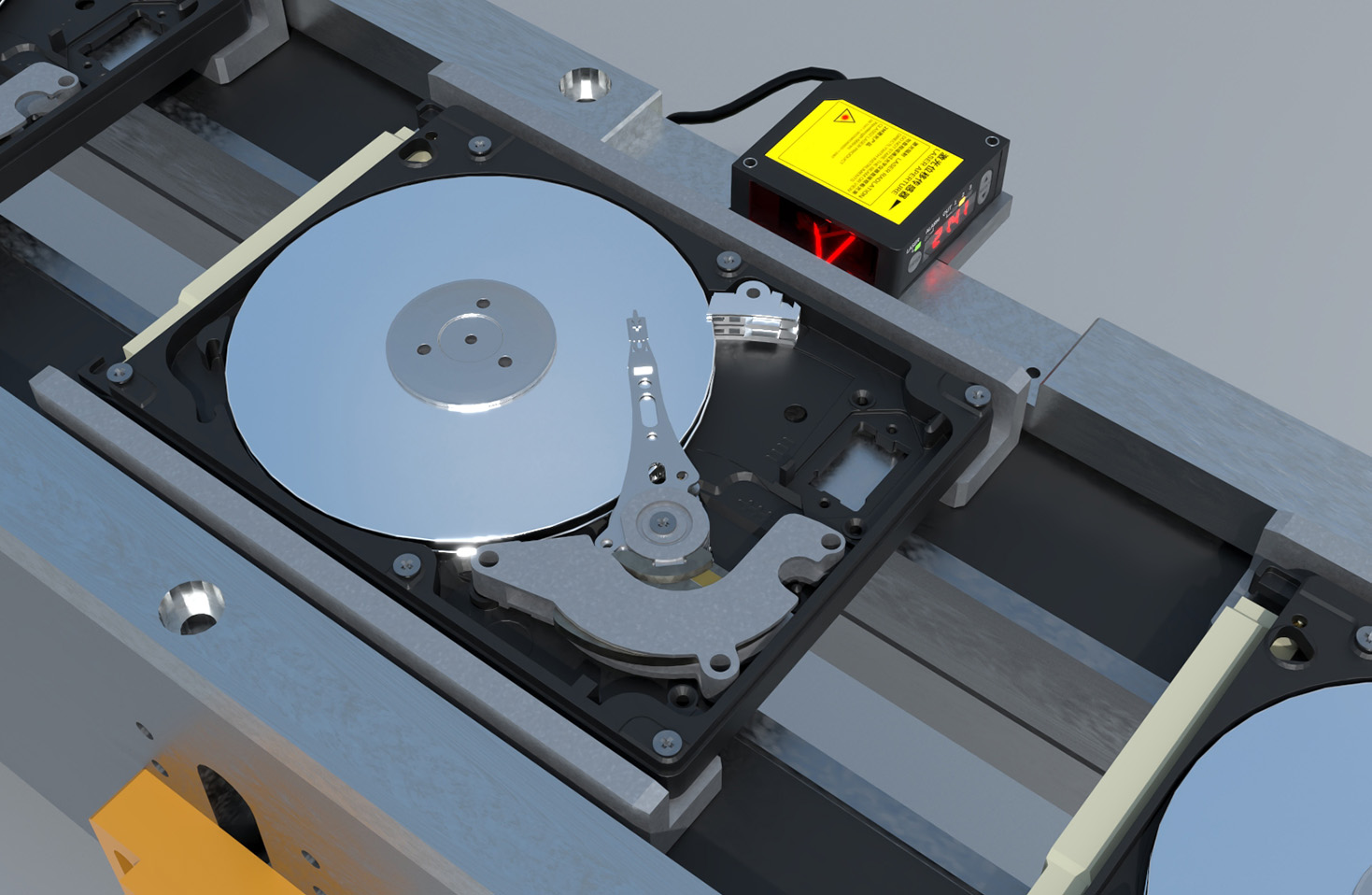
Selecting the right line laser sensor requires careful consideration of several parameters. Measurement range, resolution, scanning frequency, and laser class are primary factors. The required profile points per scan and the sensor's field of view must align with the target's size and the desired detail level. Environmental factors like ambient light, surface reflectivity (from matte to highly reflective), and operational distance also influence performance. Leading manufacturers offer models with blue laser technology, which provides superior performance on shiny or organic surfaces compared to traditional red lasers, by minimizing specular reflection interference.
Implementation best practices are crucial for maximizing ROI. Proper mounting and alignment ensure consistent data capture. Calibration against known standards guarantees long-term accuracy. Integrating the sensor's data stream with manufacturing execution systems (MES) or statistical process control (SPC) software enables real-time monitoring, trend analysis, and proactive process adjustment, moving beyond simple pass/fail inspection to predictive quality management.
Looking ahead, the evolution of industrial line laser sensors is intertwined with smarter, more connected manufacturing. The integration of on-sensor edge computing for initial data processing reduces the load on central systems and enables faster response times. Advancements in multi-line projection and high dynamic range (HDR) imaging are expanding capabilities for measuring complex geometries and challenging surfaces. As a critical enabler of digital twins and closed-loop manufacturing, the line laser sensor continues to push the boundaries of what is measurable, driving efficiency, quality, and innovation on the factory floor. Their role is not merely to see but to understand dimensions with unparalleled clarity, forming the eyes of intelligent automation systems.