In the world of industrial automation, robotics, and advanced measurement, laser sensors stand out as a cornerstone technology. Their ability to deliver non-contact, high-speed, and incredibly accurate data makes them indispensable. But with a vast array of models and manufacturers, identifying the "best" laser sensor is not a one-size-fits-all proposition. The optimal choice hinges entirely on the specific application, required performance parameters, and environmental conditions. This guide explores the key factors to consider and highlights leading technologies and manufacturers that consistently set the benchmark for quality and reliability.
The fundamental principle behind a laser sensor involves emitting a focused beam of light and analyzing the reflected signal. Different technologies interpret this reflection in distinct ways to measure distance, displacement, position, or even profile. The three primary technologies are triangulation, time-of-flight (ToF), and confocal chromatic.
Triangulation sensors are the go-to solution for high-precision, short-range measurements. They work by projecting a laser spot onto a target. The reflected light is focused onto a position-sensitive detector (like a CCD or CMOS array) at a known angle. As the target distance changes, the position of the light spot on the detector shifts. This geometric relationship allows for resolutions down to the sub-micron level. Brands like Keyence (with their IL series) and Micro-Epsilon (known for their optoNCDT series) dominate this space, offering exceptional accuracy for tasks like thickness gauging, vibration analysis, and part inspection. Their limitations are a relatively small measuring range and sensitivity to surface color and texture.

For longer ranges, from a few centimeters to several hundred meters, Time-of-Flight (ToF) sensors are often preferred. These sensors calculate distance by measuring the time it takes for a laser pulse to travel to the target and back. They are robust, fast, and generally less sensitive to surface properties than triangulation sensors. They excel in applications like vehicle detection, bulk level monitoring, and AGV (Automated Guided Vehicle) navigation. Companies like SICK (with its DT35 or TIM series) and Banner Engineering provide robust ToF sensors known for their durability in harsh industrial environments. While extremely reliable for medium accuracy, they typically cannot match the ultra-high precision of triangulation sensors at close range.
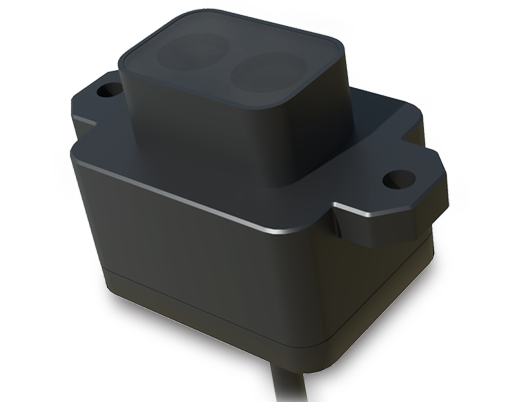
A third, highly specialized technology is confocal chromatic sensing. This method uses white light, where different wavelengths are focused at different distances. By analyzing the color of the reflected light, the sensor can determine the exact distance to the target with nanometer resolution. It is uniquely capable of measuring transparent, glossy, or multi-layered surfaces that confound standard red laser sensors. Micro-Epsilon's IFS series is a leader in this niche, providing critical solutions for the semiconductor and glass industries.
Beyond technology, critical selection criteria include measuring range, resolution, repeatability, linearity, and response speed. The operating environment is equally crucial. Factors like ambient light, dust, fog, temperature fluctuations, and potential exposure to chemicals will dictate the required ingress protection (IP) rating and housing material. For instance, a sensor on a welding robot needs a hardened housing and protective window, while one in a cleanroom requires a different specification.
For general-purpose, high-precision positioning and inspection, the triangulation sensors from Keyence and Micro-Epsilon are frequently cited as industry bests. Their combination of user-friendly interfaces, extensive software support, and proven reliability makes them a top choice. In logistics and material handling, the long-range robustness of SICK's ToF sensors is often unbeatable. For the most challenging surfaces, confocal chromatic sensors, though premium in price, offer a unique and powerful solution.
Ultimately, the best laser sensor is the one that solves your specific problem with the required accuracy, speed, and reliability, all while fitting within the project's constraints. Engaging with technical specialists from reputable manufacturers for a sample test or application review is the most reliable path to selecting the perfect sensor. Investing time in this selection process ensures that the sensor will not only gather data but will deliver the precise, actionable information needed to enhance quality, efficiency, and automation.