Fiber Bragg Grating (FBG) laser sensors represent a significant leap forward in the field of precision measurement and structural health monitoring. Unlike traditional electronic sensors, these devices utilize the unique properties of light within an optical fiber to detect changes in physical parameters such as strain, temperature, pressure, and vibration. The core of the technology lies in the FBG itself—a periodic modulation of the refractive index inscribed into the core of a single-mode optical fiber. When broadband light is launched into the fiber, this grating reflects a specific narrowband wavelength, known as the Bragg wavelength, while transmitting all others. This reflected wavelength is exquisitely sensitive to changes in the grating period, which is altered by mechanical strain or thermal expansion. Therefore, by precisely measuring the shift in this Bragg wavelength, an FBG sensor can quantify the magnitude of the applied physical change.
The operational principle is both elegant and robust. A typical FBG sensing system consists of a broadband light source, the sensor fiber containing one or multiple FBGs, an interrogation unit, and data processing software. The interrogation unit, often a spectrometer or a tunable laser-based system, continuously monitors the reflected spectrum from each FBG. Any external stimulus that stretches, compresses, or heats the grating causes a proportional shift in the Bragg wavelength. This shift is an absolute measurement, meaning it does not drift over time and is immune to fluctuations in the light source's intensity. This inherent stability is a key advantage over many conventional sensing technologies.
One of the most compelling features of FBG sensors is their capability for multiplexing. Multiple gratings, each with a distinct Bragg wavelength, can be inscribed at different points along a single optical fiber. This allows for the creation of distributed or quasi-distributed sensor networks, where dozens or even hundreds of sensing points can be monitored simultaneously using one interrogation unit and one fiber cable. This drastically reduces the complexity, weight, and installation cost of large-scale monitoring systems, making them ideal for applications in aerospace, civil engineering, and energy infrastructure.
The applications of FBG laser sensors are vast and growing. In aerospace, they are embedded in composite materials of aircraft wings and fuselages to monitor strain, impact damage, and fatigue in real-time, enabling predictive maintenance and enhancing safety. In civil engineering, they are permanently installed within bridges, dams, tunnels, and high-rise buildings to monitor structural integrity, detect deformation, and assess the impact of earthquakes or heavy loads. The oil and gas industry employs them for downhole pressure and temperature sensing in extreme environments where electronic sensors fail. Furthermore, their immunity to electromagnetic interference (EMI) and ability to operate in explosive or high-voltage environments make them indispensable in power generation, mining, and chemical processing plants.
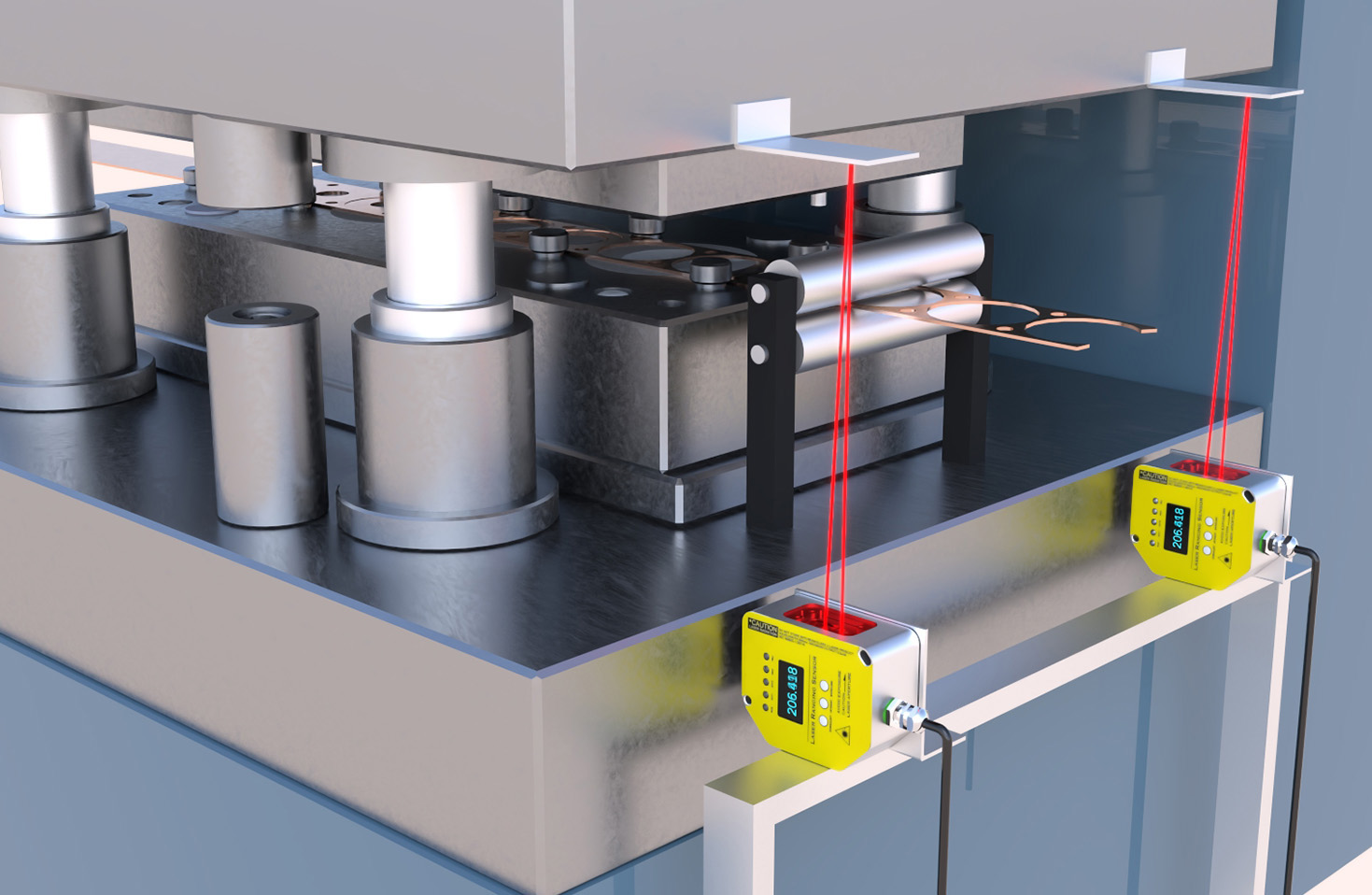
Compared to conventional electrical sensors, FBG systems offer a suite of distinct advantages. Their passive nature means they require no electrical power at the sensing point, enhancing safety in hazardous areas. They are inherently resistant to corrosion and are fabricated from silica glass, making them durable in harsh conditions. The small size and lightweight of the optical fiber allow for minimally invasive embedding into materials or structures without compromising their strength. The long-distance signal transmission capability with low loss enables remote monitoring over several kilometers. Finally, their high sensitivity, precision, and long-term reliability provide accurate data over decades, which is crucial for critical infrastructure monitoring.
In conclusion, FBG laser sensors have evolved from a laboratory curiosity to a cornerstone of modern sensing solutions. By translating physical changes into precise optical signals, they provide a reliable, multiplexable, and robust method for monitoring the health and performance of assets across numerous industries. As interrogation technology advances and costs decrease, their adoption is set to expand further, driving innovation in smart structures, industrial automation, and beyond, ensuring safer and more efficient operations through continuous, precise measurement.
