In the realm of industrial automation, consumer electronics, and safety systems, one frequently encounters the term "proximity sensor." Its abbreviation, often seen in technical datasheets, wiring diagrams, and component lists, is simply PRX or sometimes more specifically P-Sensor. However, it's crucial to understand that this abbreviation is a general shorthand. The specific type of proximity sensor is often denoted by a more precise abbreviation based on its underlying technology. This distinction is vital for engineers, technicians, and procurement specialists.
The core function of a proximity sensor is to detect the presence or absence of an object within a certain range without any physical contact. This non-contact operation is its primary advantage, leading to high reliability, long operational life, and minimal wear and tear. The abbreviation becomes a convenient label for this entire class of devices in system documentation and casual technical communication.
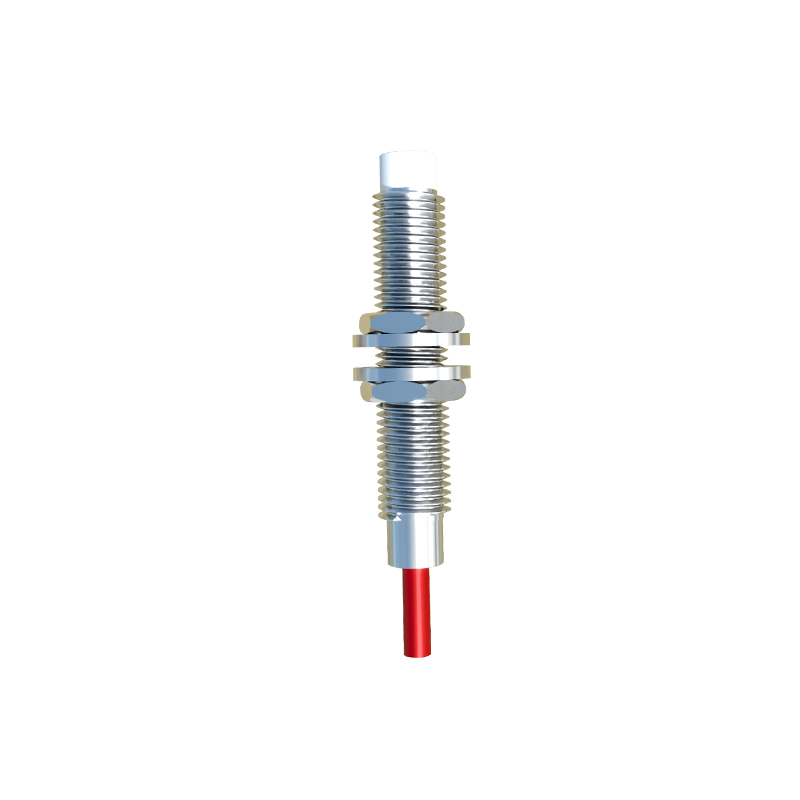
Delving deeper, the most common types of proximity sensors and their standard abbreviations include:
Inductive Proximity Sensor (IN or IPS): These sensors detect metallic objects, primarily ferrous metals like iron and steel. They work by generating an electromagnetic field. When a metal object enters this field, it induces eddy currents within the object, which the sensor detects. Abbreviated as IN (for inductive) or IPS, they are ubiquitous in machine automation for counting metal parts, determining position limits, and ensuring safety.
Capacitive Proximity Sensor (CAP or CPS): These can detect both metallic and non-metallic objects, including liquids, plastics, glass, and wood. They function by sensing changes in capacitance. The sensor forms one plate of a capacitor, and the target object forms the other (or alters the dielectric constant). Abbreviated as CAP or CPS, they are used in level detection for liquids or granular materials, and in applications requiring detection of non-metallic substances.
Photoelectric Sensor (PE or PES): While often considered a separate category, photoelectric sensors are a form of proximity sensor. They use light beams (visible, infrared, or laser) to detect objects. Abbreviations include PE, PES, or PHOTO. They are further subdivided into through-beam, retro-reflective, and diffuse-reflective types, offering some of the longest sensing ranges.
Ultrasonic Proximity Sensor (US): These sensors use sound waves beyond the human hearing range. They measure the time taken for an ultrasonic pulse to reflect off a target and return. Abbreviated as US, they are excellent for detecting objects of virtually any material, shape, or color, and are commonly used in distance measurement and level sensing in challenging environments.
Magnetic Proximity Sensor (REED or HALL): Often used to detect the presence of a permanent magnet, these are frequently abbreviated based on their technology: REED for reed switch sensors or HALL for Hall-effect sensors. They are simple, cost-effective, and widely used in door/window security systems and low-speed rotational sensing.
Understanding these abbreviations is more than an academic exercise; it has direct practical implications. In system design, using the correct abbreviation (IN vs. CAP) prevents specification errors. During troubleshooting, a technician seeing IPS on a schematic immediately knows to check for metal objects interfering with the sensor. In procurement, searching for a CPS sensor will yield results for capacitive models, streamlining the sourcing process.
The application of these sensors, denoted by their concise abbreviations, is vast. In a modern smartphone, a PRX sensor (typically an infrared or capacitive type) disables the touchscreen during a call to prevent accidental inputs. In an automotive assembly line, an IN sensor verifies the presence of an engine block. In a food processing plant, a CAP sensor monitors the level of flour in a silo. In a parking garage, an US sensor guides drivers by indicating available space.
In conclusion, while "PRX" serves as a handy universal abbreviation for a proximity sensor, the true technical lexicon relies on more specific acronyms like IN, CAP, PE, and US. These abbreviations are a fundamental part of the language of automation, encapsulating complex technology into efficient, communicative symbols. Their correct use ensures clarity, precision, and efficiency from the design phase through to maintenance, underpinning the seamless operation of the automated systems that define our modern world.