Inductive sensors are fundamental components in modern industrial automation, valued for their robustness, precision, and non-contact operation. Their primary function is to detect the presence or absence of metallic objects without any physical contact. This is achieved through the principle of electromagnetic induction. At the core of an inductive sensor is a coil wound around a ferromagnetic core, which forms part of an oscillator circuit. When an alternating current flows through this coil, it generates a high-frequency electromagnetic field that radiates from the active face of the sensor.
When a conductive metal target enters this oscillating field, eddy currents are induced on the surface of the metal. These eddy currents draw energy from the sensor's oscillator circuit, causing a measurable change in its amplitude. The sensor's internal electronics continuously monitor this oscillation amplitude. Once the amplitude drops below a predefined threshold—indicating the presence of a metal object—the sensor's output state switches. This switch can be from On to Off or vice versa, depending on the sensor's configuration (normally open or normally closed). When the metal target moves away, the oscillation amplitude recovers, and the output switches back to its original state.
The key to reliable function lies in the sensor's ability to ignore non-metallic materials like plastic, wood, or liquids, as these do not generate significant eddy currents. The sensing distance, or nominal range, is a critical specification and is typically defined for a standard target made of mild steel. This range varies with the target material's properties; for instance, metals with higher conductivity like copper or aluminum can be detected at slightly reduced ranges compared to steel because the eddy currents are stronger and more concentrated on the surface.
There are several distinct types of inductive sensors, each with a specialized function. Standard proximity sensors are the most common, used for simple presence detection. Factor 1 cylindrical sensors offer a symmetrical field for precise positioning. Flat or rectangular sensors provide a wider sensing field for area monitoring. Special variants like analog sensors provide a continuous output signal proportional to the distance to the target, enabling precise position measurement. All-metal sensors are tuned to detect all types of metals at a consistent range, while weld-field immune sensors are designed to function reliably in environments with high levels of electromagnetic interference from welding equipment.
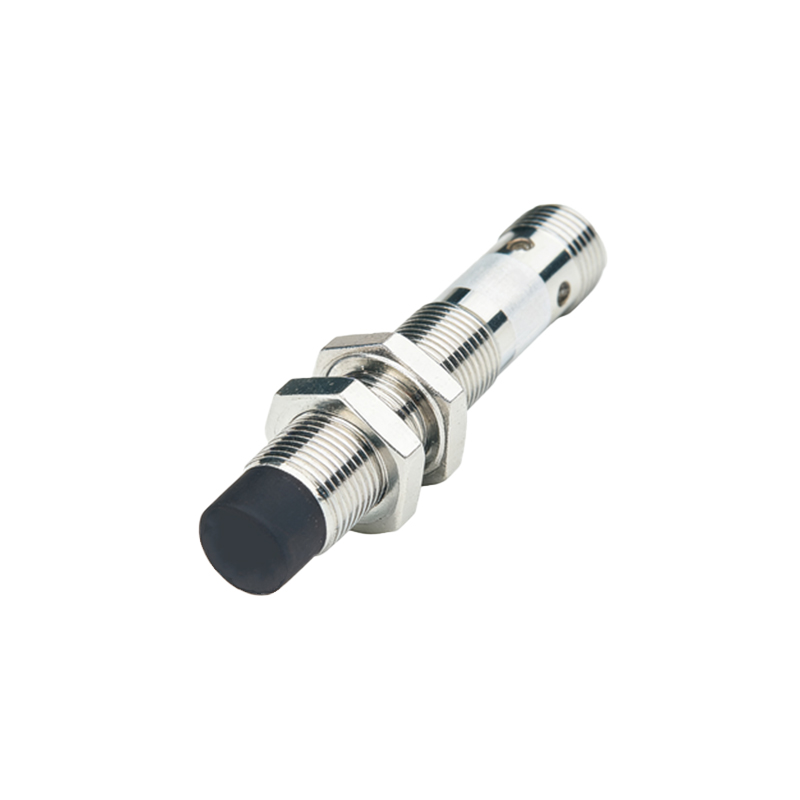
The advantages of inductive sensor function are numerous. Their non-contact nature eliminates mechanical wear, leading to exceptionally long service life and high reliability. They are capable of operating at very high switching frequencies, making them suitable for counting fast-moving parts on production lines. Sealed in robust housings, often made of stainless steel or nickel-plated brass, they are resistant to dust, dirt, oils, and coolants, thriving in harsh industrial environments. They require no maintenance and are generally easy to install and integrate into control systems via their standard PNP or NPN output configurations.
In practical applications, the function of inductive sensors is ubiquitous. On assembly lines, they detect the position of metal components, control robotic grippers, and verify part presence. In machine tools, they serve as end-position limit switches for slides and spindles. They are integral to rotary encoders for speed monitoring, used in metal detection systems for sorting, and ensure safety by monitoring guard door positions. Their versatility and durability make them indispensable for tasks ranging from simple object counting to complex positional feedback in automated systems.
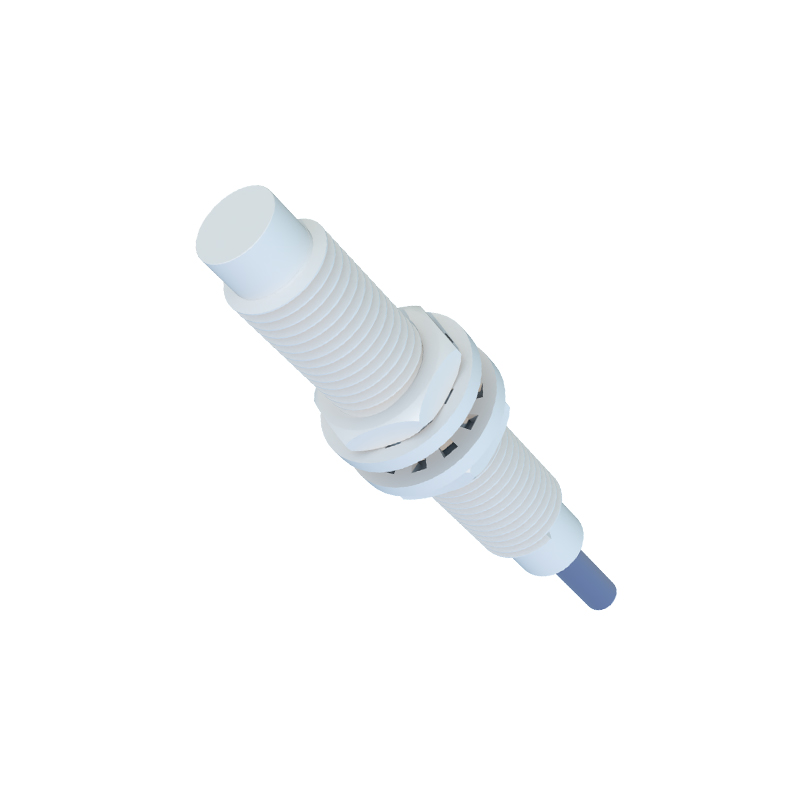
When selecting an inductive sensor, engineers must consider several parameters beyond basic function: the required sensing distance, the target material and size, the operating voltage, the output type (digital or analog), the housing style for mounting, and the environmental conditions such as temperature and potential exposure to chemicals. Proper installation is also crucial; maintaining the correct clearance around the sensor (lateral and frontal) prevents false triggering from surrounding metal structures.
In summary, the function of an inductive sensor is elegantly based on electromagnetic principles to provide a reliable, wear-free method of metallic object detection. Its ability to perform consistently under demanding conditions has solidified its role as a cornerstone of industrial sensing technology, enabling precise control, safety, and efficiency across countless automated processes.