Capacitive proximity sensors are a cornerstone of modern industrial safety and automation, offering non-contact detection of objects through the principle of capacitance change. Unlike their inductive counterparts that detect only metals, capacitive sensors can detect a wide range of materials, including liquids, powders, plastics, and wood. This versatility makes them indispensable for safety-critical applications where reliable presence detection is paramount.
The core operating principle is based on an oscillator circuit. The sensor face and the detected object form two plates of a capacitor. When an object enters the sensor's electrostatic field, it alters the capacitance, causing a change in the oscillator's amplitude. This change is evaluated by the subsequent circuitry, triggering a solid-state output switch. For safety applications, this output is often a critical signal to a safety controller or a safety relay, initiating a machine stop, closing a guard, or activating an alarm to prevent hazardous situations.
A key advantage in safety systems is their ability to sense through non-metallic barriers. This allows for the design of sealed, hygienic, or protected sensing setups. For instance, a capacitive sensor can be mounted behind a plastic machine guard to detect if the guard is properly closed without requiring a physical penetration that could compromise integrity. It can also monitor fill levels of aggressive chemicals through a tank wall, ensuring overfill prevention without direct contact with the medium.
When selecting a capacitive sensor for a safety function, several specifications are crucial. The sensing range, typically from a few millimeters to about 40 millimeters for standard models, must be carefully considered. Environmental factors like temperature, humidity, and the presence of dust or contaminants can influence performance. Manufacturers often offer sensors with robust housings (e.g., stainless steel or PBT plastic) and high ingress protection (IP) ratings like IP67 or IP69K for harsh environments. The output type, commonly PNP (sourcing) or NPN (sinking), must be compatible with the safety PLC's input module.
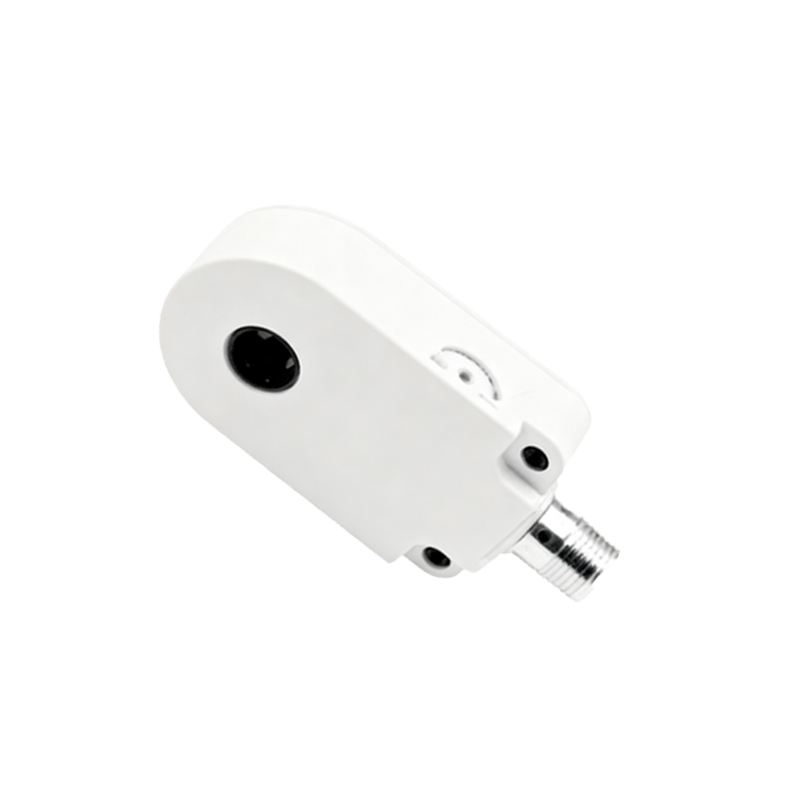
Reliability is non-negotiable. Safety-rated capacitive sensors are designed with high repeatability and minimal drift over time. They are often part of a certified safety system, complying with international standards such as IEC 60947-5-2 for proximity sensors and relevant parts of IEC 61508 for functional safety. It is vital to integrate them within a validated safety circuit, which may include redundancy, cross-monitoring, and periodic functional testing to achieve the required Safety Integrity Level (SIL) or Performance Level (PL).
Common safety applications include:
Guard Monitoring: Detecting the correct position of safety doors, hatches, or telescopic guards on machinery.
Material Presence Verification: Ensuring a part is correctly positioned before a machining cycle begins or confirming the presence of a workpiece in a robotic cell.
Level Control Safety: Preventing overfilling or run-dry conditions in tanks containing flammable or hazardous liquids.
Anti-Collision Systems: Used on automated guided vehicles (AGVs) or cranes to detect personnel or obstacles in a safety zone.
Packaging Safety: Detecting jams or misaligned products that could lead to equipment damage or operator intervention in a danger zone.
Installation and tuning are critical for consistent operation. Factors like the grounding condition, the sensor's mounting, and the dielectric constant of both the target and any intervening material affect sensitivity. Most sensors feature a potentiometer or teach-in button to adjust the sensitivity threshold, ensuring they ignore the background (like the tank wall) and only detect the target material. Proper shielding minimizes the effects of unwanted parasitic capacitance.
In conclusion, capacitive proximity sensors provide a flexible and reliable sensing solution for enhancing operational safety. Their material-independent detection capability allows for innovative and secure machine design. By understanding their operating principles, key specifications, and integration requirements within a certified safety architecture, engineers can effectively deploy these sensors to mitigate risks, protect personnel, and ensure compliance with stringent industrial safety regulations.