In today's automated world, many devices seem to possess a subtle awareness of their surroundings. A smartphone screen dims when held to the ear during a call. An automatic faucet turns on when hands are placed beneath it. A car beeps a warning as it nears an object while parking. This seemingly intuitive behavior is often powered by a small, silent, and crucial component: the proximity sensor.
At its core, a proximity sensor is a device that detects the presence or absence of an object within a specified range without any physical contact. It achieves this by emitting a field or a beam of electromagnetic radiation or by looking for changes in a local field. The sensor then analyzes the reflected signal or the disturbance in the field to determine an object's proximity. The key advantage is non-contact detection, which eliminates mechanical wear and tear and allows for operation in harsh environments where physical touch is impractical or contaminating.
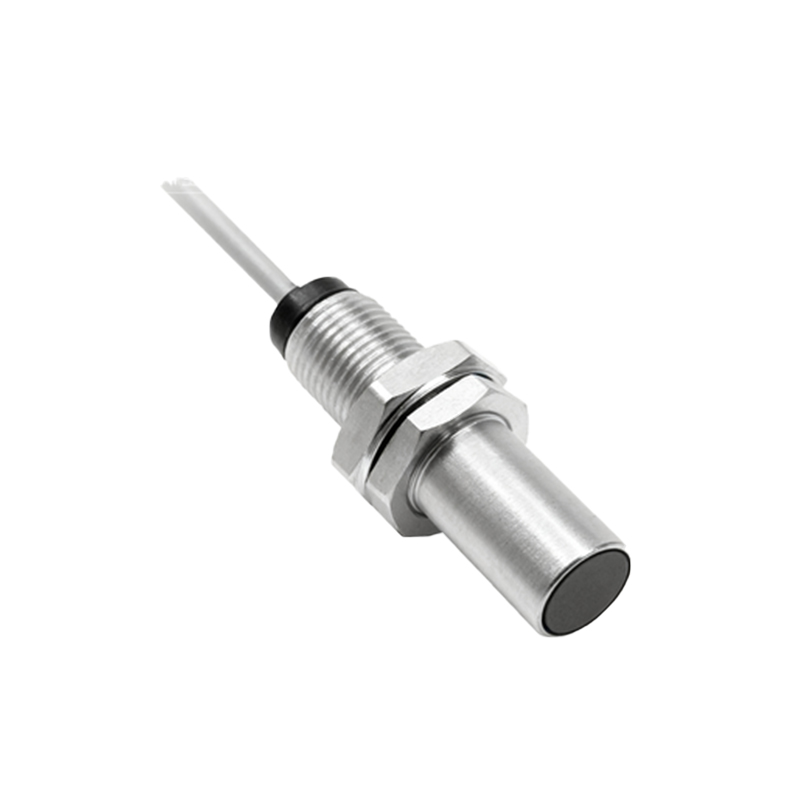
Several distinct technologies underpin the functionality of modern proximity sensors, each with its own principles, strengths, and ideal applications.
Inductive proximity sensors are workhorses in industrial automation. They generate an oscillating electromagnetic field. When a metallic object enters this field, it induces eddy currents within the object, which in turn dampens the sensor's own oscillation. This change is detected, signaling the object's presence. These sensors are exceptionally reliable for detecting metals, are resistant to dirt, oil, and water, and are commonly used for tasks like counting metal parts on a conveyor belt, determining valve positions, or as limit switches in machinery.
Capacitive proximity sensors operate on a different principle. They can detect both metallic and non-metallic objects—liquids, plastics, wood, or granules. The sensor acts as one plate of a capacitor, with the target object acting as the other. As an object nears the sensor's face, it changes the capacitance of the circuit. This measurable change triggers the output. This makes them versatile for applications like liquid level detection in tanks, monitoring presence of material in hoppers, or touch-sensitive interfaces.
Optical proximity sensors, often called photoelectric sensors, use light. An emitter sends out a beam of light (visible, infrared, or laser). A receiver detects this light. In the most common "diffuse" mode, the sensor looks for the reflection of its own beam from a nearby object. When an object is close enough, the reflected light intensity reaches a threshold, and the sensor activates. These sensors offer longer detection ranges and can sense very small objects. They are ubiquitous in consumer electronics (like the smartphone example), automatic doors, and packaging lines to detect product presence or count items.
Ultrasonic proximity sensors function similarly to sonar. They emit high-frequency sound waves and measure the time it takes for the echo to return. The time-of-flight calculation provides highly accurate distance measurement, not just presence detection. They are excellent for detecting objects regardless of color, transparency, or material, and work well in dusty or foggy environments where optical sensors might fail. Typical uses include vehicle parking aids, level sensing in bulk material containers, and robotic obstacle avoidance.
The applications of proximity sensors span virtually every industry. In manufacturing, they enable precision, safety, and efficiency in assembly, packaging, and robotics. In automotive systems, they are integral to parking assistance, collision avoidance, and occupant detection for airbag systems. In consumer electronics, they manage display states to save power and prevent accidental touch inputs. In the home and public spaces, they provide hands-free convenience and hygiene in faucets, soap dispensers, and paper towel machines. They are even found in aerospace for landing gear status and in agriculture for equipment control.
Selecting the right proximity sensor requires careful consideration of the target material, required sensing distance, environmental conditions (temperature, contaminants), response speed, and output type needed (digital on/off or analog distance data). Understanding the fundamental technology behind each type is the first step to a successful implementation.
From the factory floor to the palm of your hand, proximity sensors are fundamental enablers of interaction between machines and the physical world. Their ability to provide reliable, contactless detection makes them indispensable in building smarter, safer, and more efficient systems across the globe. As technology advances, these sensors continue to become smaller, more energy-efficient, and more intelligent, further expanding their role in the interconnected landscape of the Internet of Things and advanced automation.