In the industrial landscape, bulk material storage, particularly for commodities like coal, presents a unique set of operational challenges. Managing inventory levels, preventing hazardous overfills or critical empty runs, and ensuring structural integrity are paramount concerns. Traditional measurement methods, such as mechanical plumb bobs, ultrasonic sensors, or manual sounding, often fall short in the harsh, dusty, and volatile environment of a coal silo. These methods can be inaccurate, require frequent maintenance, or expose personnel to unnecessary risk. This is where coal silo laser sensors have emerged as a transformative technology, offering a robust, precise, and reliable solution for continuous level monitoring.
The core principle of a laser sensor is based on Time-of-Flight (ToF) measurement. The device emits a focused pulse of laser light towards the material surface. The pulse reflects off the surface and returns to the sensor's receiver. By precisely calculating the time difference between the emission and reception of the laser pulse, and knowing the constant speed of light, the sensor can determine the exact distance to the material with exceptional accuracy. This distance data is then converted into a level measurement, typically displayed as a percentage of silo capacity or in specific units like feet or meters.
The advantages of deploying laser sensors in coal storage applications are significant and multifaceted. First and foremost is their unparalleled accuracy and precision. Modern laser sensors can achieve measurement accuracies within millimeters, providing operators with real-time, trustworthy data for inventory management and process control. This precision helps in optimizing coal feed to boilers or processing plants, preventing costly production disruptions due to unexpected material shortages.
Secondly, laser sensors excel in the difficult conditions of a coal silo. Unlike ultrasonic waves, which can be scattered or absorbed by dust, steam, and changing gas compositions, a focused laser beam penetrates dust layers with minimal interference. High-quality sensors are equipped with advanced signal processing algorithms that can filter out background noise and identify the true material surface reflection, even in heavy particulate atmospheres. This makes them far more reliable than alternative technologies in challenging environments.
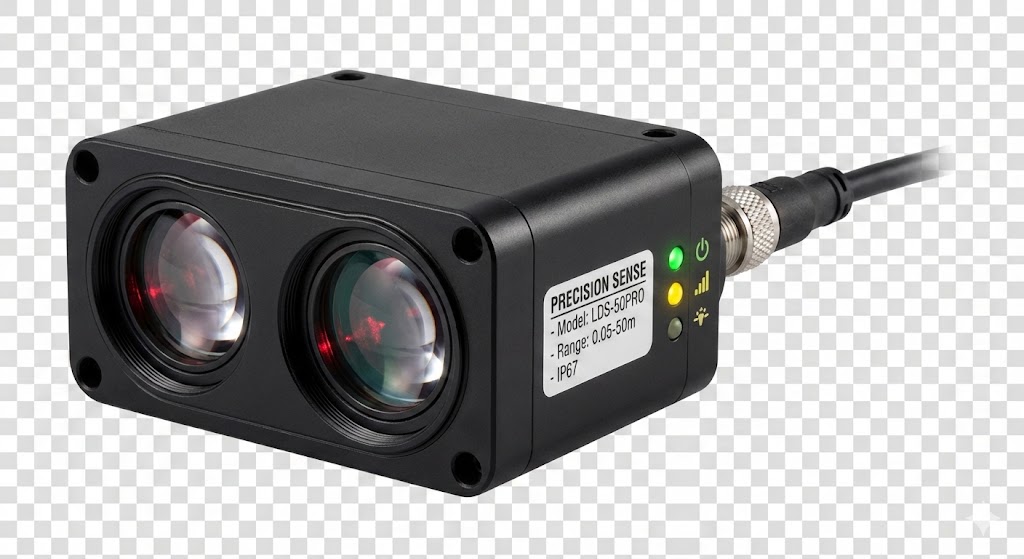
Safety is another critical benefit. Laser sensors enable completely non-contact, remote monitoring. Personnel no longer need to climb silos for manual checks, eliminating the risks associated with falls, confined space entry, and exposure to potentially explosive atmospheres. The continuous data stream also allows for the implementation of automated high-level and low-level alarms, preventing overfilling that could damage silo structure or cause spillage, and avoiding empty runs that could damage downstream equipment.
From an operational efficiency standpoint, the data provided by laser sensors integrates seamlessly with modern Distributed Control Systems (DCS) or Supervisory Control and Data Acquisition (SCADA) systems. This integration facilitates automated inventory tracking, trend analysis for predictive maintenance, and better logistical planning for coal delivery and consumption. The reduction in unplanned downtime and the optimization of material handling directly contribute to lower operational costs and increased plant productivity.
When selecting and installing a coal silo laser sensor, several factors must be considered. The sensor must have an appropriate ingress protection (IP) rating, typically IP67 or higher, to withstand dust and moisture. It should be housed in a rugged enclosure resistant to mechanical impact and temperature fluctuations. The installation point is crucial; the sensor should be mounted in a location that provides a clear line of sight to the material surface, avoiding beams, ladders, or filling streams that could cause false echoes. Regular maintenance, though minimal, involves keeping the laser window clean to ensure optimal performance.
In conclusion, coal silo laser sensors represent a significant technological leap in bulk solids monitoring. By delivering highly accurate, reliable, and continuous level data in the most demanding conditions, they address the core challenges of safety, efficiency, and operational control. As industries continue to prioritize automation, safety, and cost-effectiveness, the adoption of laser-based measurement systems in coal handling and storage is set to become the standard, replacing older, less reliable methods and paving the way for smarter, more resilient industrial operations.