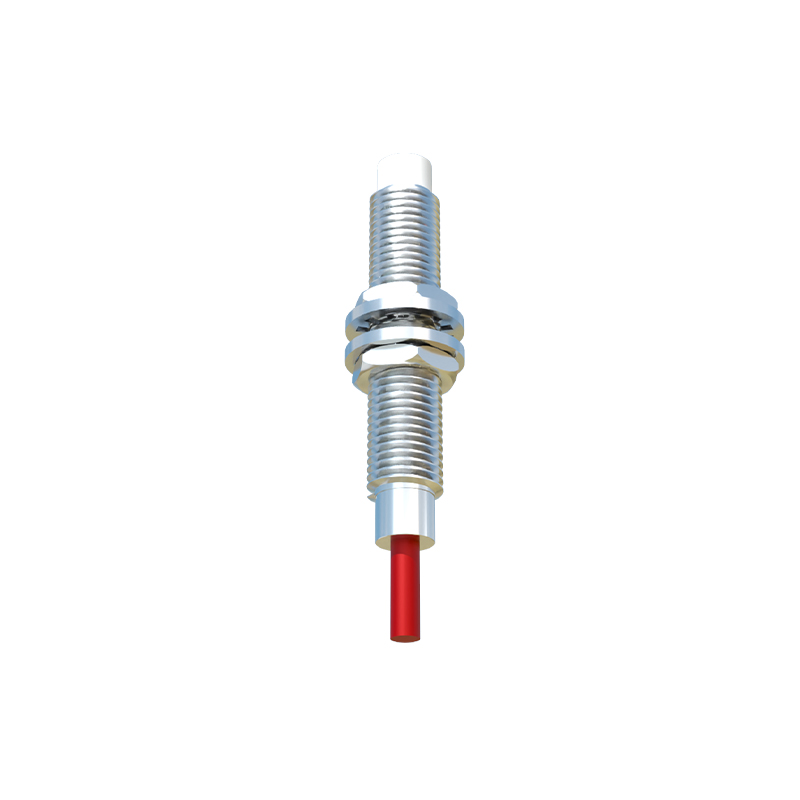
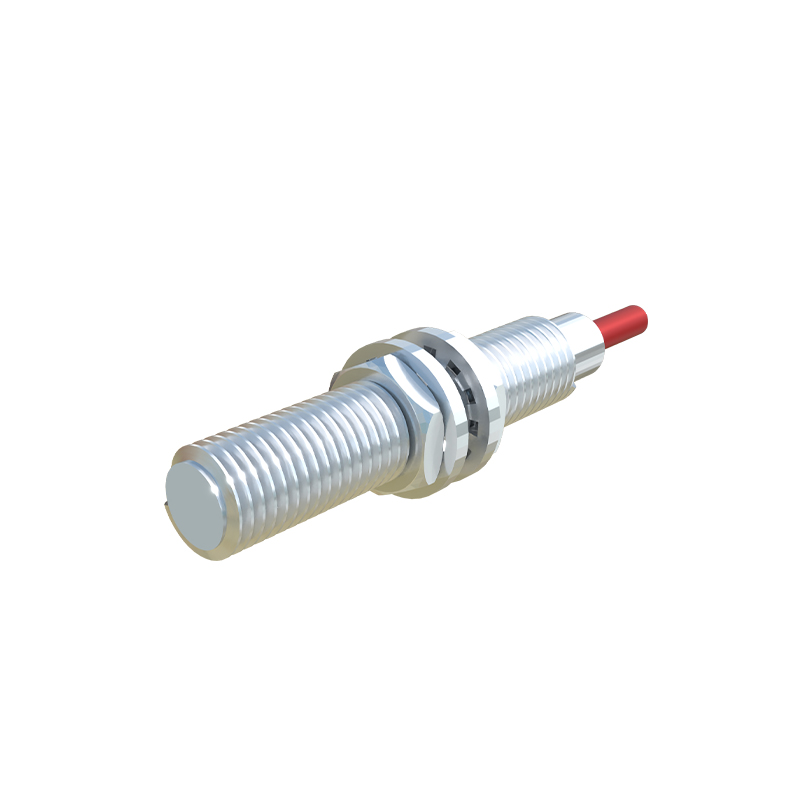
Proximity sensors are a cornerstone of modern automation, silently performing critical tasks in countless devices and industrial systems. Unlike traditional mechanical switches, they detect the presence or absence of an object without any physical contact. This non-contact operation grants them exceptional reliability, long operational life, and high-speed response, making them indispensable in manufacturing, consumer electronics, automotive systems, and beyond. The core principle behind their operation is elegantly simple: they emit a field or beam of electromagnetic radiation or sound and look for changes in the field or return signal.
The most common types of proximity sensors operate on inductive, capacitive, ultrasonic, or optical principles. Each type is tailored for specific materials and sensing environments. Inductive proximity sensors are the workhorses of industrial automation. They generate an oscillating electromagnetic field from a coil wound around a ferrite core. When a metallic object, known as the target, enters this active field, eddy currents are induced on the surface of the metal. These eddy currents draw energy from the sensor's oscillator circuit, causing a reduction in the amplitude of oscillation. An internal circuit monitors this amplitude change. Once the amplitude drops below a predetermined threshold—signifying the object is within the specified sensing range—the sensor's output state switches, typically from "off" to "on." This makes them ideal for detecting metals, such as counting gear teeth, verifying part presence on a conveyor, or determining the position of a machine component. They are largely unaffected by non-metallic materials like dust, oil, or plastic.
Capacitive proximity sensors, on the other hand, can detect both metallic and non-metallic objects, including liquids, powders, wood, and glass. They function by generating an electrostatic field between two electrodes (often the sensor face and a ground connection). Any object that enters this field alters the dielectric constant and thus the capacitance of the system. The sensor's internal oscillator is designed to start oscillating only when this capacitance reaches a sufficient level. The detection circuit then triggers a change in the output state. This ability allows capacitive sensors to solve unique problems, such as monitoring fill levels in plastic or glass containers, detecting wood chips on a sawmill line, or sensing the presence of a hand near a touchless faucet.
For longer-range detection or in environments filled with smoke or dust, ultrasonic sensors are frequently employed. They operate on the principle of echolocation, similar to bats or sonar. The sensor emits high-frequency sound pulses (typically 40-400 kHz) from a piezoelectric transducer. A timer starts as the pulse is sent out. If the sound wave strikes an object, it is reflected back to the sensor. The receiver detects this echo, and the timer stops. By knowing the speed of sound in the medium (usually air), the sensor's microcontroller can calculate the distance to the object using the simple formula: Distance = (Speed of Sound × Time of Flight) / 2. This "time-of-flight" measurement provides precise distance information, not just a simple on/off switch, making them perfect for level measurement in tanks, robot obstacle avoidance, and parking assist systems.
Optical proximity sensors, often found in consumer electronics, use infrared (IR) light. A basic version consists of an IR LED emitter and a photodiode or phototransistor receiver. In a common configuration known as diffuse or reflective sensing, the emitter constantly sends out an IR beam. When an object comes near, it reflects some of this light back to the receiver. The receiver converts the light intensity into an electrical current. When this current exceeds a set threshold, the output is activated. More sophisticated versions use a separate, constantly-on IR LED to measure ambient light levels, allowing the sensor to compensate for sunlight or other IR sources to improve accuracy. This technology is ubiquitous in smartphones to disable the touchscreen during a call and in automatic hand dryers or paper towel dispensers.
The selection of the appropriate sensor depends heavily on the application's requirements: the target material, required sensing distance, environmental conditions (like dirt, moisture, or temperature), response speed, and output type needed (digital on/off or analog distance data). Understanding the fundamental working principle of each type—whether it's the disruption of an electromagnetic field, a change in capacitance, the reflection of sound waves, or the interruption of a light beam—is key to deploying them effectively. Their non-contact nature ensures minimal wear and tear, while their solid-state electronics provide millions of reliable operations. From ensuring robotic arms pick up parts correctly to making our smartphones smarter and our factories more efficient, proximity sensors are a fundamental enabling technology, translating physical presence into actionable electronic signals with silent, unwavering precision.