In the realm of precision measurement and automation, laser distance sensors have become indispensable tools. These devices provide fast, accurate, and non-contact measurements, revolutionizing processes across countless industries. At their core, they operate by emitting a laser beam towards a target and analyzing the reflected light to calculate distance. The fundamental principle is elegantly simple, yet the underlying technologies enable remarkable precision and versatility.
The most common operating principles for laser distance sensors are time-of-flight (ToF) and triangulation. Time-of-flight sensors measure the time it takes for a laser pulse to travel to the target and back. Since the speed of light is a known constant, the distance can be calculated directly from this time interval. This method is excellent for measuring over long ranges, from several meters to hundreds of meters, and is widely used in surveying, forestry, and unmanned vehicle navigation. The latest phase-shift ToF sensors offer even higher accuracy for medium-range applications.
Triangulation-based sensors, on the other hand, are the champions of short-range, high-precision measurement. Here, a laser diode projects a visible spot onto the target. The reflected light strikes a position-sensitive detector (like a CCD or CMOS array) at an angle. The position of the light spot on this detector changes linearly with the distance to the target. By precisely measuring this position, the sensor calculates the distance with resolutions down to the micrometer level. This makes them ideal for quality control on production lines, measuring component thickness, or monitoring vibration and deformation.

Beyond these, interferometric sensors represent the pinnacle of precision, using the wave nature of light to measure displacement with nanometer accuracy, crucial in semiconductor manufacturing and scientific research. Another notable type is the confocal chromatic sensor, which uses white light and spectral analysis to measure distance, particularly effective on transparent or reflective surfaces.
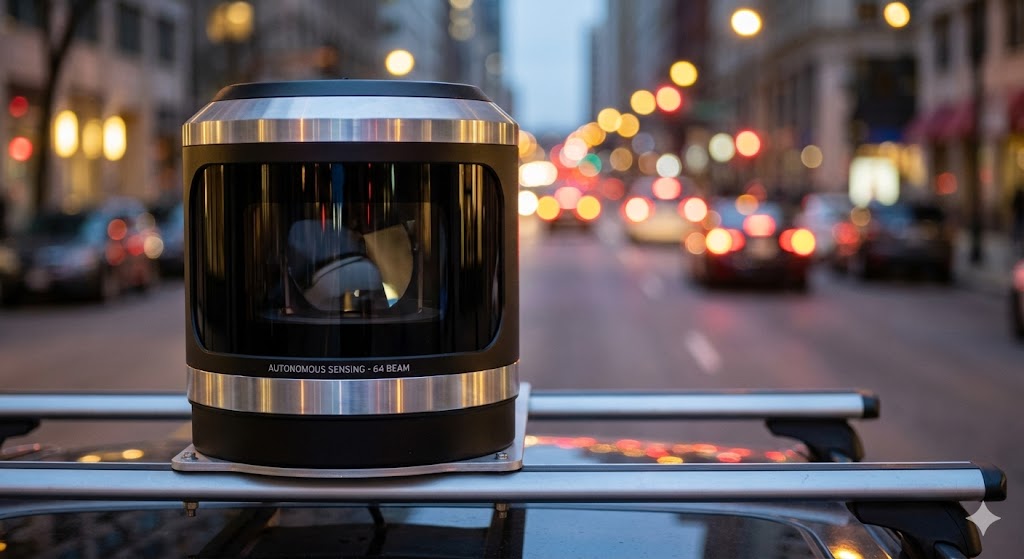
The applications of laser distance sensors are vast and growing. In industrial automation, they are the eyes of robots, guiding assembly, pick-and-place operations, and bin picking. They ensure consistent product quality by verifying dimensions, checking fill levels in containers, and controlling the gap between rollers in printing or paper manufacturing. In the automotive sector, they are integral to advanced driver-assistance systems (ADAS), enabling adaptive cruise control and collision avoidance by monitoring the distance to vehicles ahead.
The construction and architecture fields rely heavily on laser distance measures for surveying, layout, and monitoring structural integrity. In logistics, they automate warehouse management by measuring parcel dimensions for optimal storage and shipping cost calculation. Even in consumer electronics, miniature ToF sensors enable features like camera autofocus, gesture recognition, and augmented reality applications on smartphones.
Selecting the right laser distance sensor requires careful consideration of several key parameters. The measuring range defines the minimum and maximum distances the device can handle. Accuracy and resolution indicate how close the reading is to the true value and the smallest detectable change, respectively. The response time or measurement rate is critical for high-speed processes. Environmental factors like ambient light, temperature fluctuations, and the target's surface properties (color, reflectivity, texture) can significantly impact performance. Modern sensors incorporate sophisticated algorithms and filters to compensate for these challenges.

The future of laser distance sensing is geared towards greater integration, intelligence, and miniaturization. Sensors are becoming smaller, more energy-efficient, and less expensive. The integration of sensor data with machine learning algorithms allows for not just distance measurement, but also object classification and predictive analytics. LiDAR (Light Detection and Ranging) systems, which essentially use arrays of laser distance sensors to create 3D point clouds, are a driving force in autonomous vehicles and smart city infrastructure.
In conclusion, laser distance sensors are a cornerstone of modern technology. By providing reliable, non-contact distance data, they enhance efficiency, safety, and quality in virtually every sector. From the factory floor to the open road, and from construction sites to our pockets, these precise optical instruments continue to expand the boundaries of what is measurable and automatable, quietly powering the advancement of a more intelligent and interconnected world.