Proximity sensors are a cornerstone of modern automation, enabling machines to detect the presence or absence of objects without physical contact. This non-contact detection capability is crucial for enhancing efficiency, safety, and reliability across countless industries. The term "proximity sensor" encompasses a diverse family of devices, each operating on distinct physical principles to suit specific environmental conditions, target materials, and application requirements. Understanding the different types is key to selecting the right sensor for the job.
One of the most common and versatile types is the Inductive Proximity Sensor. These sensors generate an electromagnetic field. When a metallic object enters this field, it induces eddy currents within the target, causing a change in the sensor's oscillation amplitude. This change is detected, triggering an output signal. Inductive sensors are exceptionally robust, resistant to dirt, dust, and moisture, making them ideal for harsh industrial environments like metal machining, automotive assembly lines, and conveyor systems. They are, however, limited to detecting ferrous and non-ferrous metals.
For detecting non-metallic objects, Capacitive Proximity Sensors are the go-to choice. They function by generating an electrostatic field. Any object that enters this field—be it plastic, wood, liquid, powder, or even a human hand—alters the capacitance of the sensor's circuit. This alteration is measured, leading to object detection. This makes capacitive sensors incredibly useful in applications such as level detection in tanks (for liquids or granules), material handling for plastics or paper, and touch-sensitive interfaces. They can sense through certain non-metallic walls, offering flexible mounting options.
Ultrasonic Proximity Sensors operate on a principle similar to sonar. They emit high-frequency sound waves (ultrasound) and measure the time it takes for the echo to return after bouncing off a target object. By calculating this "time-of-flight," the sensor can determine not only the presence of an object but also its precise distance. This makes them excellent for distance measurement, object profiling, and detecting transparent or highly reflective objects that might confuse optical sensors. Common uses include palletizing robots, liquid level control, and collision avoidance in automated guided vehicles (AGVs).
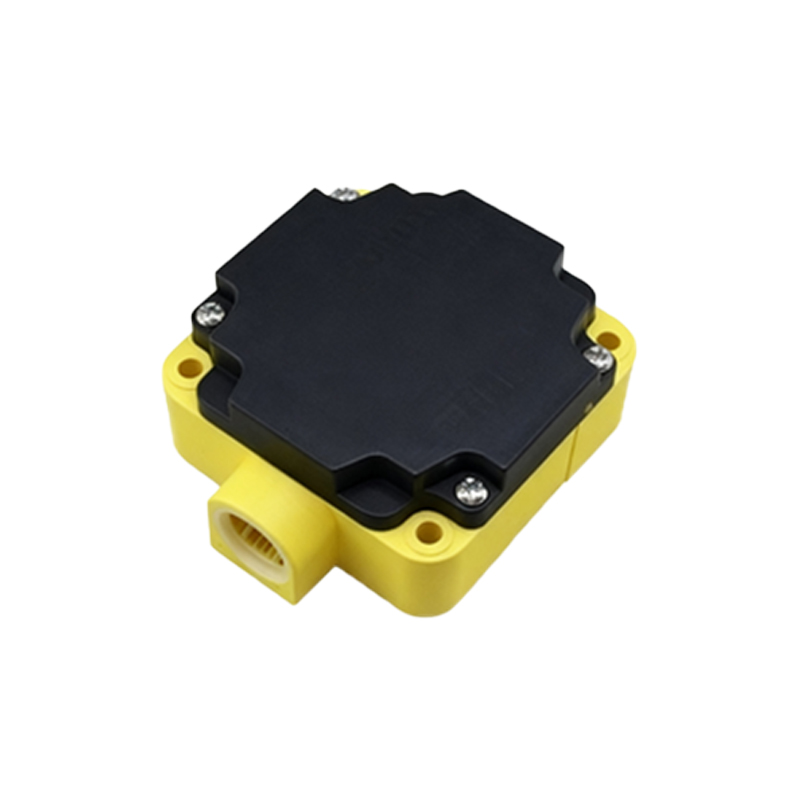
Photoelectric Sensors, or photo-eyes, use light to detect objects. They consist of a light emitter (usually an LED) and a receiver. There are three main sub-types: through-beam, retro-reflective, and diffuse. Through-beam models have separate emitter and receiver units; an object is detected when it breaks the beam. They offer the longest sensing ranges and high reliability. Retro-reflective types use a single unit and a reflector, detecting an object when it interrupts the light beam reflected back. Diffuse sensors rely on the reflection of light directly off the target object itself. Photoelectric sensors are highly effective for detecting a vast range of materials, colors, and shapes, and are ubiquitous in packaging, material handling, and assembly automation.
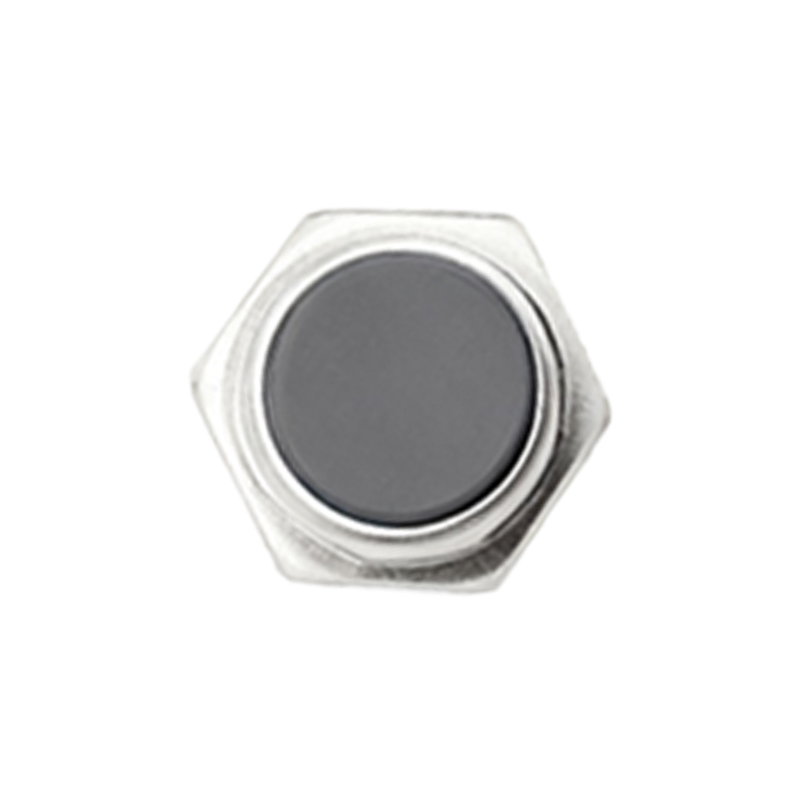
Magnetic Proximity Sensors are designed specifically to detect permanent magnets. They often use reed switches or Hall-effect chips. When a magnet approaches, the reed switch contacts close, or the Hall-effect chip registers a change in magnetic field, generating a signal. These sensors are simple, cost-effective, and can be completely sealed, making them perfect for applications like detecting the position of a cylinder piston in pneumatic systems, door/window closure detection in security systems, and in environments requiring explosion-proof ratings.
Choosing the right proximity sensor depends on several critical factors. The target material is paramount: inductive for metals, capacitive for nearly everything else, photoelectric for versatile detection. The required sensing distance varies greatly; ultrasonic and through-beam photoelectric sensors offer the longest ranges. Environmental conditions like temperature, humidity, dust, and chemical exposure will dictate the sensor's housing and ingress protection (IP) rating. Finally, the output type (e.g., digital NPN/PNP, analog 4-20mA) must be compatible with the control system, such as a PLC.
In conclusion, from the robust inductive sensor on a factory floor to the sensitive capacitive sensor in a consumer device, each type of proximity sensor fills a unique niche. Their collective ability to provide reliable, non-contact detection is what drives precision and intelligence in automated systems today, forming an invisible yet essential network that keeps our industrial and technological world in motion.