In the rapidly evolving landscape of industrial automation, consumer electronics, and automotive safety, the demand for precise, reliable, and intelligent sensing solutions has never been greater. At the heart of this technological advancement lies the Proximity Sensor Research and Development Center, a specialized hub dedicated to pushing the boundaries of non-contact detection. These centers are not merely laboratories; they are crucibles of innovation where physics, material science, and digital signal processing converge to create the next generation of sensors that "see" without touching.
The primary mission of a Proximity Sensor R&D Center is to explore and refine the fundamental principles of detection—namely, inductive, capacitive, photoelectric, and ultrasonic technologies. Each principle serves distinct applications. Inductive sensors, for instance, are perfected here for detecting metallic objects in harsh manufacturing environments, requiring research into coil design, oscillation circuits, and immunity to electromagnetic interference. Concurrently, teams focused on capacitive sensors work on enhancing sensitivity for non-metallic targets, such as liquids or plastics, which involves intricate work on electrode geometry and field shaping. The environment within the R&D center is one of focused experimentation, where prototypes undergo rigorous testing for repeatability, temperature stability, and response time.
A significant portion of the work is driven by application-specific challenges. The automotive industry, for example, requires sensors for parking assistance, collision avoidance, and occupant detection that must operate flawlessly across a temperature range of -40°C to 125°C. R&D engineers collaborate closely with automotive clients to design sensors that meet these stringent reliability and safety standards. Similarly, for consumer electronics, the drive is toward miniaturization and power efficiency. Teams develop low-power, chip-scale proximity sensors for smartphones and wearables, enabling features like screen blanking during a call or gesture recognition. This requires advanced work in semiconductor fabrication, optical design for IR-based sensors, and algorithm development for noise filtering.
The modern Proximity Sensor R&D Center is deeply interdisciplinary. It brings together physicists, electrical engineers, software developers, and application specialists. A key trend is the integration of smart features. Researchers are increasingly embedding microprocessors and IoT connectivity into sensor platforms. This transforms a simple detection device into an intelligent node capable of self-diagnosis, predictive maintenance, and data communication. Developing these "smart sensors" involves not only hardware innovation but also creating embedded firmware and software interfaces that allow for easy configuration and integration into larger Industry 4.0 or smart home systems.
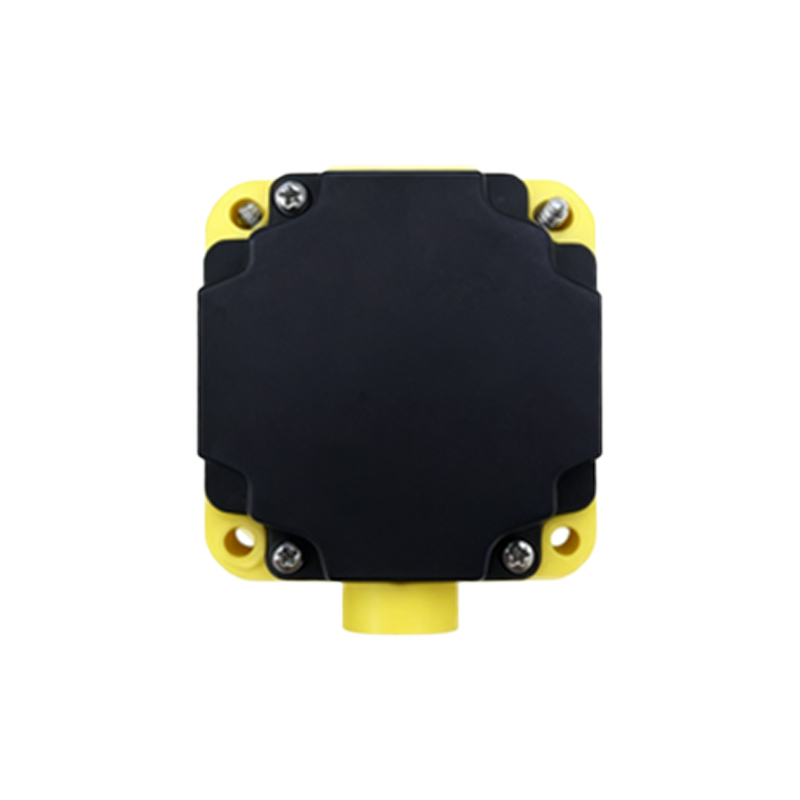
Material science plays a pivotal role. The development of new substrates, coatings, and encapsulation materials is critical for enhancing sensor performance and longevity. For sensors deployed in corrosive environments or wash-down areas in food & beverage plants, R&D centers test novel housing materials and sealing techniques to achieve high IP ratings. Furthermore, research into novel semiconductor compounds and nanomaterials holds promise for sensors with unprecedented sensitivity and range.
The workflow within the center follows a structured innovation cycle: conceptual design, simulation, prototyping, validation, and field testing. Advanced simulation software is used extensively to model electromagnetic fields, thermal dynamics, and mechanical stress before a physical prototype is ever built, significantly accelerating the development timeline. The validation phase is exhaustive, involving environmental stress chambers, EMI/EMC test suites, and long-term endurance cycles to ensure the product will perform for years in the field.
Ultimately, the value of a Proximity Sensor R&D Center extends beyond product creation. It serves as a knowledge base and a partnership engine for clients. By tackling fundamental technical hurdles and anticipating market needs, these centers enable breakthroughs in automation efficiency, product safety, and user interface design. They are the silent engines behind the seamless interaction between machines and their environment, ensuring that systems can sense, adapt, and respond with precision. As the world moves towards greater autonomy and interconnectivity, the work conducted within these specialized facilities will continue to be a fundamental pillar of technological progress, making the invisible realm of proximity a domain of precise and actionable data.