In the realm of industrial automation, precision is not merely a desirable attribute—it is an absolute necessity. Among the myriad components that ensure seamless operations, fine thread proximity switch sensors stand out as critical elements for accurate detection and control. These sensors, characterized by their finely threaded housings, are engineered to deliver exceptional performance in environments where space constraints and exact positioning are paramount.
Fine thread proximity sensors operate on the principle of non-contact detection, utilizing electromagnetic fields, capacitive changes, or ultrasonic signals to identify the presence or absence of target objects. Unlike standard threaded sensors, the fine thread variant features threads with a higher pitch count, allowing for meticulous adjustment and secure mounting in compact or intricate assemblies. This design is particularly advantageous in applications such as CNC machinery, robotic arms, and precision manufacturing lines, where even minor misalignments can lead to significant operational disruptions.
The construction of these sensors typically involves robust materials like stainless steel or brass, ensuring durability against harsh industrial conditions, including exposure to coolants, oils, and metallic debris. The fine threading not only enhances vibration resistance but also facilitates easy integration into threaded mounting holes without requiring additional adapters. This simplifies installation and maintenance, reducing downtime and associated costs.
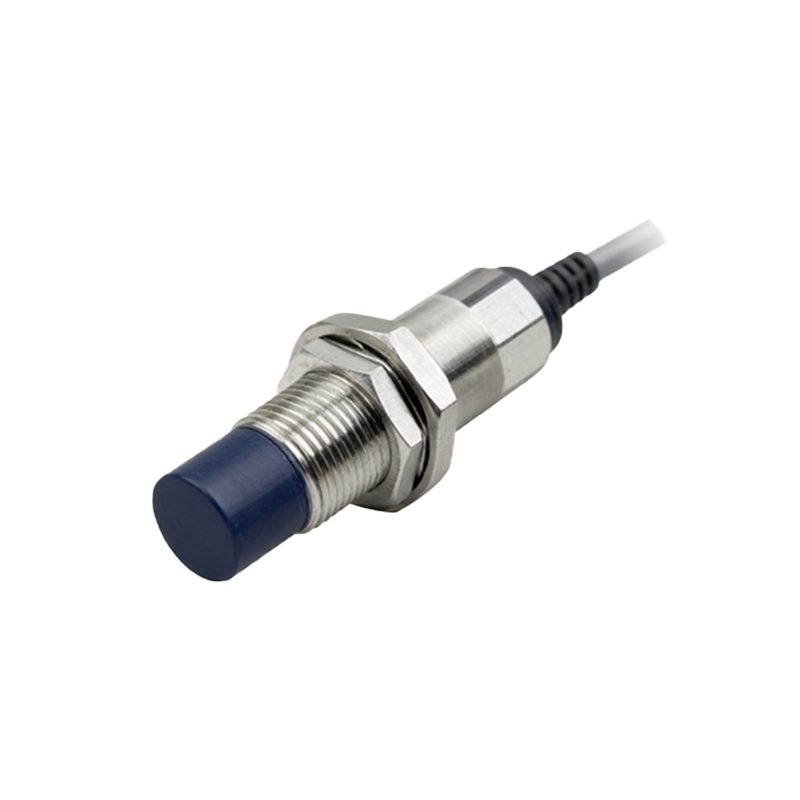
One of the key advantages of fine thread proximity switches is their versatility. They are available in various sensing ranges, output configurations (e.g., NPN, PNP, or analog), and housing sizes to suit diverse applications. For instance, in automated packaging systems, these sensors can detect minute variations in product placement, triggering precise actions for sorting or sealing. Similarly, in automotive assembly lines, they ensure components are correctly positioned before welding or fastening processes, enhancing overall quality control.
When selecting a fine thread proximity sensor, factors such as sensing distance, thread size (e.g., M5, M8, or M12 with fine pitch), and environmental ratings (e.g., IP67 for dust and water resistance) must be carefully considered. Advanced models may incorporate features like temperature compensation or short-circuit protection, further boosting reliability in demanding settings.
In practice, the implementation of these sensors often involves calibration to account for specific target materials, as ferrous and non-ferrous metals can influence inductive sensor performance. Regular testing and alignment are recommended to maintain optimal functionality, leveraging tools like oscilloscopes or manufacturer-specific diagnostic software.
Ultimately, fine thread proximity switch sensors embody the intersection of mechanical ingenuity and electronic sophistication. By enabling precise, repeatable detection in tight spaces, they contribute significantly to the efficiency, safety, and productivity of modern industrial systems. As automation continues to evolve, the demand for such specialized components is poised to grow, underscoring their role as indispensable tools in the pursuit of operational excellence.