In modern industrial automation and machinery, ensuring the safety of personnel is paramount. Safety proximity sensors play a critical role in this domain, acting as the first line of defense by detecting the presence or absence of objects without physical contact. Unlike standard proximity sensors, their safety-rated counterparts are designed, tested, and certified to meet stringent international safety standards, such as ISO 13849-1 and IEC 61508. This ensures a high level of reliability and performance in preventing hazardous machine movements when a person or object is detected within a predefined danger zone.
The core principle of operation for most safety proximity sensors is based on electromagnetic fields, inductive sensing, or capacitive sensing. Inductive sensors, the most common type for metal detection, generate an oscillating electromagnetic field. When a metallic object enters this field, it induces eddy currents that dampen the oscillation, triggering a switch in the output signal. For safety applications, these sensors incorporate redundant circuits and self-monitoring features. They continuously perform diagnostic checks to detect internal faults like wire breaks, short circuits, or component failures. If a fault is identified, the sensor drives its output to a safe state—typically switching off the safety signal—to ensure the machine stops or prevents a start.
Several key types of safety proximity sensors are deployed based on the application. Safety-rated inductive sensors are used for position monitoring of guards, doors, and robotic cells where metal parts need detection. Safety light curtains and laser scanners create an invisible protective field or plane; an interruption of this field by a person's body part immediately sends a stop signal. Safety mats and edges are pressure-sensitive devices placed on floors or around machines, triggering a safety response when stepped on. Furthermore, coded-magnet safety sensors, used with hydraulic cylinders or moving guards, provide a highly secure solution as they only respond to a specific, unique magnetic code, preventing tampering or false triggering from stray magnetic fields.
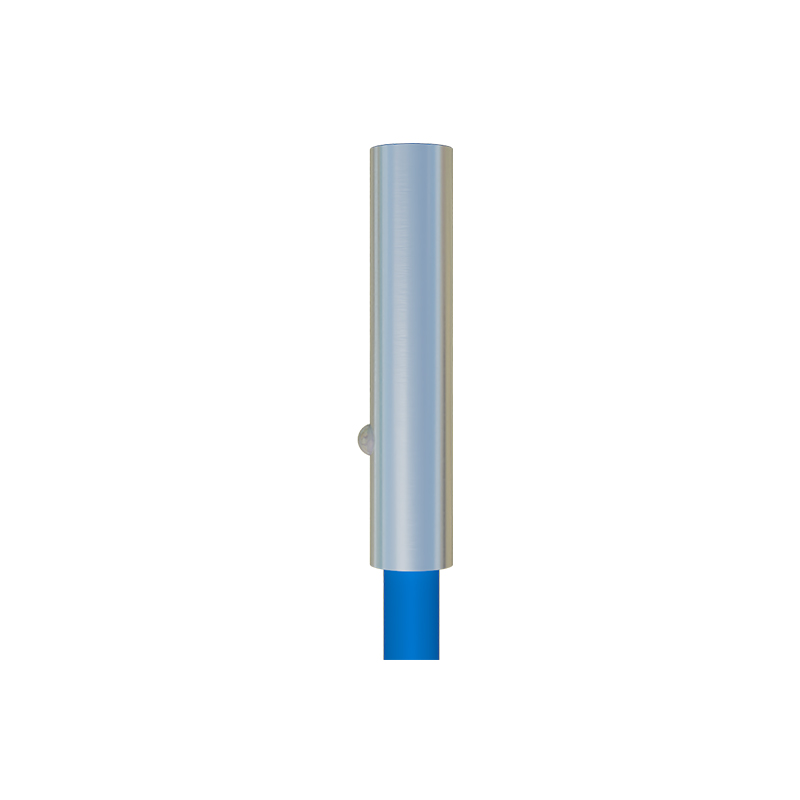
The applications for these devices are vast and critical. They are integral to robotic workcells, safeguarding human workers interacting with collaborative robots or working near traditional industrial robots. They monitor the position of machine guards, interlocking doors, and hinged or sliding access panels on industrial machinery. In automated guided vehicle (AGV) systems, safety laser scanners create protective fields to avoid collisions with personnel. They also play a vital role in press brakes, injection molding machines, and packaging equipment, preventing the machine cycle from initiating if a hand or tool is within the point of operation.
Selecting the right safety proximity sensor requires careful consideration of several factors. First, the required Safety Integrity Level (SIL) or Performance Level (PL) must be determined based on a risk assessment of the machine. The sensing range, size, and form factor must suit the installation space and detection needs. Environmental conditions are crucial; sensors are available with high IP ratings for resistance to dust, water, coolants, and chemicals. The output type (e.g., OSSD – Output Signal Switching Device) and connection interface must be compatible with the safety controller or relay. Finally, compliance with relevant standards and possession of certifications from bodies like TÜV are non-negotiable for genuine safety components.
Installation and maintenance are as important as selection. Sensors must be mounted securely and positioned correctly to reliably detect the target while avoiding interference from other metal objects or adjacent sensors. Regular functional testing, as part of the machine's overall safety system validation, is essential. This verifies that the sensor responds correctly to an intrusion and that any internal fault is properly reported, maintaining the integrity of the safety function over the equipment's lifetime.
In conclusion, safety proximity sensors are sophisticated, purpose-built devices that form the backbone of modern machine safety. By providing non-contact, reliable, and fault-monitored detection, they enable productive automation while rigorously protecting human operators. Understanding their technology, types, and proper application guidelines is essential for engineers, system integrators, and safety professionals committed to creating a safe industrial working environment.