In the world of industrial automation, robotics, and smart devices, proximity sensors are the silent workhorses that enable machines to "sense" their surroundings without physical contact. These devices detect the presence or absence of an object within a specific range, triggering a corresponding output. Their applications are vast, from ensuring safety on factory floors to enabling touchless faucets in public restrooms. Understanding the different types of proximity sensors is crucial for selecting the right technology for a given task. Each type operates on a distinct physical principle, offering unique advantages, limitations, and ideal use cases.
One of the most common and widely used types is the Inductive Proximity Sensor. This sensor generates an electromagnetic field. When a metallic object, typically ferrous metals like steel or iron, enters this field, it induces eddy currents within the object. The sensor detects the change in the field's oscillation amplitude and signals the presence of the object. Key advantages include high switching frequency, robustness in harsh industrial environments (resistant to dust, dirt, and moisture), and long operational life due to the absence of moving parts. They are, however, limited to detecting metals and have a relatively short sensing range, usually from a few millimeters to about 60 millimeters. Typical applications include position sensing of metal parts, limit switching in machine tools, and detecting the presence of gears or bearings.
For non-metallic objects, Capacitive Proximity Sensors are often the solution. These sensors function similarly to inductive sensors but detect changes in capacitance. The sensor forms one plate of a capacitor, with the target object acting as the other plate. As an object enters the sensing field, it alters the dielectric constant, changing the capacitance and triggering detection. The significant advantage is their ability to detect a wide variety of materials, including liquids, plastics, glass, wood, and granular substances. They can even detect through certain non-metallic barriers. Sensing ranges are similar to inductive sensors. Common uses include liquid level detection in tanks, material handling for plastics or paper, and touch-sensitive interfaces.
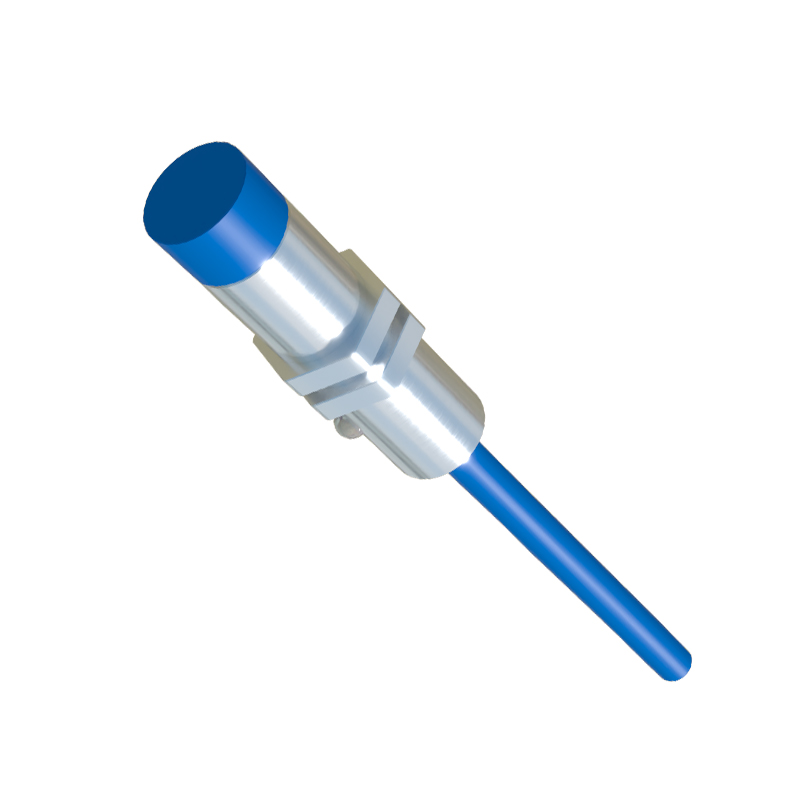
Ultrasonic Proximity Sensors employ sound waves beyond the human hearing range. They emit high-frequency ultrasonic pulses and measure the time it takes for the echo to return after bouncing off a target object. This time-of-flight principle allows them to measure distance as well as simply detect presence. Their major strength is the ability to detect virtually any solid or liquid object, regardless of color, transparency, or material composition, over longer distances—from centimeters to several meters. They are less affected by environmental factors like dust, smoke, or light. Drawbacks include potential interference from soft materials that absorb sound or from other ultrasonic noise sources. They are prevalent in parking assistance systems, tank level monitoring, and collision avoidance on automated guided vehicles (AGVs).
Photoelectric Sensors, or photo-eyes, use light to detect objects. They consist of a light emitter (usually an LED) and a receiver. There are three main sub-types. The Through-beam type has separate emitter and receiver units; an object is detected when it breaks the light beam. This offers the longest sensing range and high reliability. The Retro-reflective type uses a single unit and a reflector; detection occurs when the object interrupts the beam reflected back. The Diffuse (or proximity) type has the emitter and receiver in one housing and detects light reflected directly off the target object. Photoelectric sensors can detect objects of almost any material but can be affected by color, reflectivity, and environmental contaminants like dirt. They are extremely versatile, used in packaging lines, object counting, and door control systems.
A specialized and highly precise category is the Magnetic Proximity Sensor (often called a reed switch or Hall-effect sensor). These detect the presence of a permanent magnet. Reed switches use hermetically sealed ferromagnetic reeds that close or open in the presence of a magnetic field. Hall-effect sensors produce a voltage output proportional to the magnetic field strength. They are known for extreme reliability, very fast response times, and the ability to operate in completely sealed environments, making them ideal for hazardous or wet conditions. Applications include detecting the position of cylinder pistons, speed sensing in automotive systems (e.g., crankshaft position), and security systems on doors and windows.
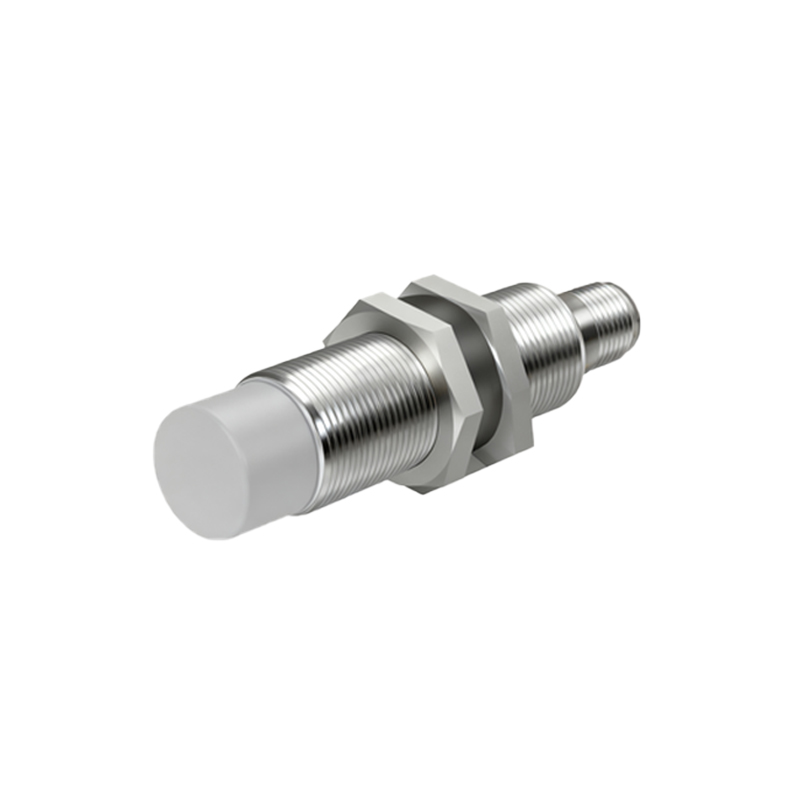
Finally, Eddy-Current Sensors represent a high-precision variant of inductive sensing. They use a high-frequency alternating current in a coil to generate a magnetic field. When a conductive target approaches, it induces eddy currents, which oppose the sensor's field. The interaction is measured with exceptional precision, allowing for not just detection but also precise measurement of displacement, vibration, and position in the micron range. They are primarily used in demanding industrial and scientific applications like monitoring turbine shaft vibration, precision machining, and material thickness testing.
Choosing the correct proximity sensor