In the realm of advanced sensing and measurement, a novel class of devices is making significant strides: jumping laser sensors. Unlike traditional static laser measurement tools, these innovative systems incorporate dynamic, often rapid, point-to-point scanning or "jumping" of the laser beam. This capability fundamentally transforms how spatial data is captured, offering unprecedented speed, flexibility, and precision in complex environments.
The core principle behind a jumping laser sensor lies in its sophisticated beam steering mechanism. While standard laser sensors, such as time-of-flight (ToF) or triangulation sensors, typically measure a single point or a fixed line, jumping laser sensors employ technologies like galvanometer mirrors, MEMS (Micro-Electro-Mechanical Systems) mirrors, or acousto-optic deflectors. These components allow for the ultra-fast and precise redirection of the laser beam to predefined coordinates in a field of view. Imagine a laser dot that can instantaneously teleport from one measurement point to another across a surface, rather than sweeping continuously. This discrete, targeted approach is the essence of the "jump."
This methodology confers several compelling advantages. First and foremost is speed. By eliminating the need to scan every infinitesimal point along a path, these sensors can achieve exceptionally high measurement rates, often in the range of tens or even hundreds of thousands of points per second. This makes them ideal for high-throughput industrial inspection, where every millisecond counts. Secondly, they offer intelligent sampling. The sensor can be programmed to focus its measurement efforts on areas of high interest or potential defect zones, optimizing data acquisition and processing power. For instance, on a manufactured part, it might densely sample critical tolerances while only taking sparse reference points on flat, non-critical surfaces.
The applications of jumping laser sensor technology are vast and growing. In industrial automation and quality control, they are deployed for rapid 3D contour mapping, weld seam inspection, and component verification on fast-moving assembly lines. Their speed ensures no bottleneck in production. In the field of robotics, these sensors provide real-time, high-resolution environmental data for navigation and object manipulation, enabling robots to dynamically understand and interact with unstructured spaces. Furthermore, in biomedical imaging and research, adapted versions can perform non-contact, high-speed profiling of biological tissues or materials.

Another promising domain is augmented reality (AR) and spatial mapping. The ability to quickly capture precise depth information of a room or object by "jumping" to key feature points facilitates the creation of detailed digital twins and immersive AR experiences. Compared to traditional LiDAR which often uses a rotating scan pattern, a jumping laser system can be more compact, energy-efficient, and tailored in its scanning pattern.

However, the technology is not without its challenges. The precision of the jump—the accuracy with which the beam lands on its intended target—is paramount and depends on the calibration and quality of the steering mechanism. Environmental factors like vibration or thermal drift can affect performance. Additionally, the system's software and algorithms for planning the optimal jump sequence and interpreting the scattered data points are complex and crucial for overall effectiveness.
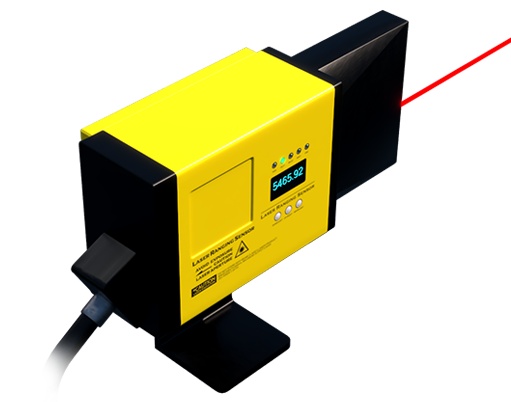
Looking ahead, the evolution of jumping laser sensors is closely tied to advancements in micro-optics, control systems, and machine learning. Smarter algorithms will allow for adaptive scanning patterns that change in real-time based on initial findings. Integration with other sensor modalities, like high-resolution cameras, will create even more powerful hybrid perception systems.
In conclusion, jumping laser sensors represent a significant leap forward in metrology and machine perception. By moving beyond static or simple continuous scanning to intelligent, dynamic point acquisition, they unlock new levels of efficiency and capability. As the technology matures and becomes more accessible, its impact will be felt across manufacturing, robotics, scientific research, and beyond, redefining what is possible in the precise digital capture of our physical world.