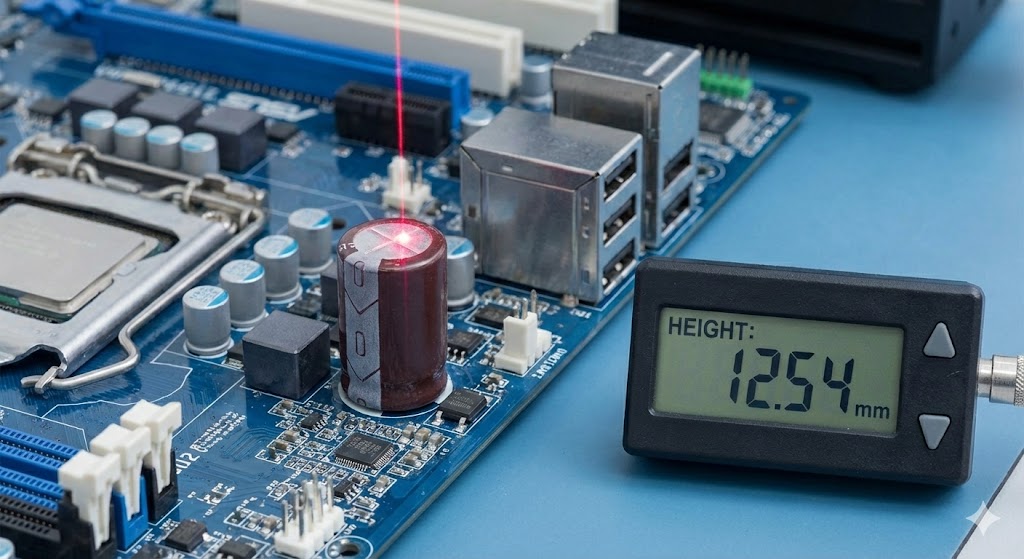
Laser sensors have become integral components across numerous industries, from manufacturing and robotics to autonomous vehicles and environmental monitoring. This article presents a comprehensive analysis of experimental conclusions drawn from rigorous testing of various laser sensor types, focusing on their operational performance, limitations, and optimal application scenarios. The findings are based on controlled laboratory experiments and real-world field tests, providing a data-driven perspective for engineers and system integrators.
A primary experimental focus was on the accuracy and precision of time-of-flight (ToF) laser sensors. Tests conducted in controlled environments with varying ambient light conditions, surface reflectivities, and measurement distances revealed consistent patterns. For standard diffuse reflective targets at distances up to 10 meters, high-quality ToF sensors demonstrated a mean accuracy of ±1.5 mm, with precision (repeatability) often exceeding ±0.5 mm. However, performance degraded significantly when measuring low-reflectivity surfaces, such as black matte materials, or in the presence of intense direct sunlight. Cross-talk interference, where multiple sensors operate in close proximity, was also identified as a critical factor requiring careful frequency or timing modulation to mitigate erroneous readings.
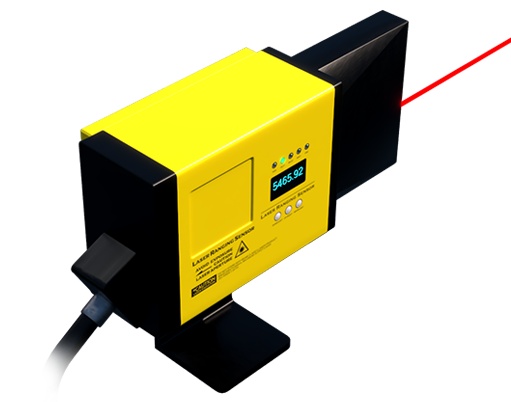
Experiments with triangulation laser sensors, commonly used for high-resolution displacement and profile measurement, yielded distinct conclusions. These sensors excelled in short-range applications (typically under 1 meter), achieving sub-micron resolution on stable, well-defined surfaces. The experiments conclusively showed that their performance is highly sensitive to the target's surface orientation and optical properties. A deviation in the incident angle beyond the sensor's specified acceptance range led to a complete loss of signal. Furthermore, contaminants like dust, oil, or condensation on the lens or target surface were found to be a major source of error, necessitating regular maintenance and clean operating environments for reliable operation.
The robustness and environmental durability of laser sensors were tested under stress conditions, including temperature cycling, mechanical vibration, and exposure to moisture. Industrial-grade sensors with proper IP ratings (e.g., IP67) maintained functionality within their specified temperature ranges (-10°C to 50°C was common). However, a key conclusion was that extreme temperature fluctuations could cause temporary drift in calibration, requiring longer warm-up times or real-time compensation algorithms. Vibration tests indicated that while the solid-state laser diodes were generally resilient, misalignment of optical components within the housing was a potential failure mode in high-vibration industrial settings.
A significant portion of the experimental work evaluated the integration of laser sensors into larger data acquisition and control systems. Conclusions highlighted the importance of signal processing. Raw sensor data, especially in dynamic measurement scenarios, often contained noise. Implementing digital filters (like moving average or Kalman filters) in the data processing pipeline dramatically improved the stability and usability of the measurement output. Communication protocol latency—comparing analog voltage outputs, PWM, and digital interfaces like RS-485 or Ethernet/IP—was quantified. For high-speed applications, such as object detection on a fast conveyor, the end-to-end system latency, not just the sensor's response time, was determined to be the critical performance bottleneck.
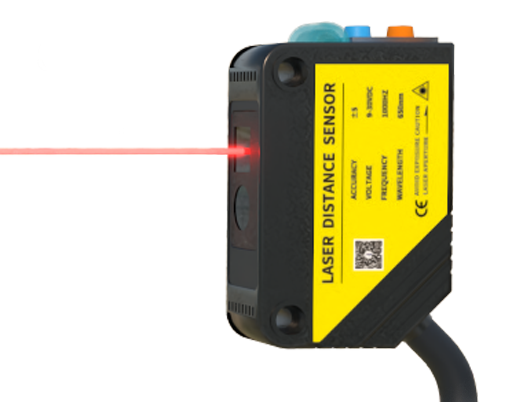
Finally, application-specific experiments provided practical conclusions. In robotic bin-picking trials, the combination of a 2D laser profile sensor for object localization and a 3D ToF sensor for volumetric assessment proved most effective. In autonomous navigation prototypes, LIDAR sensors demonstrated superior long-range object detection for mapping but were supplemented by short-range laser scanners for immediate obstacle avoidance, confirming the need for sensor fusion. For precision alignment in assembly tasks, laser micrometer systems provided the highest accuracy but required stable thermal and vibrational environments to achieve specified tolerances.
In summary, these experimental conclusions underscore that there is no universally "best" laser sensor. The optimal selection is a function of the specific measurement task, environmental conditions, required accuracy, speed, and system integration capabilities. Understanding these empirical results allows for the informed deployment of laser sensing technology, maximizing reliability and performance while mitigating inherent limitations through appropriate system design and environmental control.