In the realm of advanced sensing technology, the emergence of ultra-large laser sensors marks a significant leap forward. These sophisticated devices, characterized by their expansive detection areas and unparalleled precision, are transforming industries that demand high-accuracy, long-range, and large-scale measurement capabilities. Unlike conventional sensors limited by size or resolution constraints, ultra-large laser sensors leverage coherent light to map, detect, and analyze environments and objects with microscopic detail across vast distances.
The core principle behind these sensors is Light Detection and Ranging (LiDAR), enhanced and scaled to new dimensions. They emit pulsed laser waves and measure the time it takes for each pulse to reflect off a target and return to the sensor. By scanning across a wide field, often using rotating mirrors or phased arrays, they generate precise three-dimensional point clouds of the surveyed area. The "ultra-large" designation typically refers to sensors with exceptionally long range—sometimes exceeding several kilometers—or those capable of covering immense swathes of terrain in a single scan cycle. This scalability is made possible through advancements in laser diode efficiency, high-speed photodetectors, and powerful data processing algorithms.

The applications of ultra-large laser sensors are diverse and impactful. In autonomous vehicle development, they serve as the primary eyes for self-driving cars and trucks, creating real-time, high-definition 3D maps of the vehicle's surroundings to navigate complex environments safely. The geographic information and surveying sector relies on them for topographic mapping, forestry management, and coastal erosion monitoring, where they can accurately measure terrain elevation and vegetation density over hundreds of square kilometers from airborne platforms.
In the field of infrastructure and construction, these sensors enable precise monitoring of large-scale projects like dams, bridges, and skyscrapers. They can detect minute structural deformations or shifts over time, facilitating predictive maintenance and ensuring public safety. Similarly, in archaeology and cultural heritage preservation, non-contact laser scanning allows for the detailed digital archiving of historical sites, monuments, and artifacts without risking damage.
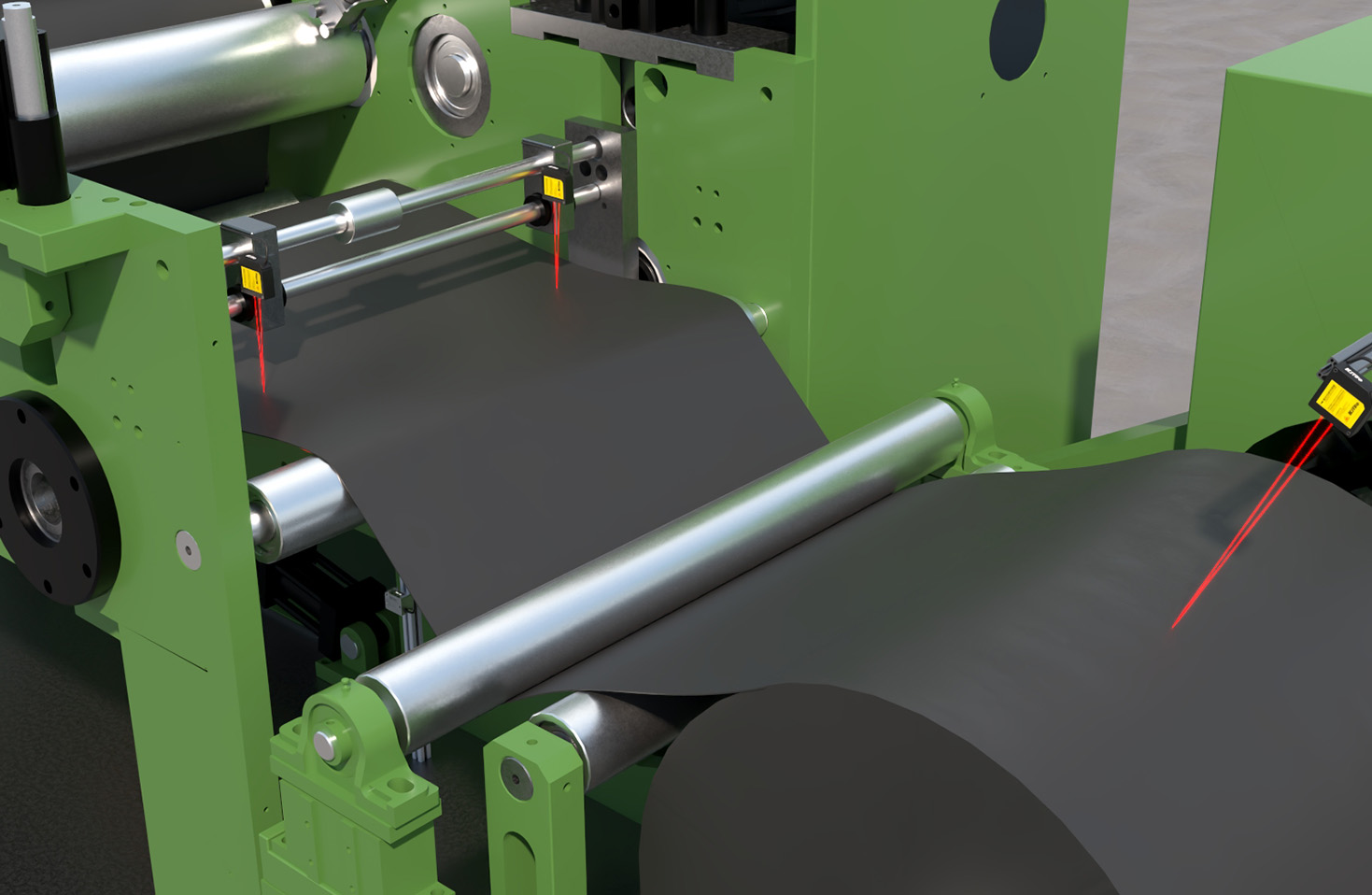
The industrial manufacturing sector benefits immensely from the integration of ultra-large laser sensors in quality control and automation. They can perform rapid, precise dimensional inspections of large components, such as aircraft wings or ship hulls, ensuring adherence to strict design specifications. In robotics, these sensors provide the spatial awareness necessary for machines to operate autonomously in dynamic, unstructured environments like warehouses or ports.
Environmental science is another critical beneficiary. Scientists deploy these sensors to monitor atmospheric composition, cloud profiles, and pollution dispersion. Specialized variants can even measure wind speeds and directions over large areas, crucial for optimizing wind farm layouts and improving weather forecasting models.
Despite their transformative potential, deploying ultra-large laser sensors presents notable challenges. The high initial cost of development and acquisition can be prohibitive for some organizations. Processing the enormous volumes of data generated—often terabytes from a single survey—requires substantial computational power and sophisticated software. Environmental factors like fog, rain, or highly reflective surfaces can sometimes degrade signal quality, though advanced signal processing techniques are continually mitigating these issues. Furthermore, the use of powerful lasers, especially in airborne systems, necessitates strict adherence to eye safety regulations and operational protocols.
Looking ahead, the trajectory for ultra-large laser sensors points toward greater miniaturization, reduced power consumption, and lower costs, driven by innovations in solid-state LiDAR and photonic integrated circuits. The fusion of laser sensor data with other modalities like radar, cameras, and thermal imaging will create more robust and comprehensive perception systems. As machine learning algorithms become more adept at interpreting point cloud data in real-time, the autonomy and intelligence of systems relying on these sensors will reach new heights.
In conclusion, ultra-large laser sensors represent a cornerstone technology for the data-driven future. By providing precise, scalable, and non-contact measurement solutions, they are unlocking new possibilities across transportation, environmental management, industrial automation, and scientific discovery. Their continued evolution will undoubtedly catalyze further innovations, shaping how we perceive, interact with, and understand the physical world on a grand scale.