In the world of industrial automation and smart devices, the reliable detection of materials is paramount. While metals are often the default target for many sensing technologies, the need to accurately sense non-metallic materials, particularly various types of plastics, has grown exponentially. Proximity sensors, specifically engineered or selected for plastic detection, have become critical components in modern manufacturing, packaging, and quality control processes. Unlike standard inductive proximity sensors, which are primarily effective only with metals, detecting plastics requires leveraging different physical principles.
The core challenge in sensing plastics lies in their non-conductive and non-magnetic nature. Therefore, the most common and effective technologies employed are capacitive and ultrasonic proximity sensors. Capacitive proximity sensors operate by generating an electrostatic field. They can detect any material that affects this field, including plastics, liquids, powders, and glass. The sensor's oscillator circuit is tuned so that when a target object enters its sensing field, it causes a change in capacitance, triggering an output signal. For plastics, the material's dielectric constant is the key property. Materials with a higher dielectric constant (like PVC or PET) are easier to detect at greater distances than those with a lower constant (like PTFE or polyethylene). Many capacitive sensors feature sensitivity adjustment potentiometers, allowing engineers to fine-tune the sensor to ignore certain materials (like a plastic container wall) while detecting the material inside (like a liquid level).
Ultrasonic proximity sensors offer another robust solution, especially for challenging applications involving clear plastics, varying colors, or complex surface textures. These sensors emit high-frequency sound waves and evaluate the echo reflected from a target. The time lapse between sending the signal and receiving the echo is used to calculate the distance to the object. Since they rely on sound reflection and not optical or electrical properties, they are largely unaffected by the color, transparency, or dielectric properties of the plastic. This makes them ideal for detecting clear films, transparent bottles, or even irregularly shaped plastic parts.
The applications for plastic-sensing proximity sensors are vast and diverse. In packaging lines, they verify the presence of plastic bottles, caps, or blister packs before filling and sealing. In automotive assembly, they ensure plastic components like dashboards, trim pieces, or fluid reservoirs are correctly positioned for robotic handling. In the electronics industry, they detect the presence of plastic housings or connectors on circuit boards. Level detection is another major application, where capacitive sensors monitor the fill level of plastic pellets in hoppers or liquids in plastic tanks without making physical contact.
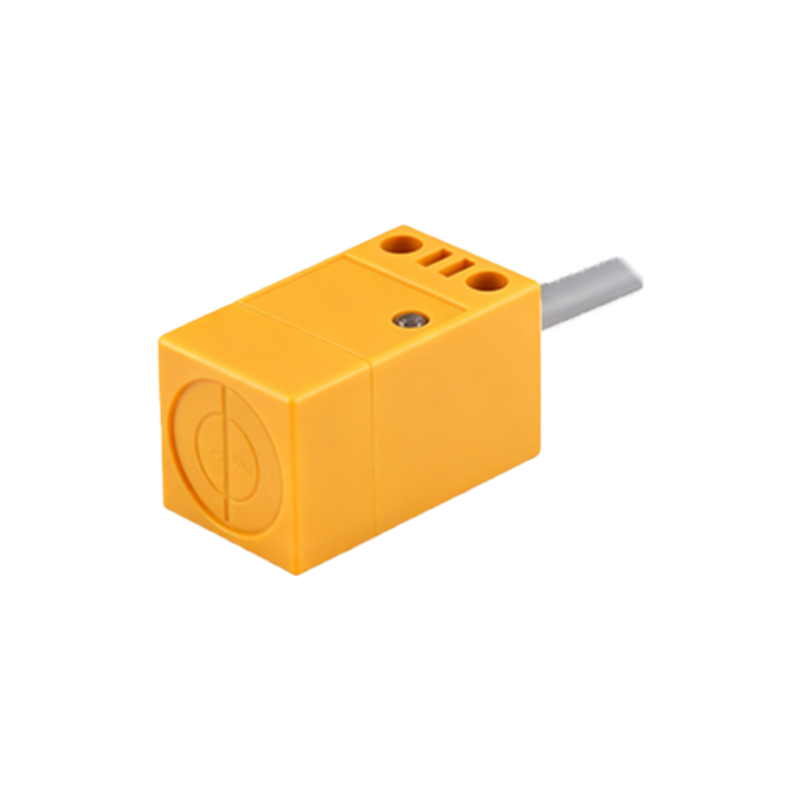
Selecting the right sensor requires careful consideration of several factors. First, identify the specific type of plastic and its properties (dielectric constant, color, transparency, surface finish). For solid, opaque plastics with a reasonable dielectric constant, a capacitive sensor is often the simplest and most cost-effective choice. For clear films, glossy surfaces that might cause optical issues, or applications requiring precise distance measurement, an ultrasonic sensor is preferable. The sensing distance needed, environmental conditions (presence of dust, moisture, or temperature extremes), required output type (PNP/NPN, analog), and mounting constraints are all critical decision points. It is also essential to consider potential interference from other materials in the sensing environment; a capacitive sensor might falsely trigger from background humidity or conductive dust if not properly shielded and adjusted.
Installation and setup are crucial for optimal performance. For capacitive sensors, the sensing field can be influenced by surrounding metals or other dielectrics. Maintaining the recommended clearance from metal mounting brackets and other objects is necessary to ensure stable operation. The sensitivity adjustment should be made with the target object in the desired sensing position, increasing sensitivity until reliable detection is achieved, but not so high that it causes false triggers from background noise. Ultrasonic sensors require a clear "acoustic path" and may be affected by extreme air turbulence or temperature gradients, though many modern models include temperature compensation.
In conclusion, the detection of plastics is not a limitation but a specialized application area for modern proximity sensing. By understanding the principles behind capacitive and ultrasonic technologies, engineers and system integrators can reliably automate processes involving a wide array of plastic materials. The key to success lies in matching the sensor's capabilities to the specific material properties and application demands, ensuring efficiency, reliability, and quality in increasingly automated production environments.