In the world of industrial automation, robotics, and smart systems, the ability to detect the presence, absence, or distance of an object without physical contact is fundamental. Among the various technologies enabling this capability, ultrasonic proximity sensors stand out for their reliability, versatility, and cost-effectiveness. These devices operate on a simple yet powerful principle, mimicking the biological echolocation used by bats and dolphins.
The core working principle of an ultrasonic sensor involves the emission and reception of sound waves beyond the range of human hearing, typically above 20 kHz. The sensor contains a transducer that acts as both a speaker and a microphone. First, it emits a short, high-frequency burst of ultrasonic pulses. These sound waves travel through the air at a known speed (approximately 343 meters per second at room temperature). If an object is present within the sensor's detection range, the sound waves reflect off its surface and travel back to the sensor. The transducer then switches to receive mode, detecting the returning echo. An internal electronic circuit measures the time elapsed between the emission of the pulse and the reception of the echo. Using the constant speed of sound, the sensor accurately calculates the distance to the object using the formula: Distance = (Speed of Sound × Time of Flight) / 2.
This "time-of-flight" measurement method grants ultrasonic sensors several distinct advantages. They are largely insensitive to the object's color, transparency, or surface finish, unlike optical sensors which can struggle with dark, transparent, or glossy materials. Whether detecting a clear glass bottle, a matte black box, or a liquid surface, an ultrasonic sensor provides consistent performance. Furthermore, they are relatively unaffected by ambient light conditions, dust, smoke, or light fog, making them suitable for challenging industrial environments where photoelectric sensors might fail.
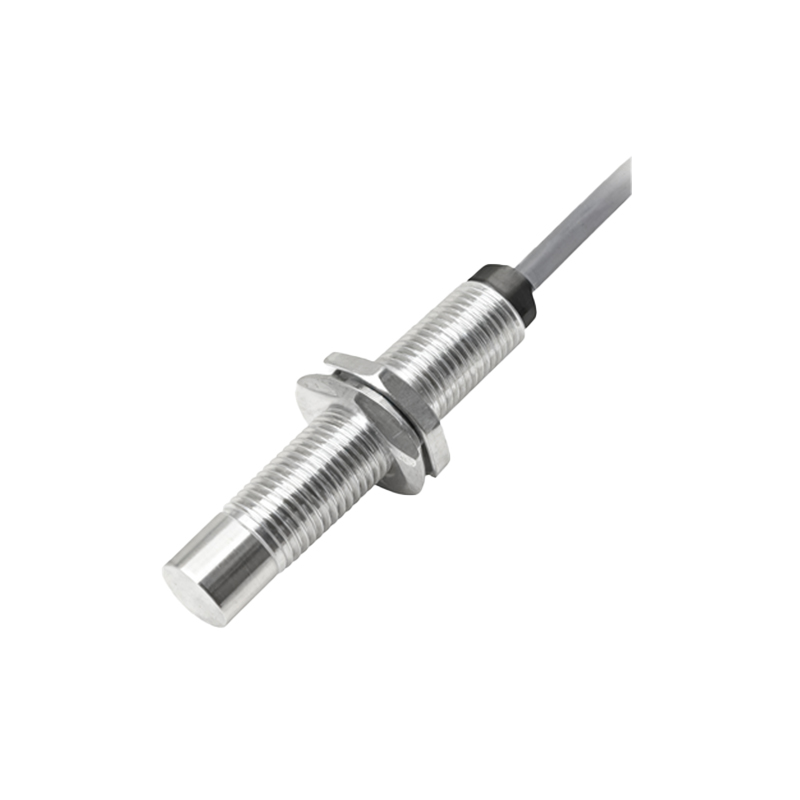
The applications for ultrasonic proximity sensors are vast and cross multiple industries. In manufacturing and packaging, they are used for precise level detection in tanks and silos, controlling the fill height of bottles or cans, and detecting the presence of items on conveyor belts. In the automotive sector, they are the key component in parking assist systems, measuring the distance to obstacles and providing audible warnings to the driver. Material handling and logistics utilize them for pallet detection, fork alignment, and controlling the height of automated guided vehicles (AGVs). Emerging applications include touchless interfaces, people counting, and even as a supportive technology in autonomous mobile robots for obstacle avoidance and navigation.
When selecting an ultrasonic sensor for a specific application, several critical parameters must be considered. The sensing range is paramount; sensors are available with ranges from a few centimeters up to several meters. The beam angle determines the width of the detection cone; a narrow beam is good for precise detection, while a wide beam is useful for area monitoring. Response time indicates how quickly the sensor can take a new measurement, crucial for high-speed applications. Output type is another key decision: analog outputs (4-20 mA or 0-10 V) provide continuous distance information, while discrete digital outputs (PNP/NPN) act as simple on/off switches at a set threshold. Environmental factors like operating temperature, potential exposure to chemicals, and required ingress protection (IP) rating for dust and water resistance must also align with the installation conditions.
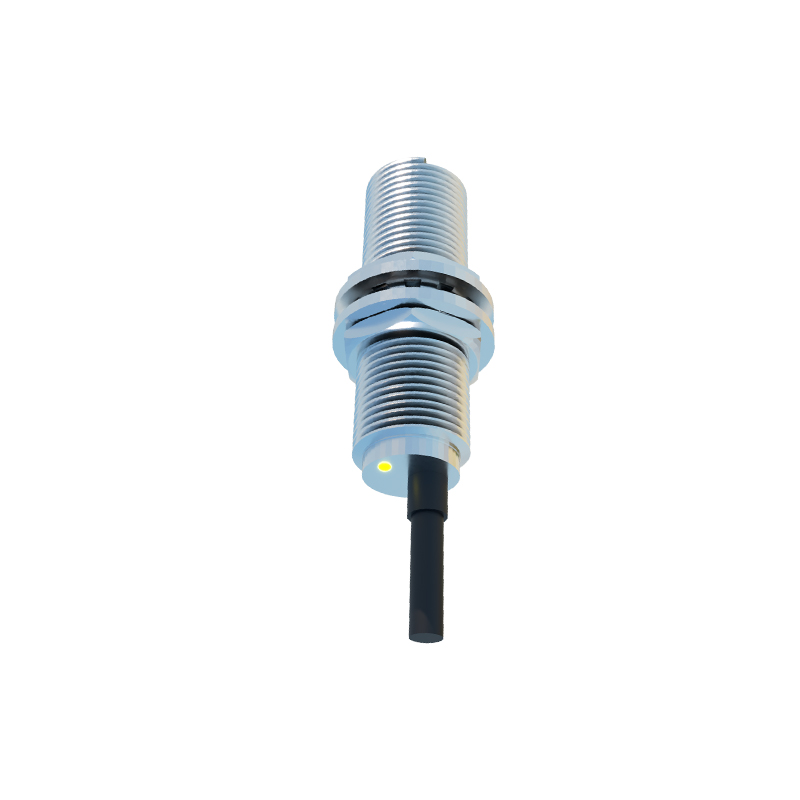
Despite their robustness, ultrasonic sensors have limitations. They can be affected by temperature gradients, which alter the speed of sound, though many modern models include temperature compensation. Very soft, absorbent materials like foam or fabric may not reflect sound waves effectively. Extremely turbulent air or high-frequency noise in the environment can also interfere with signal integrity. Therefore, a thorough evaluation of the target object and the operating environment is essential for optimal sensor selection.
In conclusion, ultrasonic proximity sensors offer a robust and adaptable solution for non-contact detection and distance measurement. Their ability to perform reliably with a wide variety of object types and in demanding environments secures their place as a cornerstone technology in automation. By understanding their operating principle, key advantages, and appropriate application areas, engineers and system integrators can effectively leverage these sensors to enhance efficiency, safety, and intelligence in countless systems, from simple presence detection to complex spatial awareness tasks.