In the world of industrial automation, robotics, and consumer electronics, the ability to detect the presence, position, or motion of an object without physical contact is paramount. Among the various technologies enabling this capability, Hall Effect proximity sensors stand out for their reliability, durability, and versatility. These solid-state devices operate on a fundamental principle of physics, offering unique advantages in challenging environments.
The core operating principle is based on the Hall Effect, discovered by Edwin Hall in 1879. When a current-carrying conductor or semiconductor is placed in a perpendicular magnetic field, a voltage difference, known as the Hall voltage, is generated across the material. This voltage is proportional to the strength of the applied magnetic field. A Hall Effect proximity sensor leverages this phenomenon. It typically consists of a Hall element (the sensing chip), a signal conditioning circuit, and a permanent magnet or relies on a magnetic field from the target. When a ferromagnetic object (like a steel gear tooth) or a permanent magnet approaches the sensor, it disturbs or alters the magnetic field at the Hall element. This change in field strength causes a corresponding change in the output Hall voltage. The sensor's internal electronics then process this signal to provide a clean, digital on/off switch signal or a continuous analog output proportional to distance.
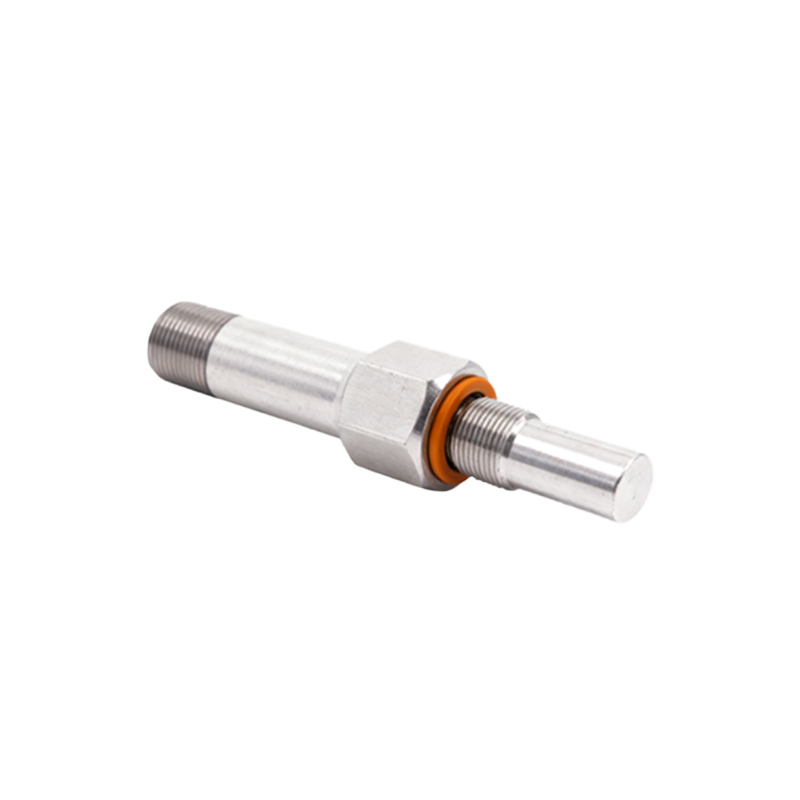
This working mechanism grants Hall Effect sensors several distinct benefits. Firstly, they are true solid-state devices with no moving parts, leading to exceptionally long operational life and high reliability, even with millions of cycles. They are immune to environmental contaminants such as dust, oil, moisture, and vibrations, making them ideal for harsh industrial settings. Unlike optical sensors, they are not affected by ambient light, dirt, or fog. Their response time is extremely fast, allowing for detection of high-speed events. Furthermore, they can operate over a wide temperature range and are capable of sensing through non-ferromagnetic materials like plastic, aluminum, or glass, enabling innovative packaging and design.
The applications of Hall Effect proximity sensors are vast and varied. In the automotive industry, they are ubiquitous, used for detecting wheel speed for anti-lock braking systems (ABS), crankshaft and camshaft position sensing, seat belt buckle detection, and gearbox position sensing. In industrial automation, they are employed for limit switching, counting rotating parts (gears, sprockets), detecting valve positions, and in conveyor systems. Consumer electronics utilize miniature Hall Effect sensors for lid-open detection in laptops, flip-cover detection in smartphones, and brushless DC motor commutation. They are also critical in medical devices, aerospace systems, and white goods for position feedback.
When selecting a Hall Effect proximity sensor for a specific application, several key parameters must be considered. The sensing distance, or switch point, is crucial and depends on the magnet's strength and the target material. Output type is a primary choice: digital (often called switch or latch) provides a simple high/low signal, while analog outputs a voltage or current proportional to the magnetic field strength, useful for precise position sensing. The electrical characteristics, such as supply voltage, output current, and connection type (2-wire, 3-wire PNP/NPN), must match the control system. Housing material and protection rating (IP67, IP69K) are vital for environmental durability. Finally, the magnetic actuation method—either using a separate permanent magnet or detecting the presence of a ferrous target—defines the application setup.
In comparison to other proximity sensor types like inductive, capacitive, or optical, Hall Effect sensors have a specific niche. Inductive sensors only detect metals, capacitive sensors detect any material, and optical sensors require a clear line of sight. The Hall Effect sensor's specific response to magnetic fields makes it the superior choice for applications involving permanent magnets or where contactless detection of ferrous objects in dirty conditions is needed. Their main limitations include sensitivity to external magnetic fields and a typically shorter sensing range compared to some inductive sensors.
In conclusion, Hall Effect proximity sensors are a robust and essential technology for non-contact detection. Their foundation in a simple physical effect translates into highly reliable and maintenance-free operation. From ensuring automotive safety to enabling precise industrial control and smart device functionality, these sensors play a silent yet critical role in modern technology. Understanding their principle, strengths, and selection criteria allows engineers and designers to effectively harness their capabilities for innovative and reliable solutions across countless industries.