Laser displacement sensors are non-contact measurement devices that utilize laser triangulation or time-of-flight principles to determine the distance to a target object with high precision. By emitting a focused laser beam onto the target's surface and analyzing the reflected light, these sensors can detect minute changes in position, thickness, or profile. Their core advantage lies in the ability to measure delicate, hot, fast-moving, or otherwise inaccessible surfaces without physical contact, eliminating the risk of damage or wear.
The operating principle of most industrial laser displacement sensors is based on laser triangulation. A laser diode projects a visible or infrared spot onto the target. The light reflected from this spot is focused through a receiving lens onto a position-sensitive detector, typically a CCD or CMOS array. As the target distance changes, the position of the reflected spot on the detector shifts. This shift is calculated by the sensor's internal processor to output a precise distance value. For very long-range measurements, time-of-flight sensors, which calculate distance based on the round-trip time of a laser pulse, are often employed.
Key performance specifications define a sensor's capability. Resolution refers to the smallest detectable change in distance, often down to the sub-micron level. Repeatability indicates the consistency of measurements under unchanged conditions. Linearity defines the accuracy across the entire measuring range. The sampling rate, or response speed, determines how quickly the sensor can update its output, which is critical for high-speed production lines. Factors like target surface color, material, texture, and ambient light can influence performance, though advanced models incorporate algorithms to compensate for these variables.
The applications of laser displacement sensors span countless industries. In automotive manufacturing, they measure critical gaps and flushness between body panels, inspect tire tread depth, and monitor brake disc thickness. In electronics, they ensure the precise height of components on circuit boards and measure the flatness of semiconductor wafers and smartphone screens. In metal processing, they control roller gaps in mills and measure the thickness of plates and sheets. They are indispensable in robotics for precise positioning and guidance, and in logistics for detecting object presence and measuring parcel dimensions. Furthermore, they play a vital role in quality control for checking product dimensions, detecting warpage, and profiling complex shapes.
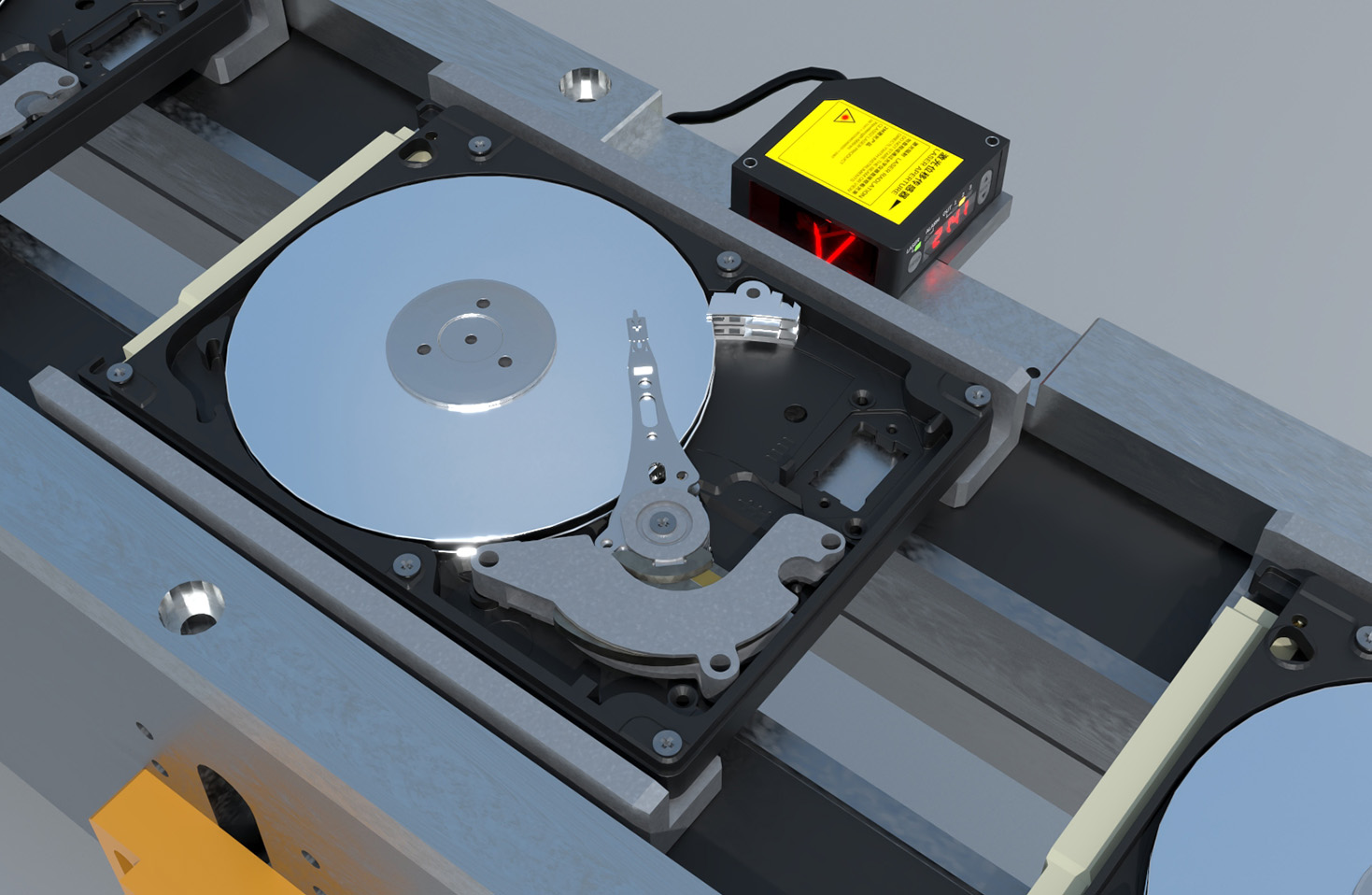
Selecting the right laser displacement sensor requires careful consideration of several factors. First, define the required measuring range and the necessary resolution. A sensor with a longer range typically has a larger spot size, which may not be suitable for measuring sharp edges or small features. Second, consider the target's characteristics. Rough, dark, or transparent surfaces can scatter or absorb laser light, reducing signal strength; specialized models with adjustable laser power or different wavelengths (e.g., blue lasers for red-hot metals) are available. Third, the required response speed must match the application's dynamics. Fourth, the sensor's output interface (analog voltage/current, digital RS-232/485, Ethernet, or fieldbus) must be compatible with the control system. Finally, environmental factors such as temperature fluctuations, dust, vibration, and exposure to coolant must be accounted for, often necessitating sensors with high IP ratings and robust housings.

Installation and maintenance are straightforward but crucial for optimal performance. The sensor should be mounted securely to minimize vibration. Ensuring the laser beam is perpendicular to the target surface within the sensor's specified tolerance is essential for accuracy. Regular cleaning of the front lens prevents dust accumulation from attenuating the signal. Users should perform periodic calibration checks using a known reference standard to maintain measurement integrity.

Recent technological advancements continue to expand the possibilities. Confocal chromatic sensors offer exceptional performance on transparent and highly reflective surfaces. High-speed line laser sensors project a laser line instead of a single spot, enabling rapid 2D profile measurement. The integration of embedded intelligence allows for in-sensor data processing, such as pass/fail judgments or profile comparisons, reducing the load on central controllers. Furthermore, the miniaturization of components has led to remarkably compact sensor designs that fit into increasingly tight spaces.
In conclusion, laser displacement sensors are fundamental tools for modern automation and precision metrology. Their non-contact nature, high speed, and exceptional accuracy make them irreplaceable for tasks demanding reliable dimensional measurement. By understanding their principles, key specifications, and application requirements, engineers and technicians can effectively select and implement these sensors to enhance product quality, optimize processes, and drive innovation across the manufacturing and research landscape.