Temperature measurement is a fundamental requirement across countless industrial, scientific, and technological fields. While traditional contact sensors like thermocouples and RTDs have long been the standard, non-contact methods offer unique advantages in many challenging scenarios. Among these, laser temperature sensors represent a sophisticated and highly effective solution. This article delves into the working principles, diverse applications, and key benefits of this advanced technology.
At its core, a laser temperature sensor is a type of infrared (IR) thermometer. It operates on the principle of detecting the infrared radiation emitted by all objects with a temperature above absolute zero. The intensity and spectral distribution of this emitted radiation are directly related to the object's surface temperature, a relationship governed by Planck's law of black-body radiation. The "laser" component is primarily for aiming. One or more low-power laser diodes project a visible spot or pattern onto the target, ensuring the operator knows precisely which area is being measured. The actual temperature measurement is performed by an optical system that collects the infrared energy from that same spot and focuses it onto a sensitive detector, typically a thermopile or a photodetector.

The detector converts the incoming IR radiation into an electrical signal. This signal is then processed by the sensor's internal electronics, which applies algorithms to account for the target's emissivity—a critical property that defines how efficiently a surface emits infrared energy compared to a perfect black body. Emissivity values range from 0 to 1. Shiny metals have low emissivity, while oxidized surfaces or non-metals typically have high emissivity. Accurate measurement requires setting the correct emissivity value in the sensor, often based on material reference tables or comparative measurements. Advanced models can automatically compensate for this and other factors like ambient temperature.
The applications for laser temperature sensors are vast and varied. In industrial manufacturing, they are indispensable for monitoring processes where contact is impossible or undesirable. For instance, they measure the temperature of moving parts like rotating rollers, conveyor belts, or motor windings. They are crucial in metalworking for monitoring forging, casting, and heat treatment processes, ensuring material properties are achieved without overheating. In the electronics industry, these sensors scan circuit boards and microcomponents to detect hotspots indicating potential failure. Within facility management, they are the tool of choice for preventive maintenance, quickly identifying overheating electrical connections, faulty bearings, or insulation deficiencies in panels and motors. Their role in scientific research is equally important, enabling temperature measurement in vacuum chambers, during material science experiments, or in harsh environmental test setups.
The advantages of using a laser-guided non-contact temperature sensor are compelling. First and foremost is the ability to measure from a distance. This allows for safe monitoring of extremely hot, hazardous, or hard-to-reach objects, such as high-voltage equipment, molten metals, or components inside machinery. Secondly, it provides a rapid response. Because it measures radiation, readings can be taken in milliseconds, making it perfect for scanning moving production lines or capturing transient thermal events. Thirdly, it does not influence the target's temperature. A contact sensor must conduct heat to or from the target, which can slightly alter the measurement, especially on small or delicate objects. The non-contact method avoids this issue entirely. Furthermore, these sensors are generally durable, require minimal maintenance, and can measure a very wide temperature range, from sub-zero to several thousand degrees Celsius, depending on the model.
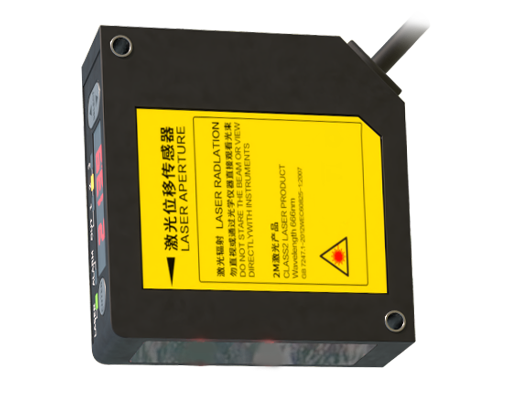
When selecting a laser temperature sensor, several specifications are paramount. The distance-to-spot ratio (D:S) indicates the size of the measurement area relative to the distance. A high ratio (e.g., 50:1) means a small spot can be measured from far away, essential for small targets. Spectral response refers to the specific IR wavelength band the detector is optimized for; some are better for plastics or glass, while others are for metals. Temperature range, accuracy, and repeatability are, of course, critical. Modern sensors often include features like data logging, high-temperature alarms, and connectivity options (USB, Bluetooth) for integration into control systems.
In conclusion, laser temperature sensors are a powerful and versatile tool in the metrology arsenal. By leveraging the principles of infrared radiation and providing precise aiming via a laser, they solve measurement challenges where traditional methods fall short. Their non-contact nature, speed, and safety make them essential for quality control, process optimization, and preventive maintenance across a broad spectrum of industries. As technology advances, these sensors continue to become more intelligent, accurate, and integrated, solidifying their role in enabling efficient and reliable temperature monitoring.