In modern industrial automation and robotics, the integration of proximity sensors for motor control represents a fundamental building block for creating intelligent, responsive, and safe systems. A proximity sensor-controlled motor system operates on a simple yet powerful principle: the sensor detects the presence or absence of a target object within a defined range without physical contact, and this detection signal is processed to command a motor's operation—starting, stopping, reversing, or varying its speed.
The core of this system lies in the sensor itself. Various technologies are employed, each with distinct advantages. Inductive proximity sensors are ideal for detecting metallic objects. They generate an electromagnetic field; when a metal target enters this field, it induces eddy currents, causing a change in the sensor's oscillation amplitude, which triggers a switching output. Capacitive sensors, on the other hand, can detect both metallic and non-metallic materials (like plastic, wood, or liquids) by sensing changes in capacitance. Ultrasonic sensors measure the time-of-flight of sound waves to determine distance, offering longer ranges. Photoelectric sensors use a light beam (visible, infrared, or laser) and are excellent for precise detection over varying distances.
The output from these sensors, typically a digital ON/OFF signal or an analog voltage/current proportional to distance, is fed into a control unit. This unit is often a Programmable Logic Controller (PLC), a microcontroller (like an Arduino or Raspberry Pi), or a dedicated motor drive. The controller interprets the sensor signal based on pre-programmed logic. For instance, a simple application might be: "IF sensor detects object, THEN start conveyor motor; IF sensor no longer detects object, THEN stop motor after 5 seconds." More complex logic can involve multiple sensors providing input for sophisticated sequencing.
The motor, the final actuator, can be of various types. AC motors are common for constant-speed applications like conveyor belts. DC motors, particularly brushless DC (BLDC) motors, offer excellent speed control. Stepper motors provide precise positional control, moving in discrete steps, which is valuable in assembly lines. The controller's output commands a motor driver or variable frequency drive (VFD), which supplies the appropriate power and signals to the motor.
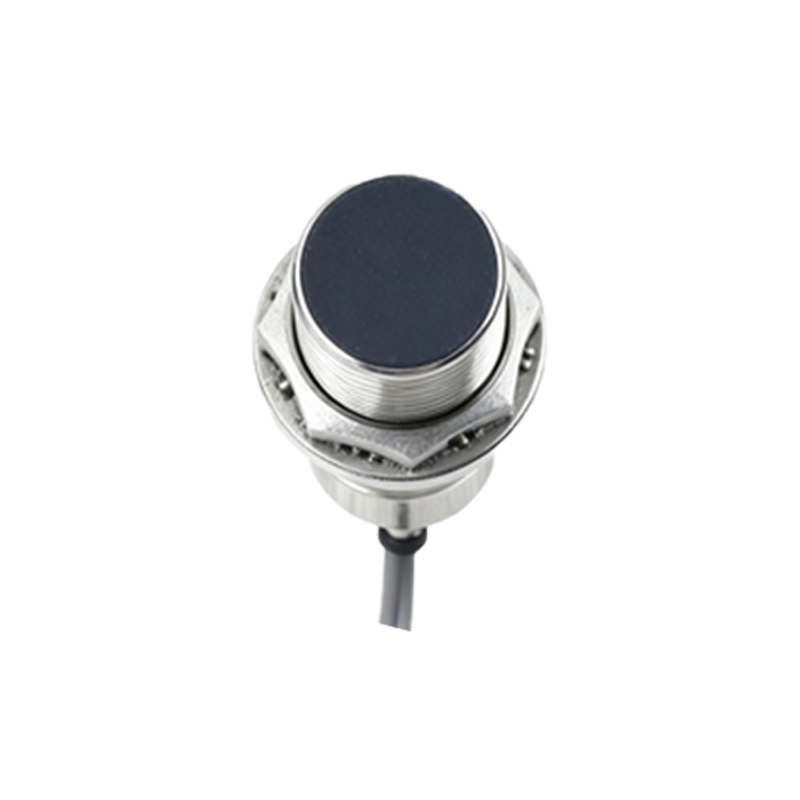
The applications for proximity sensor-controlled motors are vast and critical across industries. In automotive assembly lines, inductive sensors ensure a robotic welding arm only activates when a car chassis is precisely in position, controlling the servo motors of the robot. In packaging machinery, photoelectric sensors count bottles on a conveyor; when the count reaches a set number, the motor driving the conveyor stops, and another motor activates to push the batch into a boxing station. This creates a fully automated batching system.
Material handling is another major domain. On automated guided vehicles (AGVs) or elevators, ultrasonic or capacitive sensors act as safety bumpers. If an obstacle is detected too close, the sensor sends an immediate stop signal to the drive motors, preventing collisions. In warehouse storage systems, sensors detect the presence of a pallet at the end of a roller conveyor, signaling the motor to stop, thus preventing products from falling off.
Beyond industrial settings, these systems are found in everyday life. Automatic doors use microwave or passive infrared (PIR) sensors to detect approaching people, triggering a motor to open the door. Home appliances like washing machines use sensors to detect tub imbalance and automatically adjust motor speed or pause the cycle.
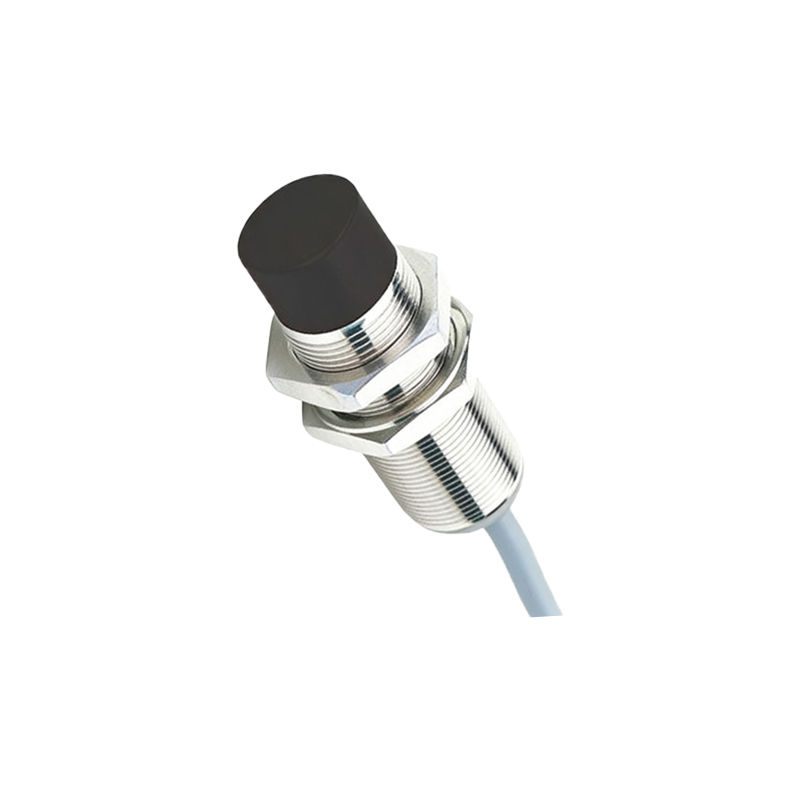
Designing a reliable system requires careful consideration. Sensor selection is paramount: one must consider the sensing range, target material, environmental conditions (dust, moisture, temperature), and required response time. The sensing range should have a suitable margin to account for mechanical tolerances and timing delays. Electrical integration is crucial; the sensor's output type must be compatible with the controller's input module. Noise immunity is also vital in electrically noisy industrial environments. Shielding cables and using sensors with robust designs mitigate false triggers.
Furthermore, safety and redundancy cannot be overlooked. For critical safety functions, such as emergency stopping, systems often employ redundant sensors or safety-rated devices (like Safety PLCs and certified safety sensors) that meet international standards (e.g., IEC 61508, ISO 13849). This ensures fail-safe operation, where a system failure defaults to a safe state, typically motor stoppage.
In conclusion, the synergy between proximity sensing and motor control is a cornerstone of automation. It enables machinery to interact intelligently with its environment, enhancing efficiency, precision, and safety. From high-speed manufacturing to consumer convenience, these responsive systems continue to evolve, driven by advancements in sensor accuracy, controller processing power, and communication protocols like IO-Link, which provide detailed sensor diagnostics and parameterization, paving the way for even more adaptive and predictive maintenance-capable systems in the Industry 4.0 landscape.