Laser sensors have become a cornerstone of modern industrial automation, robotics, and measurement systems. Their ability to provide highly accurate, non-contact detection and measurement makes them indispensable in a wide range of applications. At their core, laser sensors operate by emitting a focused beam of light—coherent and monochromatic laser light—towards a target. The sensor then analyzes the properties of the reflected light to gather information about the target, such as its presence, distance, dimensions, or surface characteristics.
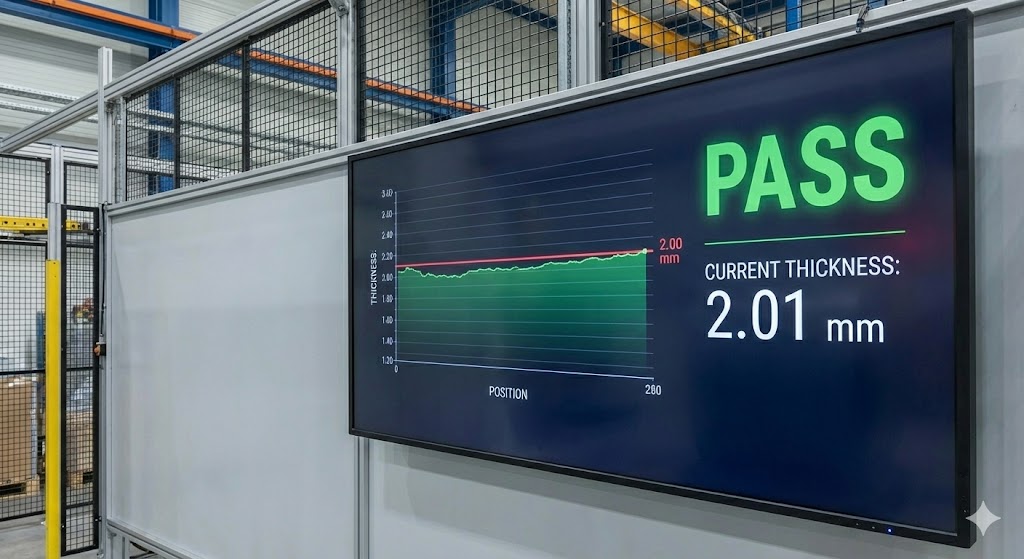
The fundamental principle behind most laser sensors involves either triangulation or time-of-flight measurement. In triangulation-based sensors, the laser emitter, the point of reflection on the target, and the receiving element (like a CCD or PSD) form a triangle. By knowing the fixed baseline and angles within this triangle, the sensor's processor can calculate the distance to the target with remarkable precision, often in the micrometer range. This method is ideal for short to medium-range, high-accuracy applications like profile scanning or thickness measurement.
Time-of-flight (ToF) sensors, on the other hand, measure the time it takes for a laser pulse to travel to the target and back. Since the speed of light is constant, the distance can be directly calculated. While typically offering slightly lower resolution than triangulation sensors over short distances, ToF sensors excel at measuring longer ranges, from several meters to hundreds of meters. They are commonly used in applications like vehicle LiDAR, bulk level monitoring in silos, and large-scale surveying.
Several key types of laser sensors dominate the market. Laser distance sensors are perhaps the most common, providing precise measurement of gaps, heights, and positions. Laser displacement sensors are a subset designed for measuring the variation in distance to a surface, crucial for checking flatness, vibration, or runout. Contrast sensors use the reflectivity of a surface to detect marks, labels, or material changes. Luminescence sensors can detect certain materials by their fluorescent properties when excited by a specific laser wavelength.
The advantages of laser sensors are numerous. Their non-contact nature eliminates mechanical wear and allows measurement of delicate, hot, or moving objects. The small, focused laser spot enables measurements on very small features or in confined spaces. High resolution and repeatability ensure consistent process quality. Furthermore, many modern laser sensors are equipped with digital interfaces like IO-Link, Ethernet/IP, or PROFINET, facilitating easy integration into Industry 4.0 and smart factory networks for data collection and predictive maintenance.
In practical application, laser sensors are ubiquitous. On automotive assembly lines, they verify gap dimensions between body panels and inspect weld seam quality. In electronics manufacturing, they precisely place components on circuit boards and measure the coplanarity of chip leads. In logistics, they count packages on high-speed conveyors and measure parcel dimensions for automated sorting. In pharmaceutical packaging, they verify fill levels in vials and check for the presence of tamper-evident seals. Beyond industry, they are integral to robotics for navigation and obstacle avoidance, and in consumer devices like smartphone facial recognition systems.

Selecting the right laser sensor requires careful consideration of several parameters. The required measuring range and resolution are primary factors. The target's properties—its color, material, surface texture (shiny or matte), and angle—can significantly affect the reflection and must be accounted for. Environmental conditions such as ambient light, dust, fog, or temperature extremes may necessitate sensors with specific protective housings or specialized filters. Finally, the required output signal and communication protocol must match the existing control system architecture.
Installation and setup are critical for optimal performance. Proper alignment is essential; the laser beam must be perpendicular to the target surface for accurate distance measurement. For diffuse-reflective sensors, ensuring a clean optical window is vital. Many sensors offer sophisticated teach-in functions or software suites that allow users to set measurement windows, thresholds, and filtering parameters easily. Regular maintenance, primarily keeping the lens clean, ensures long-term reliability and accuracy.
Looking ahead, the evolution of laser sensor technology continues. Miniaturization is making sensors smaller and more power-efficient, enabling their use in portable devices and dense installations. Advances in laser diode and detector technology are pushing the limits of speed, allowing for the measurement of extremely fast processes. The integration of artificial intelligence at the edge is beginning to allow sensors not only to collect data but also to perform initial analysis and decision-making locally, reducing latency in critical control loops.
In conclusion, laser sensors are powerful and versatile tools that provide the precise, reliable data needed for automation, quality control, and innovation across countless sectors. By understanding their operating principles, types, and key selection criteria, engineers and technicians can effectively harness their capabilities to improve efficiency, ensure product quality, and enable new levels of technological advancement. As technology progresses, these sensors will undoubtedly become even more intelligent, integrated, and essential to the interconnected industrial landscape.