In today's rapidly advancing technological landscape, laser sensors have emerged as indispensable tools across a multitude of industries. These devices operate by emitting a focused beam of light—typically from a laser diode—and measuring the properties of the reflected light to gather precise data about an object or environment. The fundamental principle involves the emission, reflection, and reception of laser light, enabling non-contact measurement with exceptional accuracy.
The core technology behind laser sensors is based on several key methods. Time-of-flight (ToF) sensors calculate distance by measuring the time it takes for a laser pulse to travel to a target and back. Triangulation sensors use a laser, a lens, and a position-sensitive detector; the laser dot's position on the detector changes with distance, allowing for precise measurement. Confocal sensors utilize chromatic aberration to measure displacement or thickness with nanometer-level precision, while laser Doppler vibrometers measure velocity and displacement by detecting frequency shifts in reflected light.
The applications of laser sensors are vast and transformative. In industrial automation and manufacturing, they are crucial for quality control, dimensional inspection, and precise positioning on assembly lines. They ensure components meet exact specifications, detect defects, and guide robotic arms with micron-level accuracy. The automotive industry relies on them for adaptive cruise control, collision avoidance systems, and autonomous vehicle navigation, where LiDAR (Light Detection and Ranging) creates detailed 3D maps of surroundings.
In the realm of consumer electronics, laser sensors enable facial recognition for device security and autofocus capabilities in smartphone cameras. The medical and biotechnology fields employ them in diagnostic equipment, surgical guidance systems, and laboratory analyzers for non-invasive procedures. Furthermore, environmental monitoring utilizes laser-based LiDAR for topographic mapping, forestry management, and atmospheric research.
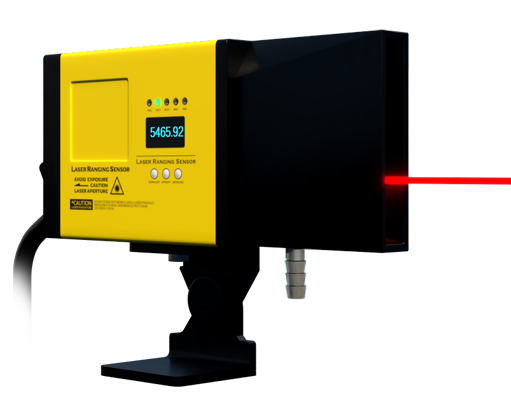
Several critical factors determine the selection and performance of a laser sensor. Measurement range defines the minimum and maximum distances it can accurately assess. Resolution refers to the smallest detectable change in measurement, while accuracy indicates how close the reading is to the true value. Repeatability is the sensor's consistency in returning the same value under unchanged conditions. The response time, or how quickly it can take and process a measurement, is vital for high-speed applications. Environmental considerations such as ambient light, temperature fluctuations, dust, and the target's surface properties (color, reflectivity, texture) also significantly impact performance.
When integrating laser sensors, proper installation and alignment are paramount to ensure optimal functionality and data integrity. Regular maintenance, including lens cleaning and calibration checks, preserves long-term accuracy. Adherence to laser safety standards (e.g., IEC 60825) is non-negotiable, as even low-power lasers can pose risks to eyesight. Proper labeling, enclosure, and operational protocols are essential for user safety.
The future of laser sensor technology points toward even greater miniaturization, enhanced intelligence, and multi-functionality. Integration with Artificial Intelligence and the Internet of Things (IoT) will enable smarter, self-optimizing sensor networks. Advancements in solid-state LiDAR and frequency-modulated continuous-wave (FMCW) technology promise higher resolution, longer range, and better performance in challenging conditions like bright sunlight or fog.
In conclusion, laser sensors represent a cornerstone of modern measurement and detection systems. Their ability to deliver high-precision, non-contact data in real-time drives innovation and efficiency from factory floors to research labs and everyday devices. As the technology continues to evolve, its role in shaping smarter, more automated, and data-driven solutions across all sectors will only become more profound.